Happy 2026! This is going to be an interesting year! To start the year out, I am adding to my already extensive collection of posts on the Buried element (to see those, go to the blog and click on the Buried topic (in the navigation area–scroll to the top if you’re on a computer, and if you’re on your phone scroll to the bottom).
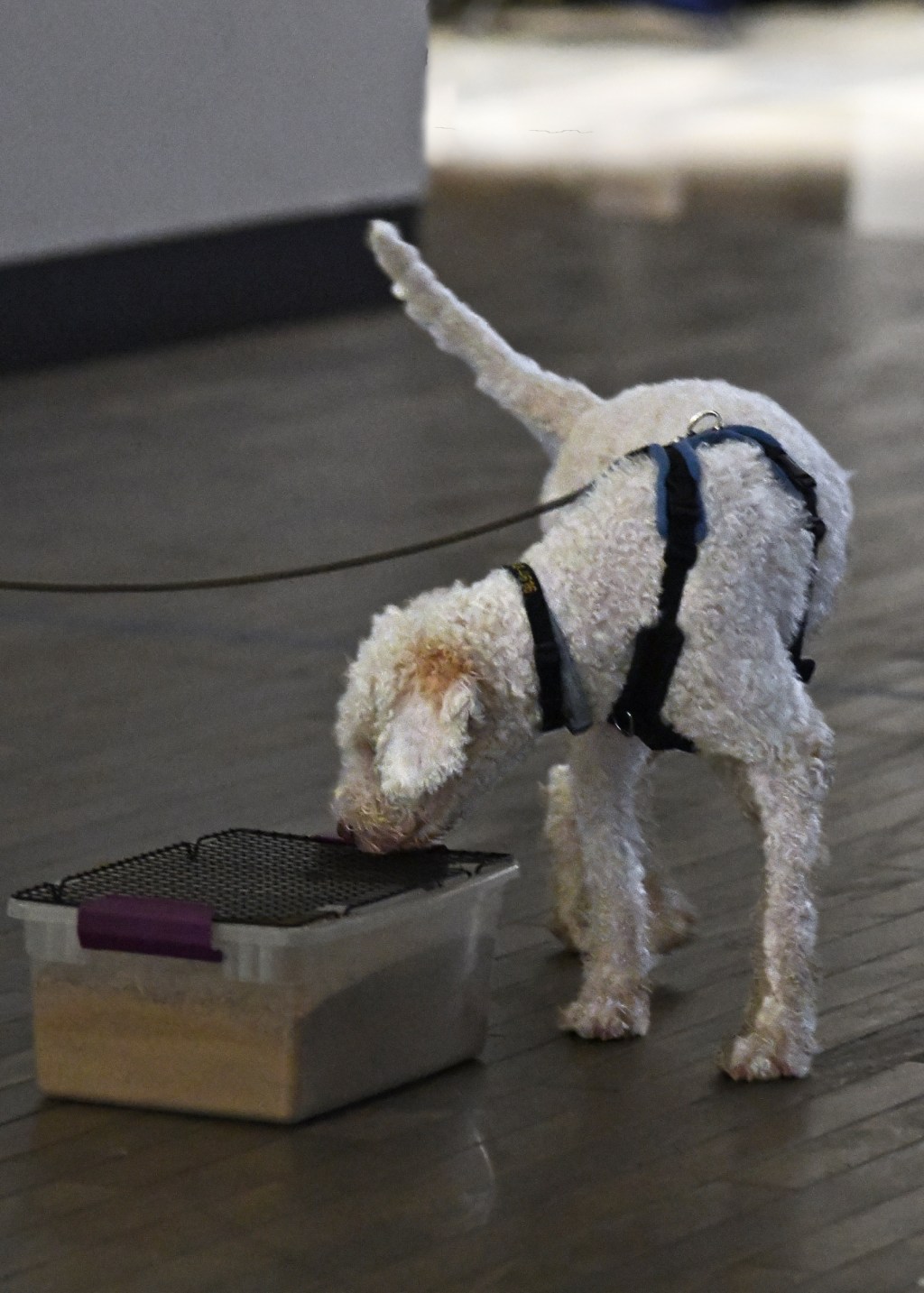
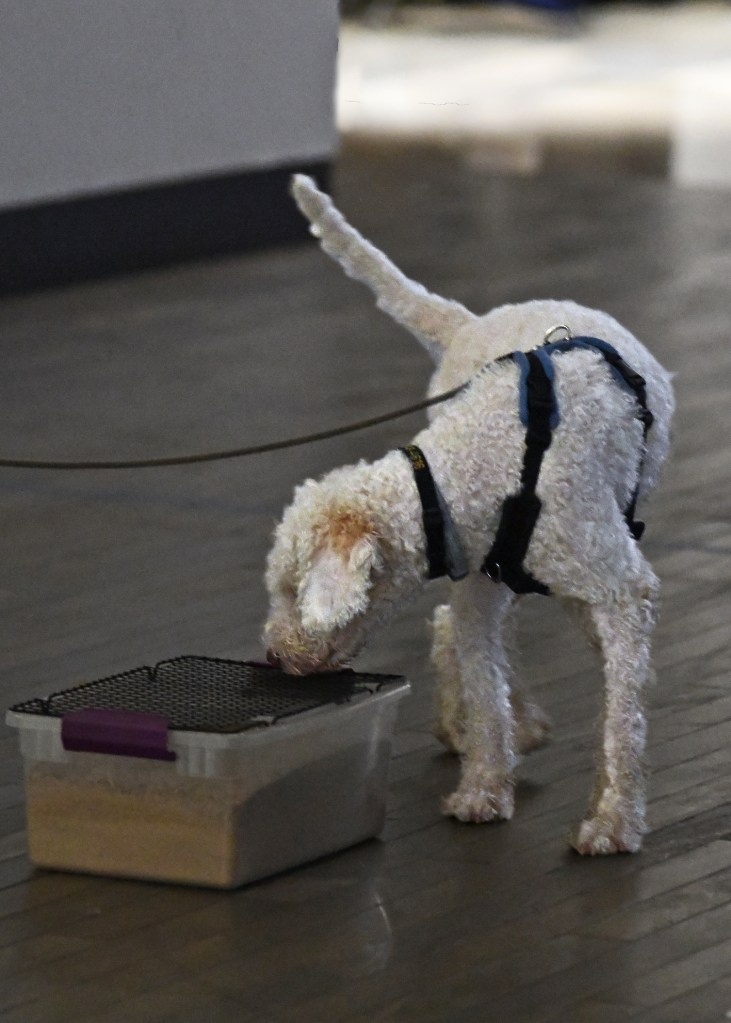
As I have discussed already, one of the challenges in buried is how much the odor is moving. To humans, the bins that we use in buried look like containers, and because we are visual thinkers, we assume the odor is ONLY IN THE BIN.
But….the lids on the bins are grates which allows the odor to flow freely around the area, as simulated in this video. (The vapor created by the dry ice in the bin makes the air currents visible and you can see how active they are.)
The odor from the hot bin will travel on the air currents and stick to the cold bins. The dog must then decide which bins actually contains the hide vs. which bin just has odor sticking to it.
I imagine that this looks something like this:
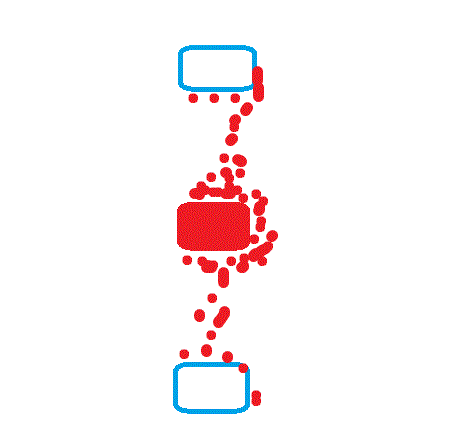
You can see that the odor particles are clustered more thickly around the hot bin in the middle than around the cold bins. The dog has to figure out which bin has the most particles around it in order to alert on the correct bin.
To complicate matters: when there is more than one hide, there is convergence. Convergence is where particles of odor from multiple hides collide and get mixed together. It may look something like this, where the blue and red represent two different hot bins.
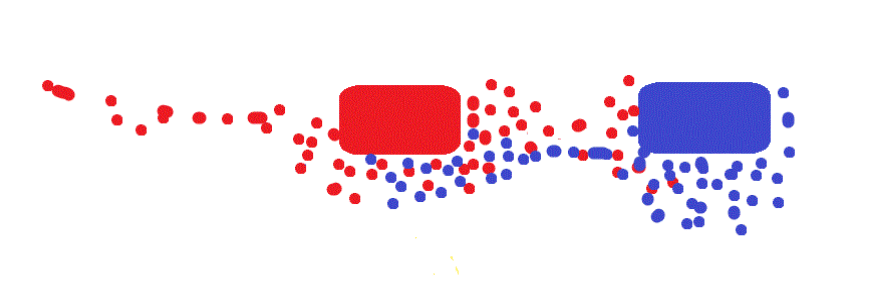
The dog has to sort out which odor particles track back to which hide and then alert on the correct bin. This is a complex task which often takes a lot of back and forth comparison. As the dogs gain experience, however, they often get faster at reading the pattern of “hot bin” and can make decisions faster. (And honestly, when you realize how complicated this task is, that feat is totally amazing).
Here is a diagram of the path that the dog may take to work out this problem. Notice that the dog works away from the bin to figure out source—he is following odor particles that have drifted off in a different direction, comes to the end of those particles and that tells him that source is “back there.”
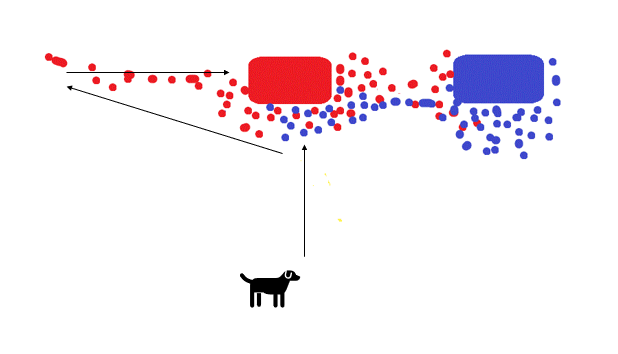
And this is where the leash becomes a factor. Many of us think that the dog should be able to just sniff the bin itself, and when the dog tries to leave the area to figure out convergence, we jerk on him, or shorten the leash to force him back to the bins. Now he has been interrupted from his process, and doesn’t have the information he needs. And then we wonder why he can’t find the hide, or falses on a bin that is not hot.
Here is Yeti, working some rows of buried bins off leash—there are four hides out here, which creates a LOT of convergence. Notice how far away from the actual bins he goes, in order to determine which ones are hot.
So next time you run your dog on buried, do him a favor: make sure the area is secured, and take the leash off. He will thank you for it.
NOTE: this is an excerpt from an online class on “Seeing Through Your Dog’s Nose” that I am working on. If you are not already a subscriber, this would be a good time to subscribe to the blog, as subscribers will get a discount!
To subscribe: scroll up to the top (or on your phone scroll down) and put your name in the black “Get posts send directly to your email” box.


 Sniffing Around Scent Work
Leave a reply to perfectlymentality9afde7ce38 Cancel reply