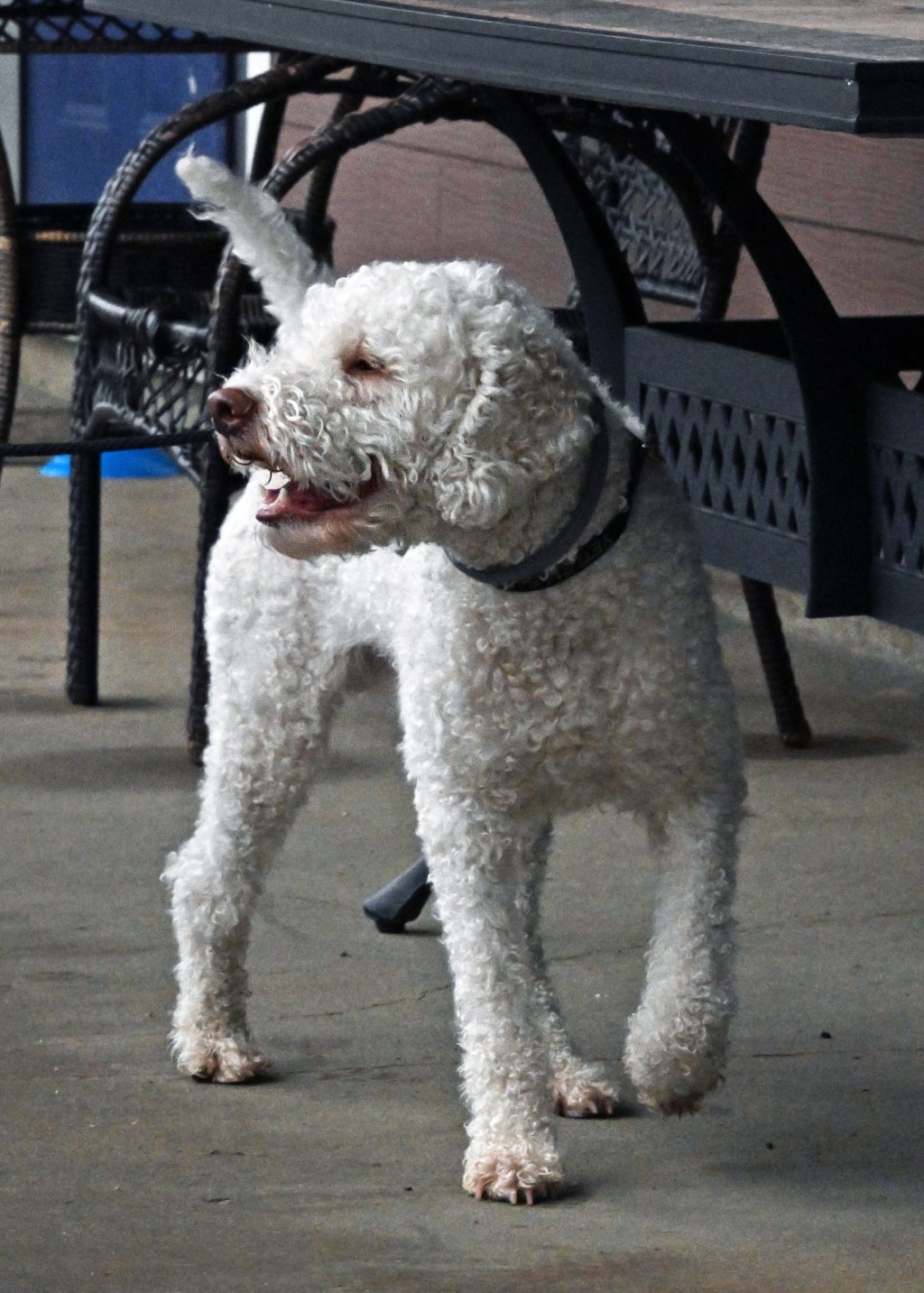
Sometimes it feels like I have been teaching scent work for a thousand years. In reality, it has only been ten years: four personal dogs and a few hundred students (probably…I really have not kept count), and judging thousands of teams. So I have a historical perspective on training practices. This morning I was reflecting one of those practices: rewarding or not rewarding for returning to a found hide.
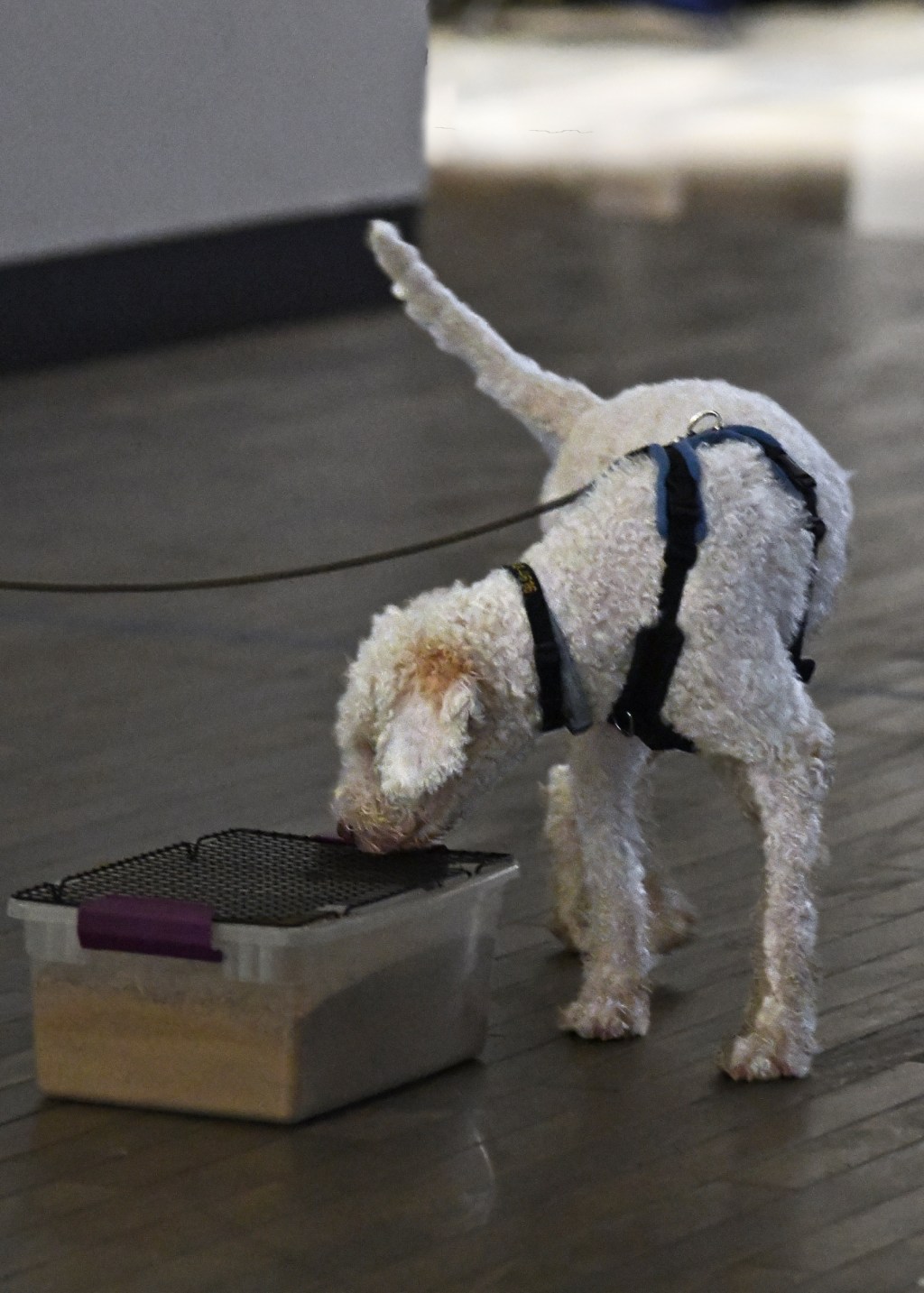
In the old days, in a practice handed down to people by NACSW (who started the scent sports), we rewarded the dog for alerting on ANY hide, whether they had found it already or not. The principle was that a dog should always be rewarded for going to odor so that we kept the dog’s drive for odor high. And this is a very good principle. Except….our dogs are all opportunists, and most of them figured out that they could use us as a vending machine, going back to a find hide just to have us pop out a cookie. And this costs us valuable time and effort in a competitive search.
So people started NOT rewarding their dogs when they went back to a hide they had already alerted on. We didn’t want to ignore our dogs when they were alerting on odor, so we marked it with a verbal encouragement: “yes, good dog, find another one!” and tried to get them to move on. Very sound practice based on very sound thinking.
One would expect that the dogs would eventually stop returning to found hides since they weren’t getting rewarded for it. And yet, they haven’t. Even if they have never been given a cookie for returning to a found hide, a large number of dogs will still do this, including my own dogs.
Why is this?
The truth is, there are several really good reasons for returning to found hides.
The first is: the dog doesn’t remember that he has already found that hide, so he figures he had better alert on it. Dogs are like people: they all have differing cognitive skills and abilities and one of these abilities is memory. Some dogs have much better memories than others. Some dogs can’t remember because of trial stress (just like us—are you one of those folks who thinks that they just can’t remember hides because they have a bad memory? See this post on how stress affects memory: https://sniffingaroundscentwork.com/2024/03/27/why-we-are-all-so-stupid-at-trials/ )
The second reason is the dog is not finding any other hides. Either the hide is not obvious to them or the hide is not findable, or in the case of the handler not knowing how many hides there are, there are no more hides to be found. The dog knows we want them to keep searching (we get pretty upset when they just give up), so the best she can do is to show us the one that she already found – look, here it is, this is the only one!!
The third reason is that the dog is having trouble finding another hide, and so they are “anchoring” on the found hide. This is another one of those very natural “sniffing” behaviors which are totally counterintuitive to humans. In any interior area where there is more than one hide, you are going to have convergence, that is, the odor clouds are going to overlap, and the dog has to untangle which stream of odor belongs to which source. I think this is similar what happens when we untangle two tangled masses of yarn. It takes patience and perseverance to untangle the strands, and sometimes you need to tug on one strand to figure out where it is coming from.
When a dog returns to a hide, sometimes she is saying ok, this stream of odor belongs to this hide here, so the other stream that I was following must belong to some other source.
This is clearly happening when the dog returns to the found hide, and doesn’t look to the owner or ask for the cookie, she just continues on the search. But sometimes I feel like the dog thinks “oh what the heck, I’m here, I might as well see if I can get an extra cookie.” And so they give the alert behavior, get the reward, and then go back to whatever they were trying to figure out.
Here is a video of one of my students working two very close converging hides. There is a hide underneath the bench, and a hide in the drain pipe on the wall. The odor in the drain pipe is shooting out all over the bench, so there is a LOT of overlap of these two odors. The video actually starts mid-search, and Charlie has already found the bench hide. She knows there is another hide but cannot source it. She goes back to the bench hide several times in an effort to untangle the two odor streams.
Dogs will sometimes return to a found hide for all three of reasons, depending on the situation, although there are usually patterns you can see. Yeti will return to a found hide repeatedly when he has found everything, but Astra usually does this when she is working out some convergence–unless I am being very dense, then she may start jabbing at the found hide repeatedly and whining. If you are careful in your observations, you can figure out what the dog is doing during your competitive search, and call finish with confidence.
Have you signed up to get posts delivered directly to email? I am no longer putting all my posts on Facebook. Scroll up to the top (or down to the bottom if you are on a mobile device) and put your email in the black box.

 Sniffing Around Scent Work
Leave a reply to Barbara Eberhardt Cancel reply