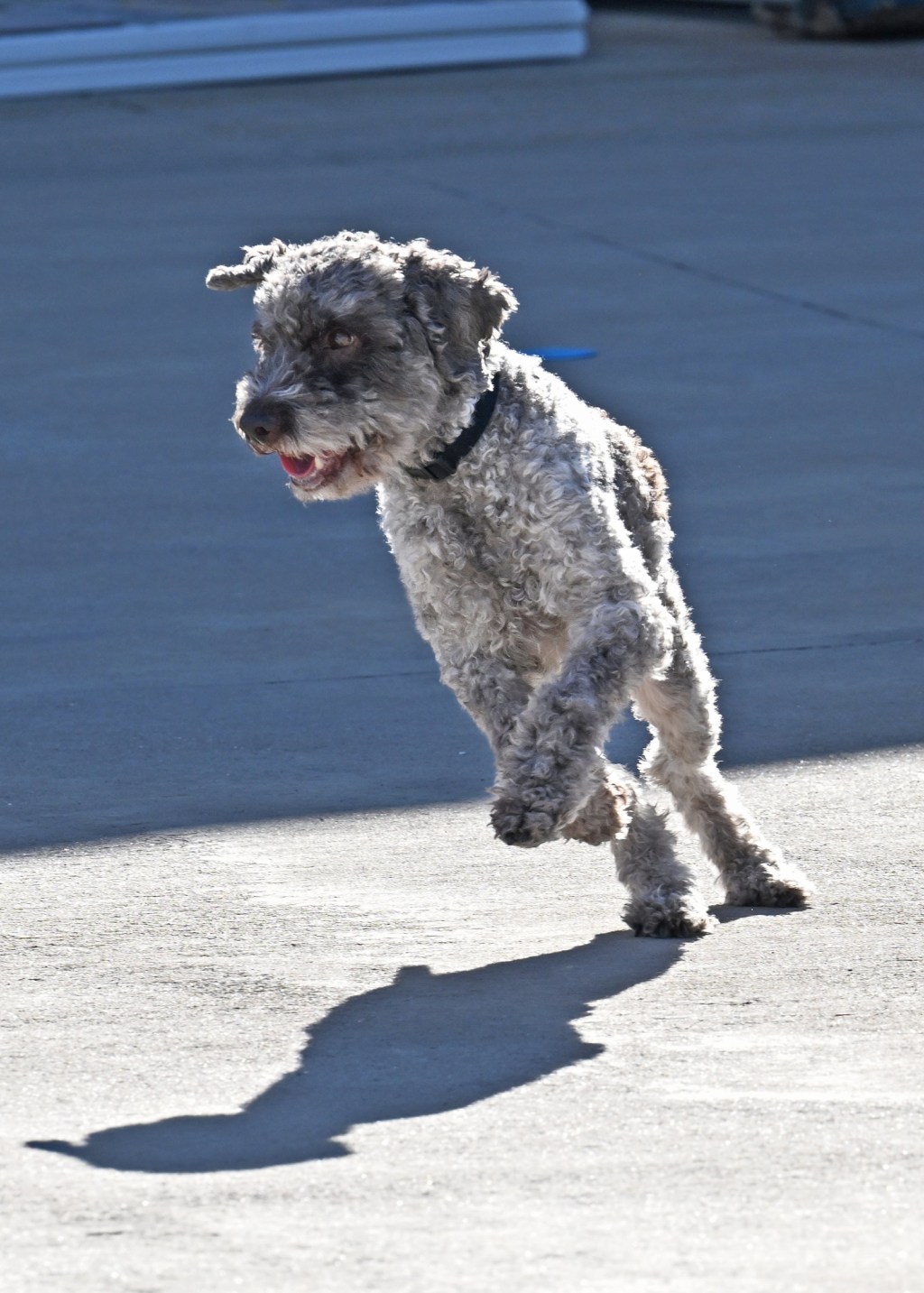
Last month, I was teaching a seminar and during the open question period someone asked “how do you stop a dog from cataloging?”
“Cataloging” in scent work, is used to describe a dog who gets into a search area, often goes directly to the odor, but doesn’t alert on it, just moves off, sometimes finding another odor, sometimes just sniffing around the room before coming back and alerting on it.
So in the sports world, this is obviously a problem, since our system is based on rewarding the fastest search. At some point, when the scent sports were starting, some judge or trainer or ex-cop remarked that a dog “cataloging” was some sort of terrible flaw.
The sports folk snapped up that term and have been using it ever since, always in a very derogative sense. Which drives me crazy, because a dog checking the search area before starting to alert IS NOT necessarily a flaw.
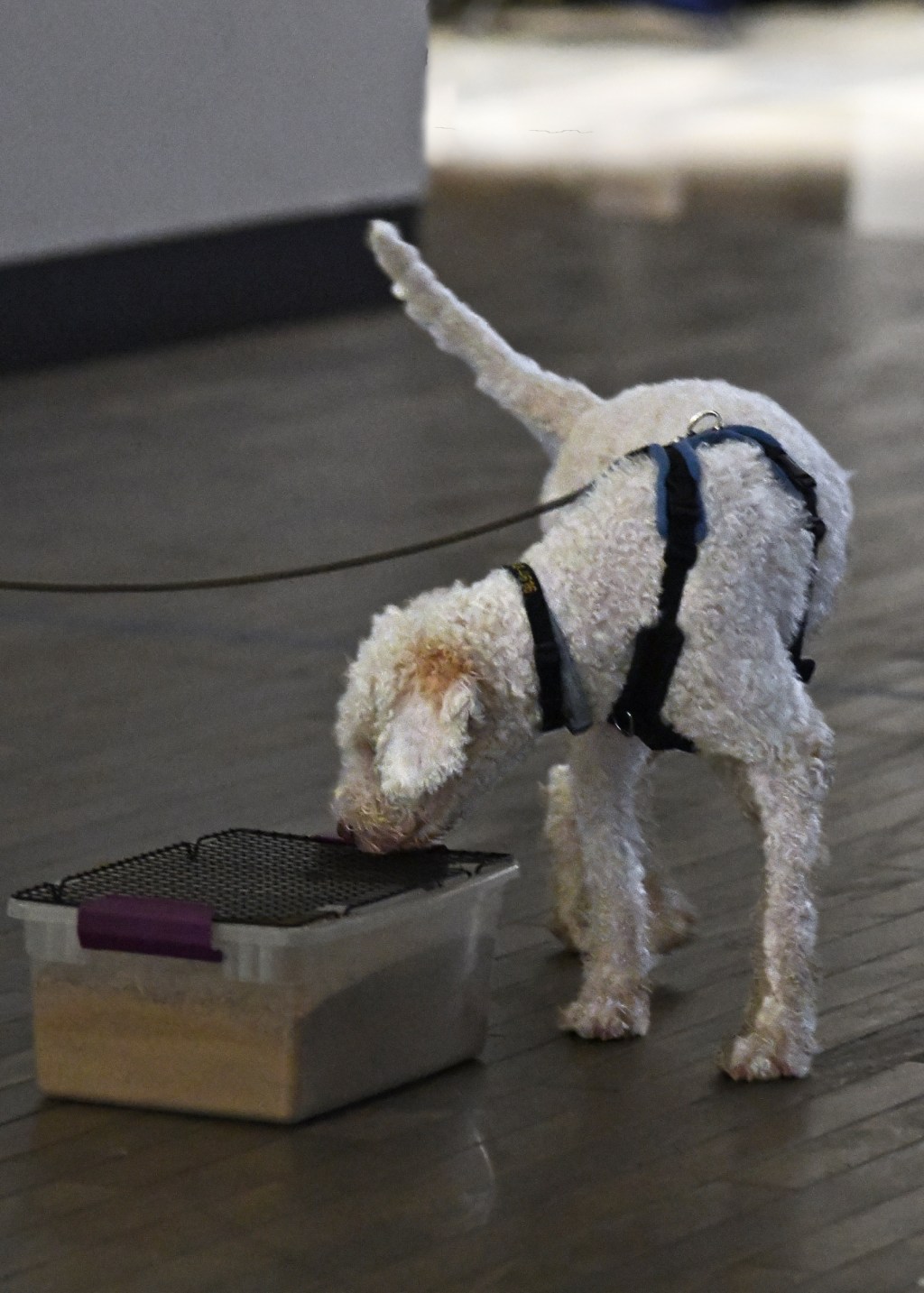
Astra was the dog who taught me this. She is a cataloger par excellence. Typically when she goes into a search area, she does a round of the area, generally marking the places of the hides with little nods of her head. And then she will start alerting. Often, depending on the difficulty of the hides, she will alert on them by going directly to them one after another, not pausing until she is done. There is really no time lost by her doing this. And it is positively magical to watch.
Here is a video of Yeti doing a nice “cataloging” round before alerting on a ladder hide:
I have watched dogs who have a “fast start”—they go directly to hide right off the start line, but then they lose a lot of time finding the second and third hide, often floundering around the search area. Most of the time they do not end up being faster than Astra.
This tendency to catalog is what I call a search “style.” Most dogs have one, it is just a collection of patterns or habits that they use when they search. The cataloging, or as I call it, the orientation round that happens before alerting starts, also usually goes hand in hand with the dog’s tendency to work the very edge of the scent cone in order to gather information about source. This is also very magical to watch—the dog will be sniffing along one wall of the room, pause, and then suddenly run directly to source on the other side of the room. It is totally counter-intuitive to humans, who use the directness of vision to locate things—I mean, how could you possibly find something on one side of the room by looking on the other side? And yet I have seen this happen again and again.
Here is Yeti doing this in a very small novice search. He initially misses the hide in the corner, and then gets some information while sniffing the garbage can on the other side of the room and goes directly to the hide.
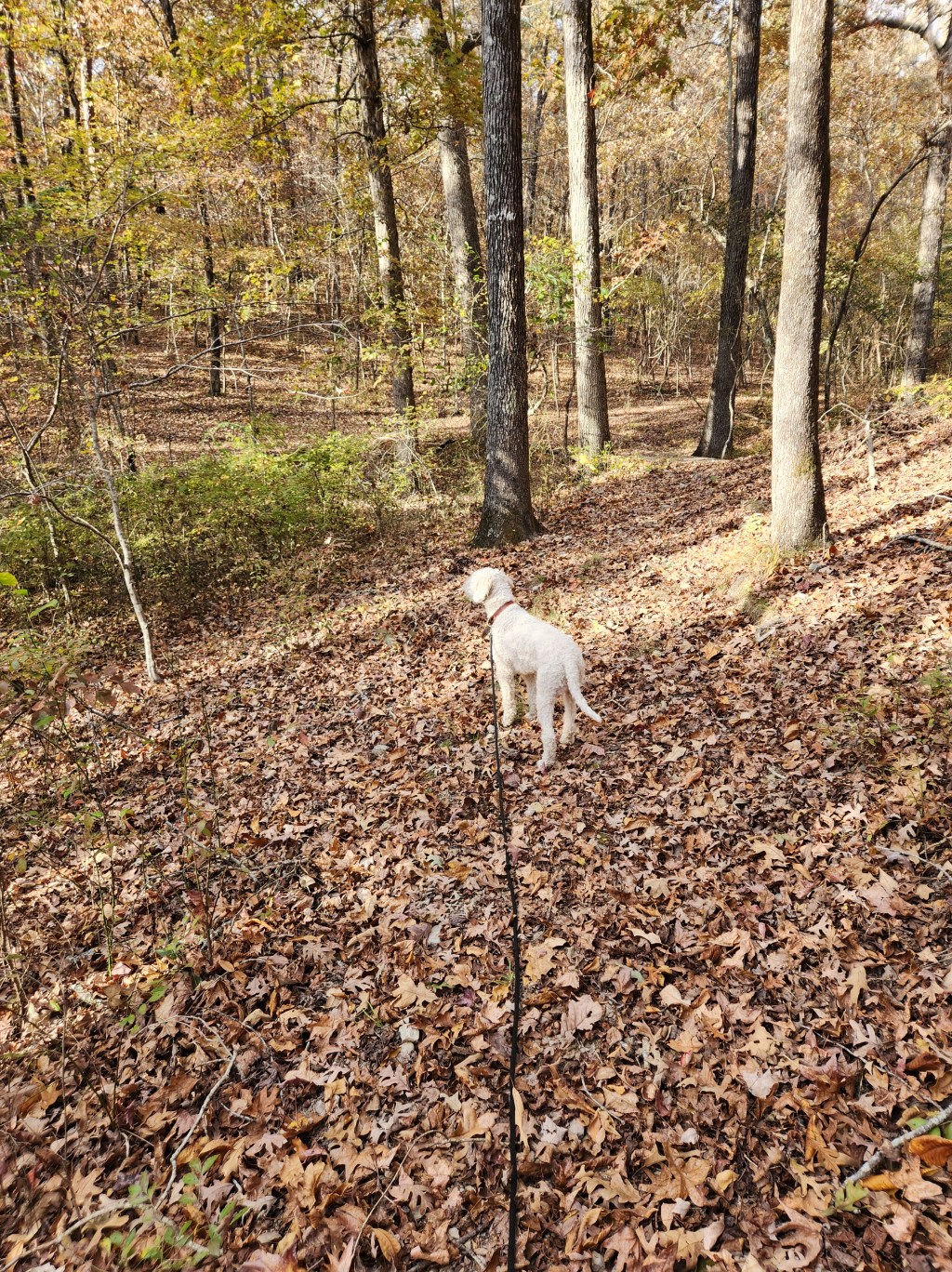
I see this happen most often with the field dogs—GSPs, Vizlas, setters, spaniels, etc. (although not exclusively. I have one student with a little Yorkshire terrier student who does this with great style). It makes sense: when you are searching acres of land for a bird (or in the case of Lagottos, a mushroom). Gathering information by using the edge of the cone is really the most efficient way to find your target. If you actually searched each individual bush or tuft of grass, it would take forever to find anything. Using the edge of the cone allows you to hone in on your target from a distance.
The herding breeds (Aussies, Border Collies, German Shepherds, etc.) as well as some of the retrievers—the labs and golden retrievers tend to work a more direct line to the source approach. This style is preferred by the scent work people as it is more easily understood and is sometimes, but not always, faster.
So, back to the question asked at the seminar: how can you stop a dog from cataloging?
My answer is basically “why would you want to?” which doesn’t satisfy anyone who asks that question, but hopefully makes them think.
The more direct answer is you really can’t. At least, not in my experience. Early in my career, I did make some attempts at it. I experimented with various techniques with Astra just after I got her: I tried stopping her at the first hide when she went on her orientation round in the search area, I tried keeping her on leash and circling her around back to the hide when she tried to leave it, I tried just rewarding with a lot of treats at the first hide. The results of these “training” attempts? She shut down and refused to search. I have seen and spoken to others who have also tried to stop the cataloging, with very little success.
I believe that “cataloging” is like humans’ “handedness” (yes, that is an actual term, I just looked it up) that is, using our right or left hands for most tasks. Using one or the other hand is a tendency that we are born with, and while it can be changed, the process of changing it is likely to be painful and take a lot of time and effort.
Since nose work is something that we do for fun, and hopefully, our dogs’ enrichment, I can’t imagine that trying to train them out of this tendency is really worth it. Instead, stand back and enjoy the spectacle, the wonder, of your dog working the odor in whatever way!
Have you signed up to get posts delivered directly to email? I am no longer putting all my posts on Facebook. Scroll up to the top (or down to the bottom if you are on a mobile device) and put your email in the black box.


 Sniffing Around Scent Work
Leave a reply to wondrous729a69cb97 Cancel reply