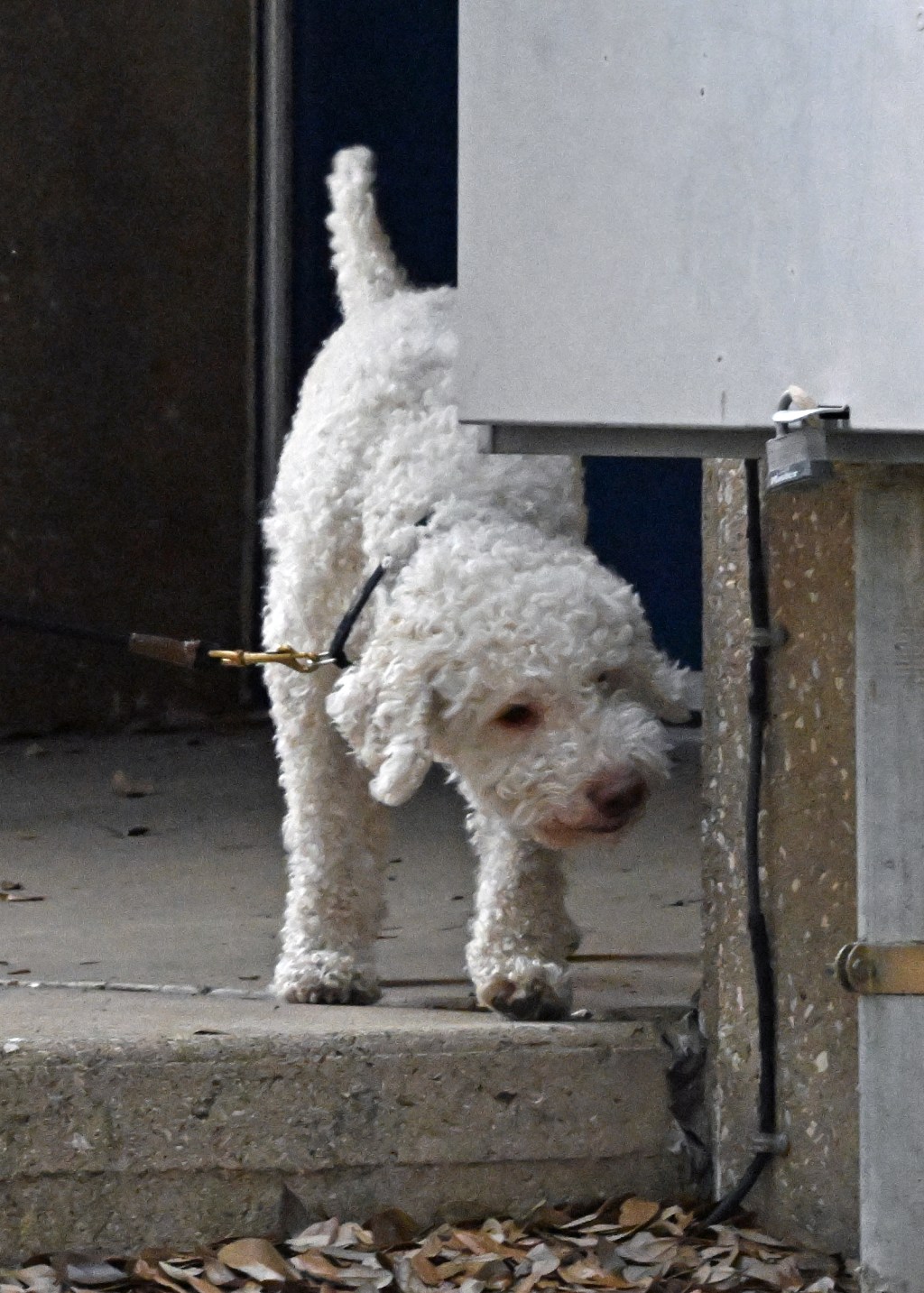
It’s a warm spring evening, and my class is working exterior hides. I am trying to give the class all the exterior practice I can before the heat starts.
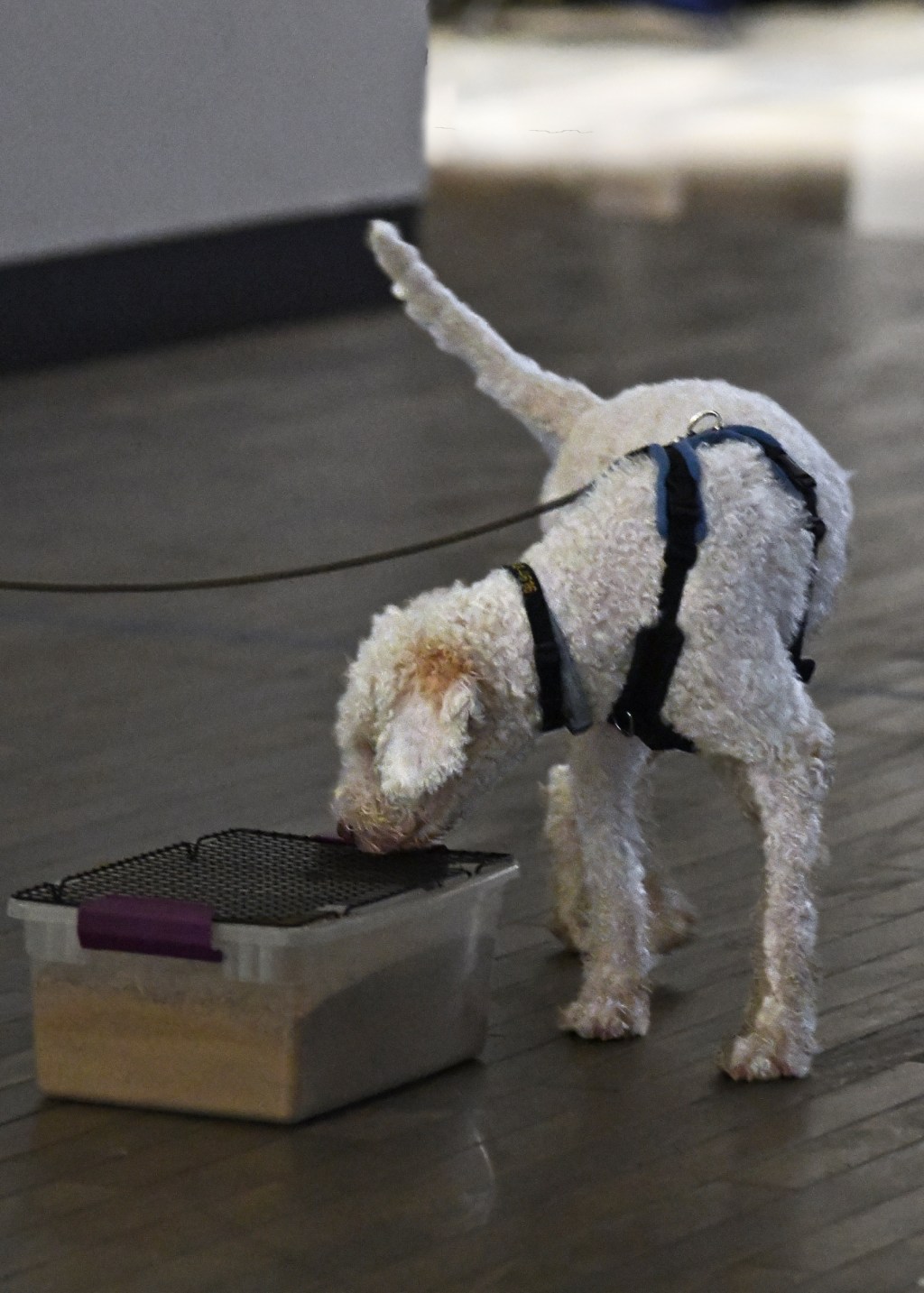
The little Lakeland terrier has been working well, sniffing his way to the first hide without problems, but he was having trouble with the second hide and after doing a loop of the area, is trotting determinedly towards the building, a good twenty feet away from the outer boundary of the search area. His handler has been faithfully following him on his long line, but he is going the wrong direction, and she is starting to think he is just wandering around. She stops and turns to face me “Have we gone too far out of the search area?” she asks.
I pause. I am just not sure. There isn’t much of a breeze, I don’t think the scent is traveling in that direction. “I think so. I think he may have lost the scent, bring him back this way.”
She gently encourages him back towards the search area, he circles and investigates a couple of objects near me, pausing to sniff the grass. He can’t seem to lock onto anything, and I finally tell her time is up, and they go back to the staging area.
It’s no big deal, dogs miss hides all the time, and this class is having challenges searching outside. But when the next dog runs the course, a much more experienced collie, I see that I was wrong—the terrier had been on odor. The collie moves with purpose towards the building, and he is obviously working some odor—his head is weaving back and forth a bit. Just before he reaches the building wall, he does a U turn and heads back, moving directly to and alerting on source.
Why is it so easy to misjudge our dogs and so difficult to believe that they are searching for target odor? I have a lot of practice at this particular skill: I have spent a good part of the last ten years watching dogs sniff, and I still have problems being sure the dogs are actually working odor. I estimate that I can tell when a dog is sniffing odor maybe 60% of the time….and I am not alone in this. Even the professionals are not confident in ALWAYS understanding when the dog is working target odor.
I believe the problem here is what I call the culture clash between our two species. Humans have five senses that we use to interpret the world: hearing, sight, taste, touch, and smell. However, we rely on sight: about 90% of our information comes through our eyes.
Dogs have the same five senses, but they get the majority of their information through smell. This is no surprise to, well, anyone.
However, we really don’t get is how a really acute sense of smell works: we don’t understand how odor travels or how the dog perceives it. We are sadly lacking in the ability to follow a plume of odor to source.
We know what it’s like to smell bread baking when we come into the house. We recognize the big odors: the pungent smell of cut grass, the stink when the septic tank is overloaded. But we never use our noses to locate, well, much of anything. We smell things, we may delight in them, we may be disgusted by them. We comment on them, and we move on. We rarely actually use that information, the way we use the information we receive from our eyes. The smells are just, well, extra data.
We are oblivious to the subtler signals that dogs so easily read: the tiny shifts of the wind, the movement of the air pushed by the HVAC systems and refrigerators, even the changes of barometric pressure when the weather fronts move in. All of these things are factors which affect odor and which drive our dogs’ behaviors.
In my ten years of teaching, I have found it very difficult to teach what is popularly known as “odor theory” or more accurately “odor movement.” In truth, there is a lot that we don’t know about odor movement, and it is difficult to structure lectures when every other sentence is punctuated by “it depends,” and “sometimes.” And nose work classes are already full enough=–it is difficult to make time for this subject.
What humans really need is to see odor “pictures,” and the dogs working those odor pictures, over and over again. We are visual creatures, after all, and we NEED to utilize our dominant sense in order to understand odor.
How to do this? Well, one way is to make the air movement visible by using smoke. There are currently all sorts of smoke machines out there that create varying amounts of smoke that will show us exactly what the air currents (and therefore what the odor is doing, since odor particles ride on the air currents). This is a trick that hunters have been using for decades.

It is best to run the smoke machine and then watch the dog work a search—that way our brains can connect the dots between the two pictures, and start to become aware of what is happening.
The other way is to watch multiple dogs do the same search. When we watch only one dog, we tend to think that his or her movement is just idiosyncratic. “oh, they are just wandering around….”
But when you watch the same dog following the same patterns, over and over again, you begin to see that there is a method. They are following something we can’t see. They are following scent. You begin to comprehend the magic.
In the old days, when the UKC nose work program had just started, a lot of the competitors would go out and watch the searches (after they had finished their run, or in classes they weren’t competing in). It was a lot of fun, and it increased our knowledge of how our dogs worked. Alas, that tradition seems to have fallen by the wayside.
The AKC scent work regulations specifically state that competitors can watch searches they are not competing is, but this generally doesn’t happen for various reasons: people are already busy running multiple classes, or the search areas are too small to allow an audience, or people are just too comfortable gossiping in the crating area.
IF YOU VOLUNTEER to time a class at a trial, I GUARANTEE you will learn a lot about how dogs work odor as well as getting a good education in handler errors. I started learning this way, and was fortunate enough to be mentored along by a couple of judges. I have also heard countless timers say that they learned A LOT in the course of a day. So next time you are at a trial, just step up and volunteer!
Sometimes I feel like I am crazy to be so involved with a sport where so much is unknown…but I guess the mystery is part of the allure.
Don’t miss a post! Scroll up (or down, on a mobile device) and put your email in the black Subscribe box.

 Sniffing Around Scent Work
Leave a reply to inventivebc40407fcd Cancel reply