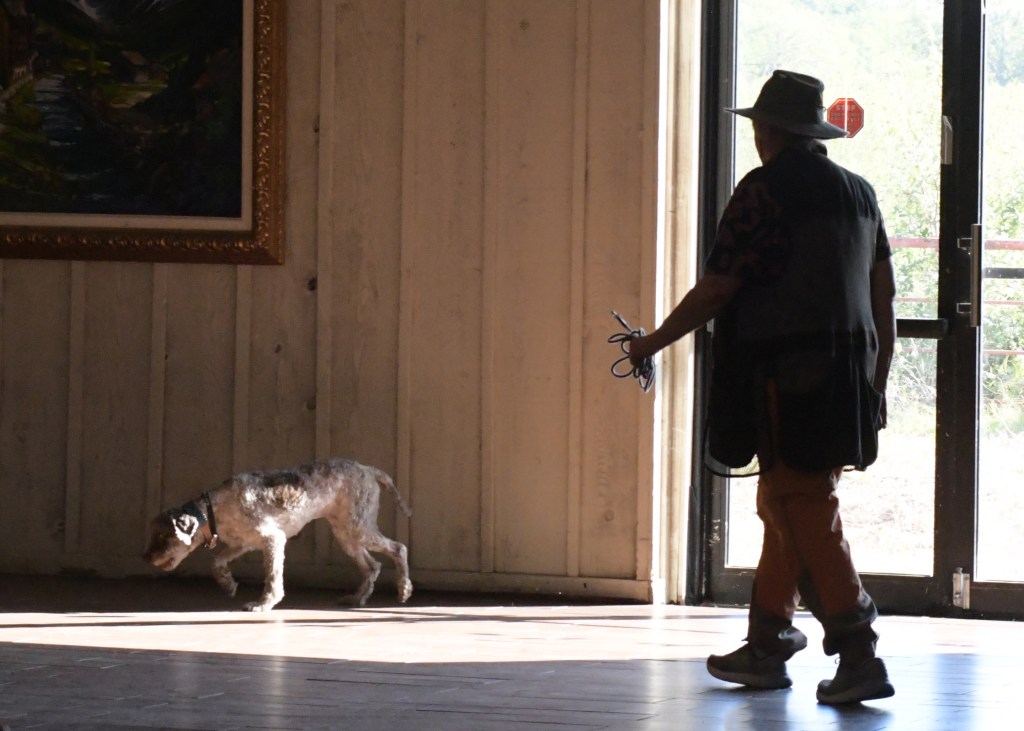
Last month, Yeti finished his overall Masters title. We actually managed to pass two Master Interior searches in one weekend, a feat I had not imagined that we were capable of. I had expected that we would spend a good part of next year finishing the Masters Interiors title.
But we got lucky. And perhaps a little skill was involved. Yeti has learned to not false if I linger excessively in the search area, and I have learned that I need to push him to really make sure we get all the hides.
But now…now I have to face the music and figure out my strategy for training for the Detective class.
The Detective class is not like moving from up from other levels. It is a whole different ballgame.
The rules are fairly simple:
- Large search areas, that include both interior and exterior (2000-5000 square feet)
- Long search time 7- 15 minutes
- 4-6 distractions, including mimic, people, sound etc.
- Unknown number of hide, between 5-10.
- You must find ALL of the hides and call finish before the time is up, and you must time yourself, there will be no thirty second warning.
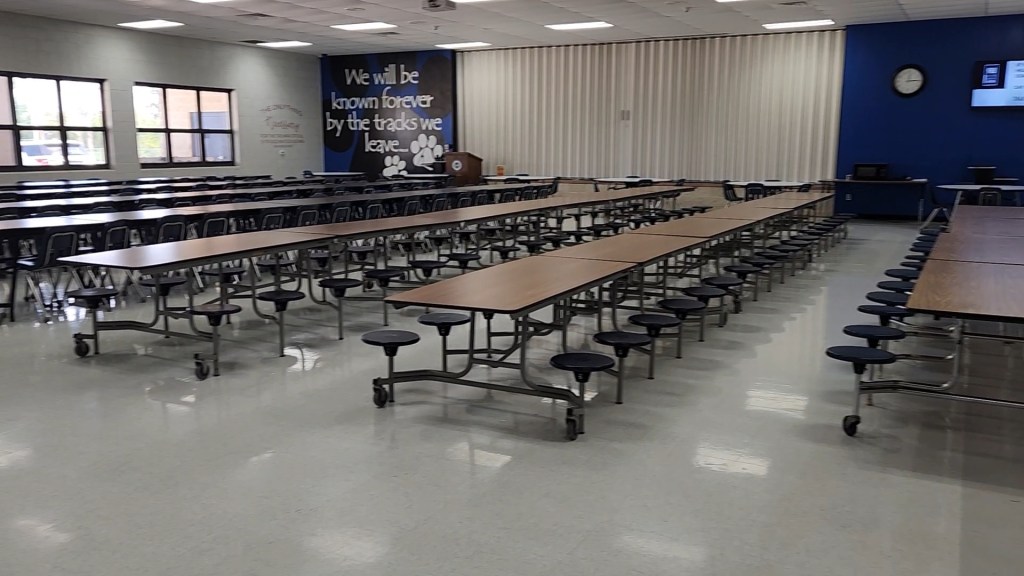
These are much, much bigger areas, much longer search times, and many more hides than most teams have encountered. And there are no limits on how high the hides can be, or how inaccessible, or how close together. This generally means lots of complexity.
The Judge’s Guidelines state: this level is intended to showcase the team’s teamwork.
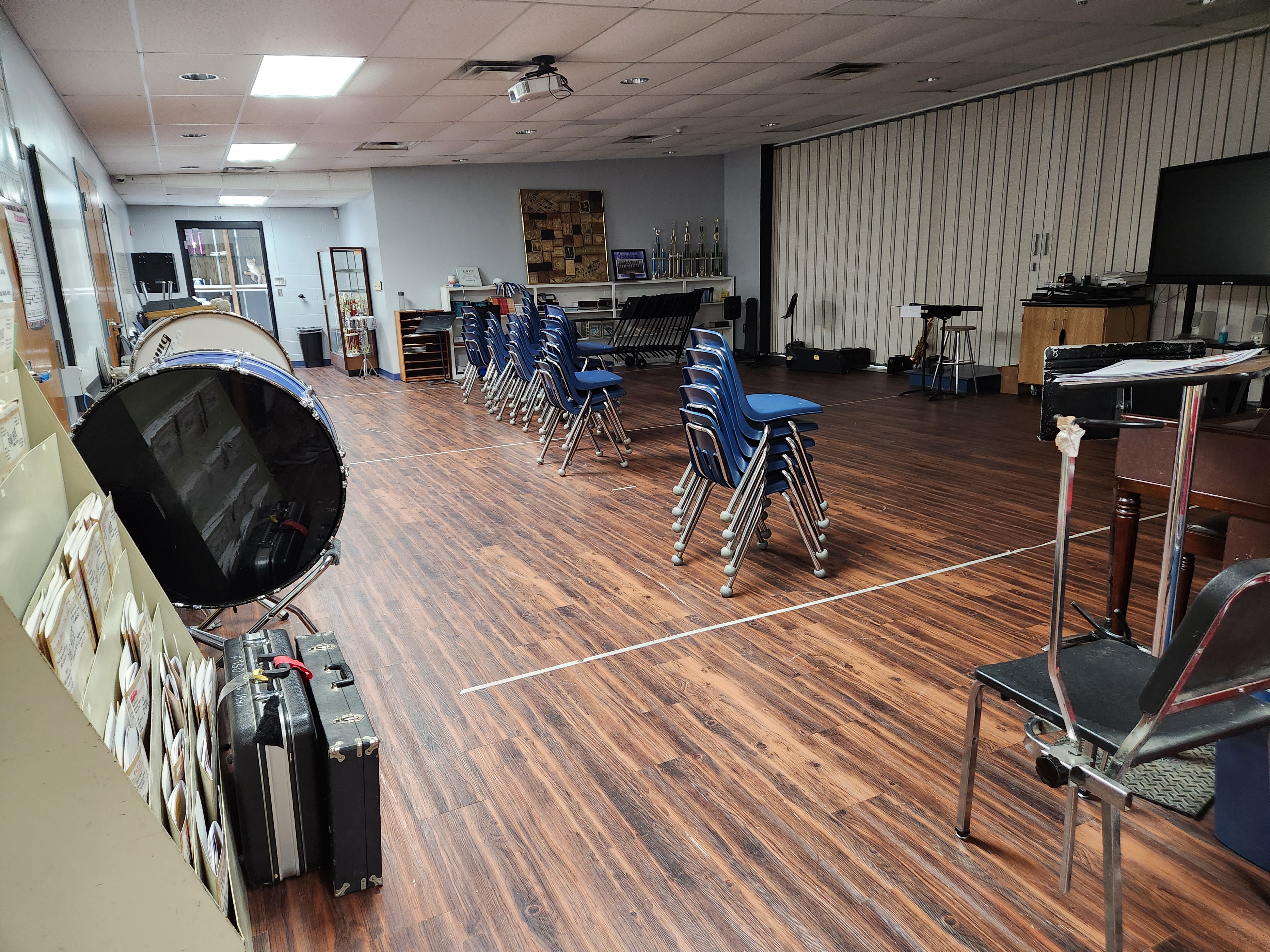
In order to enter Detective, a dog must have only one element title at the Masters level. That means three passed searches in container, buried, interior or exterior. Which in no way prepares you for Detective.
I entered Astra right after she got her first Master title, and we got through the ten required passes in Detective after what seemed like a long struggle. She was actually the first Lagotto to get the title (yay!) but this was not through any finesse on my part.
The AKC program was still fairly new at the time, and there wasn’t a lot of expertise I could tap into. So many of those searches, dear friends, were not pretty.
We struggled with cluttered areas—Astra would get overwhelmed and not be able to search for the target odor. Astra also struggled with noise sensitivies, we failed quite a few searches because there was a weird noise/gunshot in the distance and she panicked. (In her defense, she was not properly socialized as a pup—I got her when she was 6 years old and she had spent a lot of time in kennels).
I often had problems remembering hides, and it took me forever to find a timer that I could work with—I finally ended up using my phone.
Most of all, we struggled especially with leaving one hide behind, and most of the time I failed to figure out why.
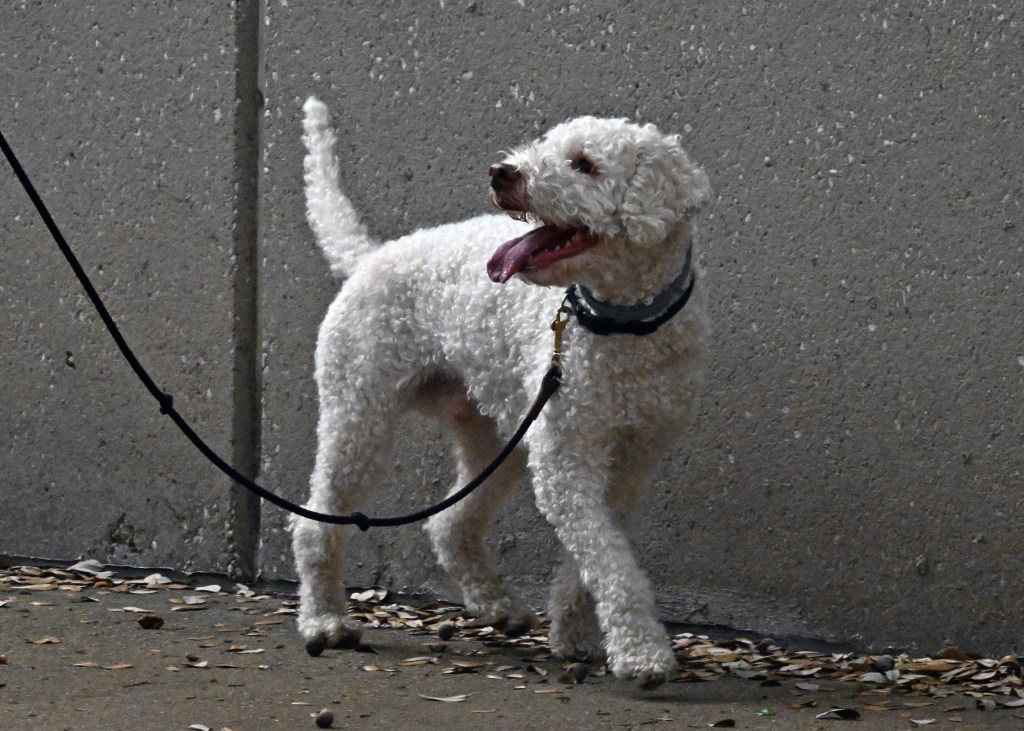
I vowed to do better with Yeti, and I decided not to enter him right after he was eligible.
Yeti has the advantages of being a better socialized dog, and in general of being gifted with a bolder temperament. I have learned to use a timer, and learned techniques for counting and remembering hides. But that still leaves quite a few major challenges.
I have also learned from judging Detective level searches, I have learned from watching Detective searches, I have learned from teaching and I have learned quite a bit from talking to my fellow judges.
Can I use what I have learned to help Yeti through these searches?
My experience with Detective class students has shown me that most people have problems with clearing areas with converging hides, and especially if one or more of those hides are high or inaccessible.
As sport handlers, we have less experience with reading our dogs on the trickier hides, and in a timed search, we tend to rush through areas. I have seen this again and again in Detective searches: the dog is searching, gets some clues about a high or inaccessible hide—they start to work it, perhaps a bit tentatively, because there is not a lot of odor, when they catch a stronger scent plume that leads to an accessible hide. They turn away to work that hide, and then, either they forget about the inaccessible hide or the handler, not having recognized that the dog was working an inaccessible hide first, will pull the dog away.
The handler assumes that they got all the hides in that room or area, or they intend to go back to that area and then forget or run out of time.
I want to work on really clearing areas with Yeti.
How? You might ask. I am not sure yet. But an important part involves dividing an area into chunks, and then clearing those systematically. It sounds easy, but it is going to take a lot of experimentation on my part.
It requires Yeti to understand that no matter how tempting or easy a hide is down the hall, I would like him to check everything right in front of us first, and find THOSE hides, even if they are difficult. This will require a better concept of teamwork than we currently have, and it might be that we won’t be able to do it.
But I would like to try, and perhaps in the trying we will discover a better way.
Want to get these posts delivered to your email? Put your email in the black subscribe box on the right.

 Sniffing Around Scent Work
Leave a reply to Juniper Cancel reply