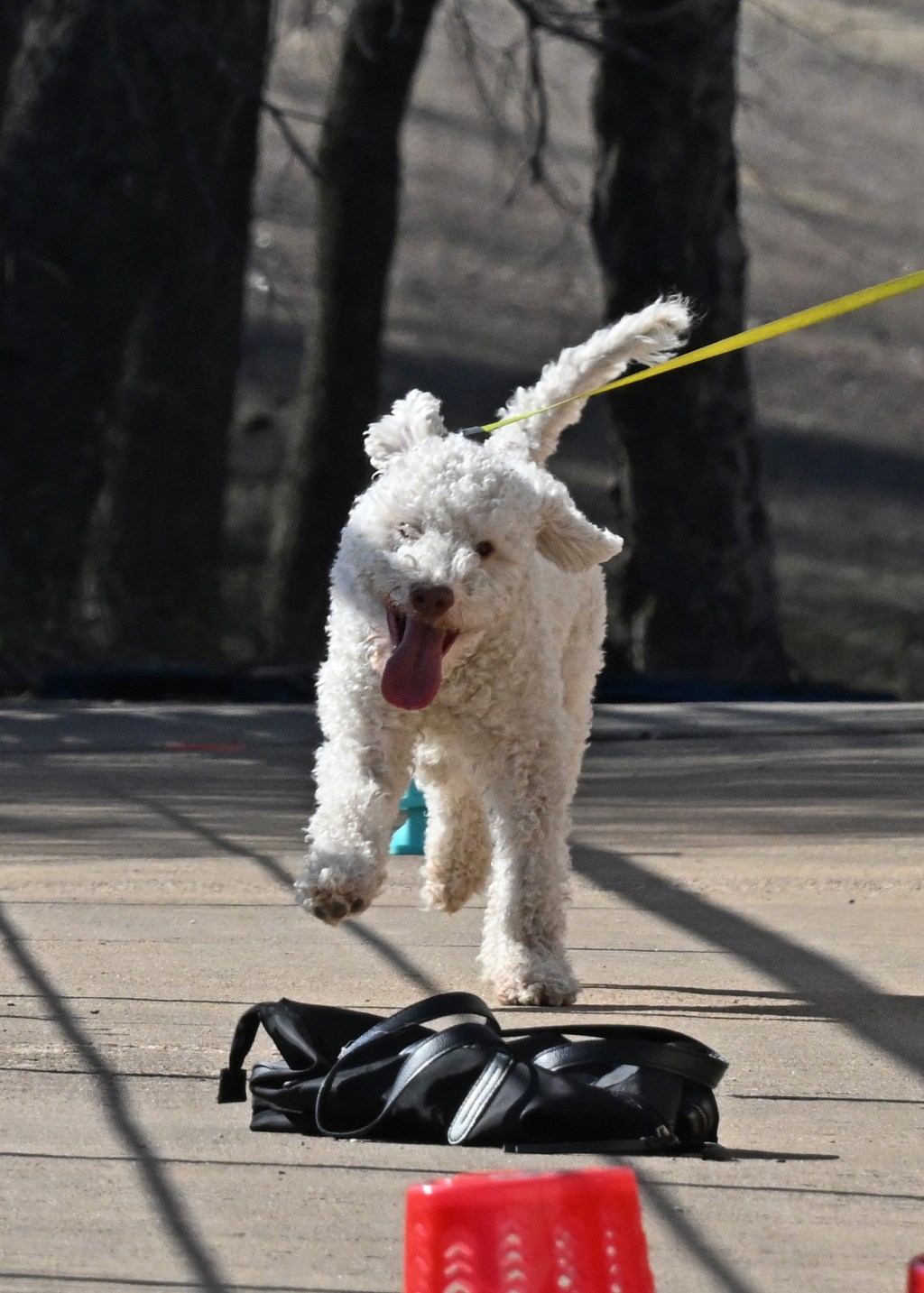
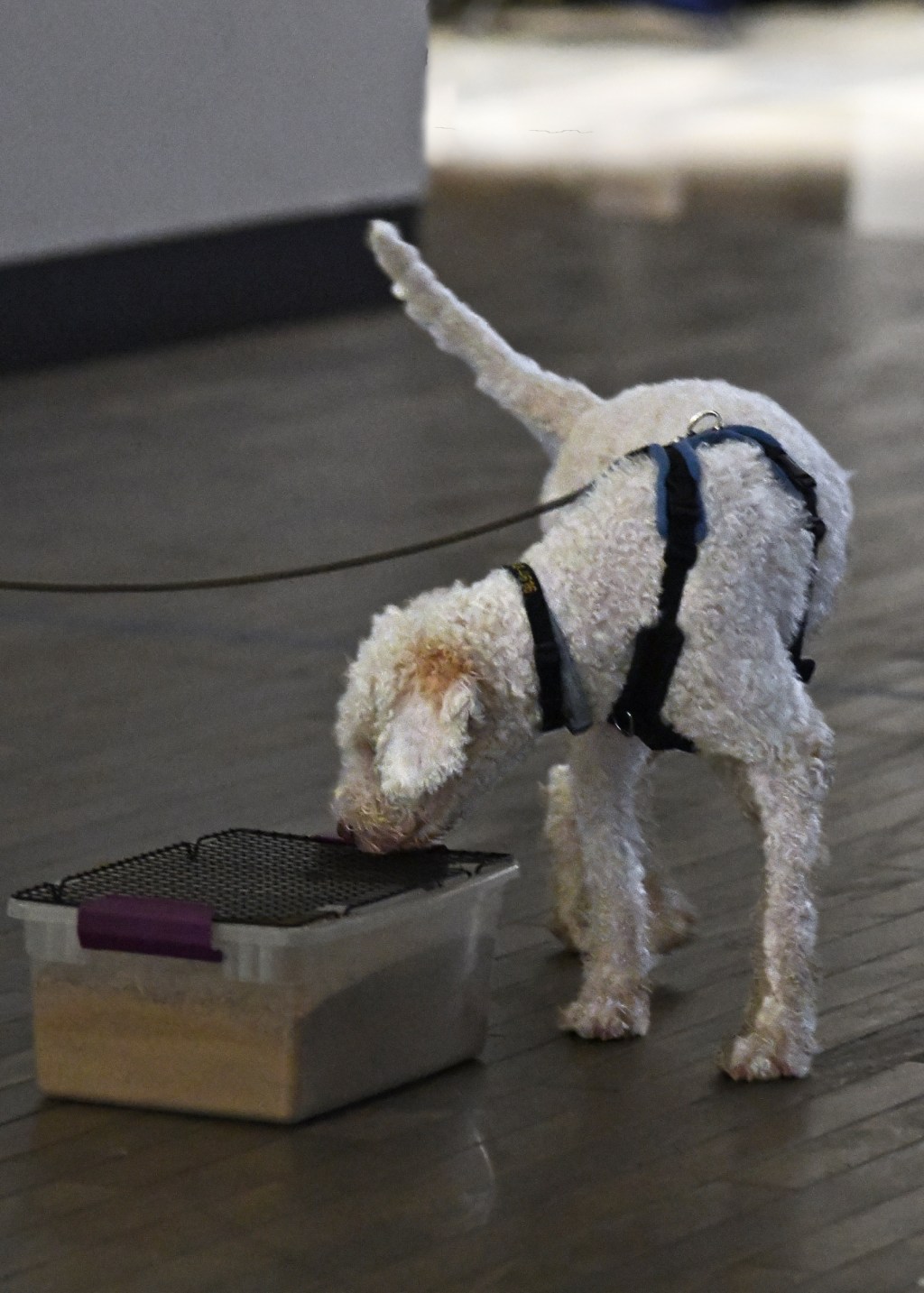
Last week I had a friend set up a containers search for Yeti: 15 plastic containers with 3 hides, 4 food distractions and two toy distractions (in the containers). We have been doing a lot of container work, and I was pretty sure that Yeti would get these hides quickly, and I could relax a bit, assured that he was ready for the upcoming competition we had entered.
But, alas, this training session would dash my hopes and shake my confidence. Yeti struggled to get one hide, and then alerted on a food distraction (fresh cooked chicken). We reset the containers and he alerted again on a food distraction (cheese this time).
Just two weeks ago, I had been working Yeti on a group of more difficult containers (backpacks, metal tins and plastic containers), with success. We had run multiple times with different number of hides, and different distractions in the containers, ranging from cooked bacon to bread to multiple tennis balls and bully sticks. We had even done runs where there were no hides, just distractions in the containers. He had searched confidently and thoroughly and had made very few errors in those sessions. The plastic containers should be easier for him.
What on earth had happened?
I started running through my mental checklist of potential problems.
I had stopped working Yeti for a week, due to a toe injury. He hadn’t had a lot of exercise during that time either, but he seemed to be coping well. He didn’t seem overly worked up during the search. He looked like he was focused, but he just couldn’t locate the hides. The containers were well ventilated so I knew the odor was accessible.
Then I realized that I had been using NACSW strength odors. The searches that I had done previously with the backpacks, etc. had been AKC strength odors. Aha!
The next day, I set up just five plastic shoeboxes with one food distraction and two NACSW strength odor tins. Yeti was able to find the hides, but it was an obvious struggle for him. He ran back and forth over the containers four or five times before finding each hide and alerting. His normal search behavior is to do a survey of the containers first, then get down to serious detailing of each container before alerting. So this search verified my hypothesis. He was clearly expecting to find a higher odor concentration, and when that wasn’t present, he had to work a lot harder to figure out where source was.
Some people are not aware of the potential problems with different odor concentrations. “Odor is odor” as the saying goes (I hate that saying.)
In fact, Odor is not just odor. This is like saying red is red. In fact, there are a multitude of different shades of red—dozens or maybe hundreds. And odor is similar, it comes in many varied concentrations, and finding and defining “source” can be a very tricky process for dogs, depending on the concentration.
The different trialing organizations have different ways of setting up “source odor” which result in different odor concentrations, and these methods can be found in the rule books.
NACSW
The originators of the sport designated this complicated method for scenting cotton swabs:
Fill the glass jar with cotton swab halves ½ to 2/3 full
Extract a dropper full of one of the target odor essential oils; one odor per jar of cotton swabs.
Drizzle oil on the glass sides around the inside of the 4 oz. jar.
Secure the lid and tumble the swabs around in the jar.
Let swabs sit (‘cook’) for 24-48 hours, then check to determine if more il needs to be added. Repeat process until desired strength is obtained before using.
These instructions drive me crazy for many reasons, but mostly because you cannot determine how much oil or scent is on any given swab.( HOW do you determine if more needs to be added? Our sense of smell is so weak that I find it an unreliable measure.) NACSW further states:
The target odors are difficult to reproduce exactly every time. Proportions may vary in potency due to the quantity of swabs to oil. Therefore, we recommend training with varying quantities of cotton swabs to account for differences in concentration and surface area of available odor.
UKC
UKC’s wording of the prep method is a bit arcane, but it boils down to one drop of oil on one end of the cotton swab (although two ends may be used in a hide if the swab has been aged over 24 hours).
AKC
AKC specifies that two drops of oil are to be placed on the end of the cotton swab. Swabs may be stored in glass jars for unspecified amounts of time.
The other trialing organizations (CPE, USCSS, ASCA etc.) tend to follow the guidelines laid out by NACSW.
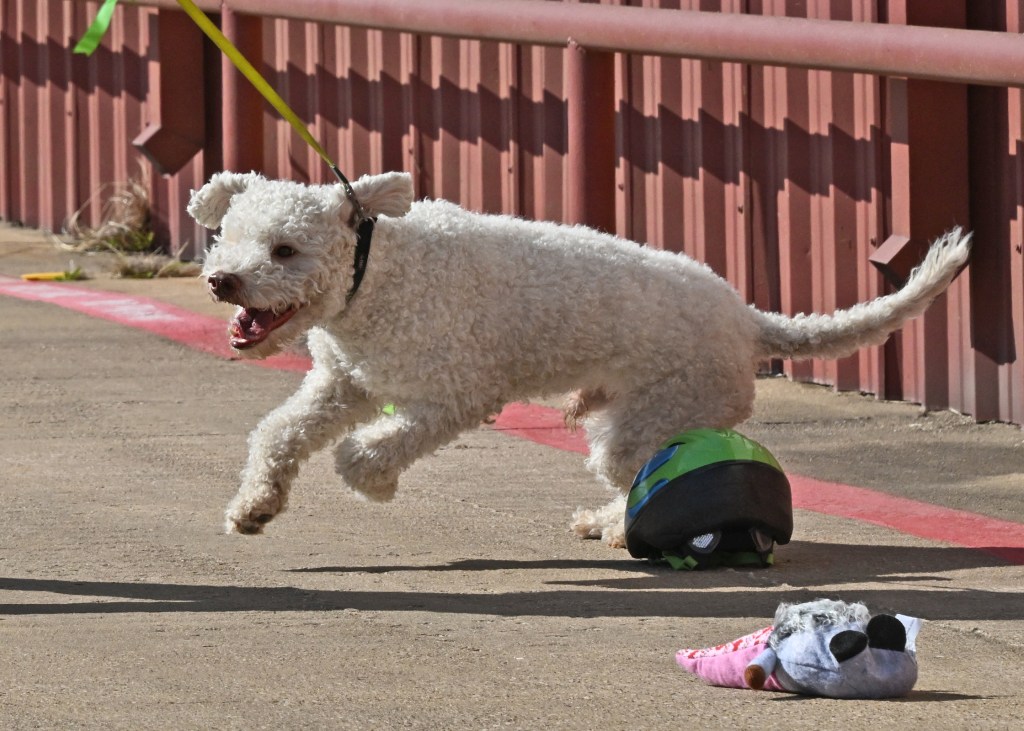
Between the different organizations the amount of odor in a hide can have a huge variation, ranging from very little essential oil to two drops. Essential oils are very volatile, that is, they are very smelly and the difference between “some” oil on a q-tip and two drops of oil on a q-tip is significant.
Dogs’ sense of smell, like people’s eyesight, have a certain amount of variation. Even normally sighted people cannot always agree on what a color is. What I call red might not be what you call red, and it is well known there are several types of color blindness in humans that can cause different perceptions.
I can’t speak to the actual perceptions of odors that dogs have because they can’t tell me in words, but I have seen that some dogs have more sensitive noses than others.
Some dogs will have trouble when moving from one odor concentration to another. In particular, the varying odor concentration may cause the most trouble in containers–the odor is not freely available to the dog, they have to work harder to find the inaccessible source, and the extra complication of concentration impedes their judgement.
Astra had a little trouble when I started training on NACSW odors, but adapted quickly. Riley the chihuahua never seemed to notice the difference. And Yeti has, from the beginning, had difficulty in training and trialing when I changed the odor concentration of the hides This difficulty has usually manifested itself in fringing, (alerting far away from the hide). Because we compete in AKC, NACSW and UKC, I have regularly trained with different concentrations of odor with him, and I had hoped that we had worked through this issue.
Alas, this particular training session has proved that we have not!
Well, back to basics. Fortunately Yeti learns quickly. This week, I started working daily with a small number of plastic containers (four to six), using only NACSW strength odors and including food and toy distractions. After Yeti started finding the hides more quickly and with fewer mistakes, I increased the number of containers and the number of distractions. Yesterday he searched the fifteen containers with five distractors successfully. Fingers crossed he can retain that for the trial! The intricacies and complications of containers go on forever.
Want to get these posts delivered to your email? Click on the HOME button on the left, scroll down to the bottom and put your email in the SUBSCRIBE box.

 Sniffing Around Scent Work
Leave a reply to Debbie Carrera Cancel reply