
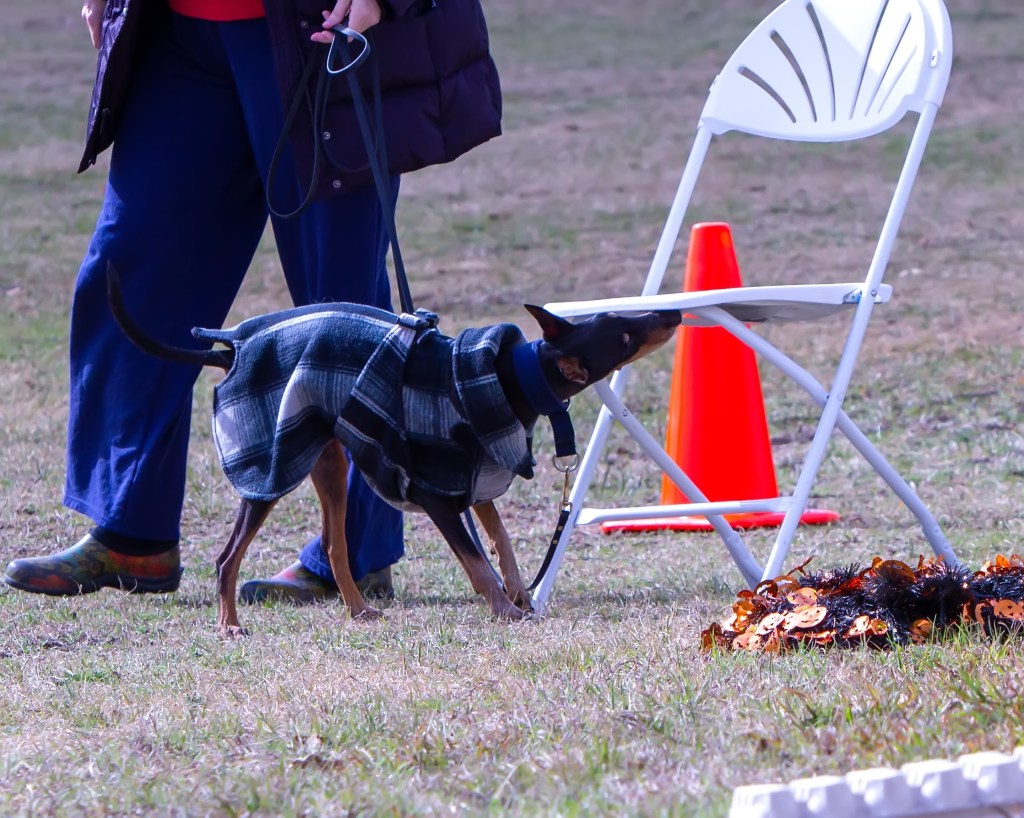
Eleanor Frisbee on a search
Today, for a change of pace, I am publishing a piece by my good friend and
fellow judge, Julie Morton. This topic of when to retire nosework dogs is near
and dear to my heart; it is something that all of us must consider sooner or
later, and Julie has written a lovely sensitive essay. Enjoy!
I recently made the decision to retire my dog from Nosework/Scentwork competition at the age of 12. The decision came after several months of arthritis pain and loss of sight. While I would have preferred to have achieved a set goal or celebrated a last trial event, I’ve come to realize that now is the time.
The sport of Nosework/Scentwork has been an important part of our relationship. When I adopted Ellie from one of the local shelters, she was approximately 5 weeks old and had already been spayed. Between that and some mistakes I made, we have struggled with fear and reactivity throughout her entire life. Teaching Ellie to search for odor has been a great tool in helping us with our day-to-day life.
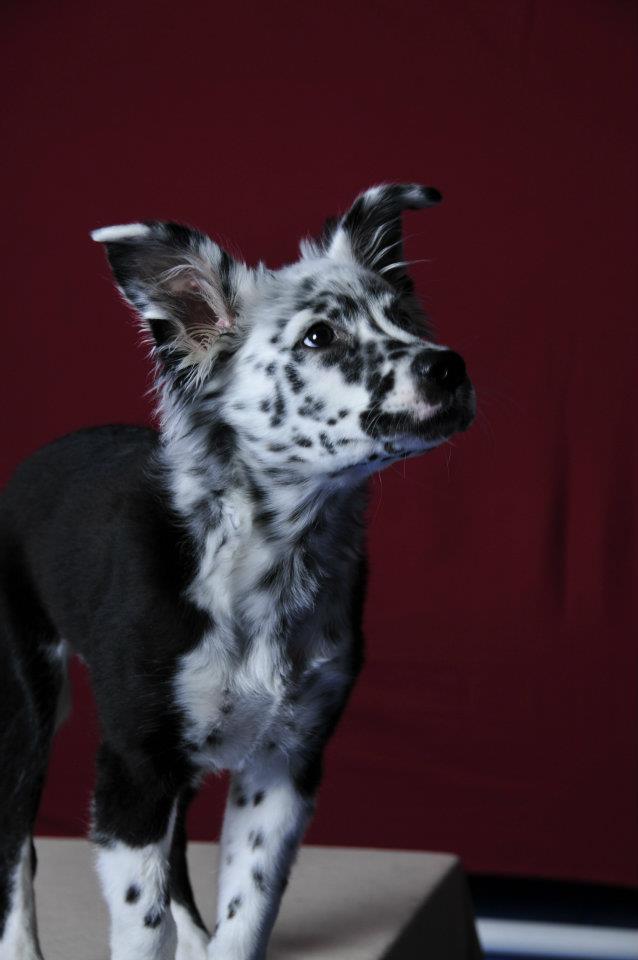
Ellie as a pup
Since starting competition in 2016, this sport has become the focus of our training regime. We played around with other games over the years, but seeking has always been the game we have enjoyed the most. To be successful, I have had to learn to read my dog’s body language, which has bled over into day-to-day life and strengthened our relationship.
The lives and careers of our dogs are so short compared with our own and we tend to cling to the image of the healthy, youthful dog that we started out with. It is hard to accept the changes in an aging dog. As a volunteer, teacher, and now an AKC judge, I have watched teams compete at all ages. Privately, I have alternately cheered and despaired as aging dogs have walked up to the start line. It is often much easier to see the change of a dog’s attitude and capability from the sidelines than from the end of the leash.
Ellie has loved nosework from the beginning, and it’s always been my hope that she would retire from competition before she lost that love. I’ve known this but have also feared that I would not see the changes that might occur in my dog. With that knowledge, I created a mental checklist to help me in my decision.
This game does not require the physicality of other sports, such as agility. But a dog in pain will not be comfortable at a trial. How does my dog look when she walks? Is she limping? How frequently does she need pain pills? How does my dog navigate the space?Is she running into things? How long does she take to recover when she bumps into things?
Mental Health
This game is all about the brain. Working the brain takes as much or more energy than physical exercise. What is my dog’s mood? Is she interested in doing things, and going places? Does she still enjoy practice? Trials? Or is she just trying to please me. Also, what is her stamina level? Does she wear out quickly? If I use her as a demo dog, does it energize or drain her?
Comfort: at a trial or an outing, is there somewhere I can set her up where she will be comfortable?
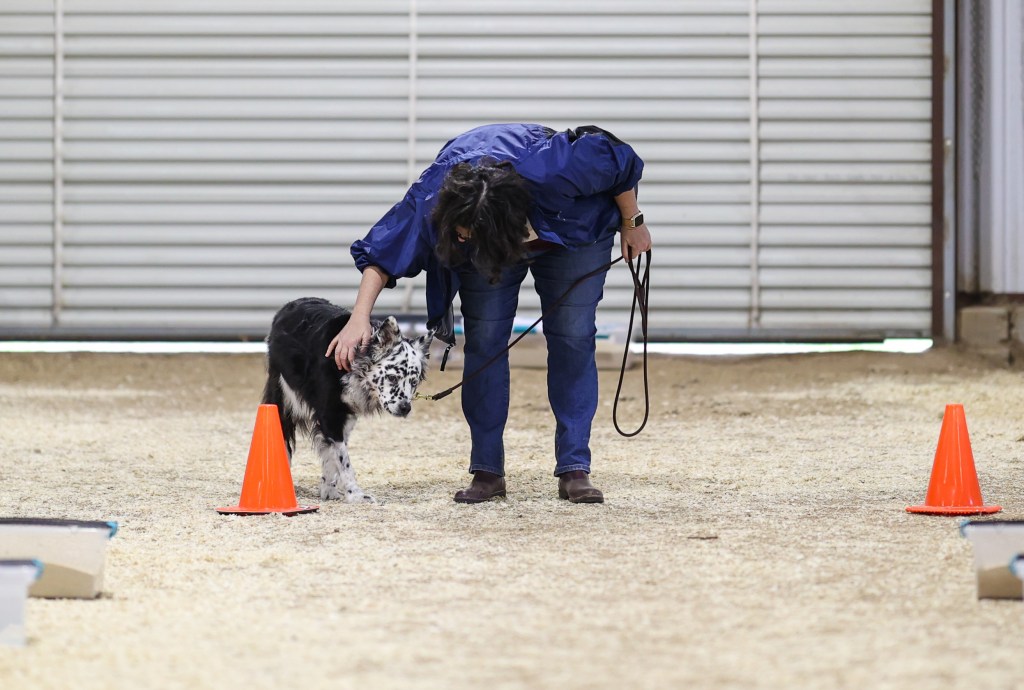
These questions have been going through my head for the last two years as arthritis has reared its ugly head. This past fall, in addition to arthritis, it became apparent that she was having vision problems.
I had entered a few trials that I pulled from as Ellie recovered from a fall off of the bed that had exasperated her arthritis. Finally, I entered an NACSW trial with the idea that I would use it as a way to evaluate if she was interested in retirement or trialing. We went to the trial and I got the sense that she was happy to be out and about. However she was uninterested in the first two searches, a bit excited in the third and loved the fourth.
I had expected this to provide an obvious answer, but I left that trial without answers or major successes. It took me a couple more months of observation and using her as demo dog for me to come to the realization that retirement was the best decision. With this comes the decision that she will be spending more time at home instead of traveling with me to volunteer or judge. It is too easy to grab her when a demo dog isn’t readily available and, while she can absolutely handle a couple of searches, I don’t want to accidentally overwhelm her or cause her pain.
This retirement dashes my dreams of ending with a big celebration after earning an AKC Detective Title (we were 4 short). I know in my heart of hearts that this is the best decision. I believe it is what Ellie wants and I feel proud that we did it our way.
Want to get these posts delivered to your email? Click on the HOME button on the left, scroll down to the bottom and put your email in the SUBSCRIBE box.


 Sniffing Around Scent Work
Leave a reply to Donna Jill Andersen Cancel reply