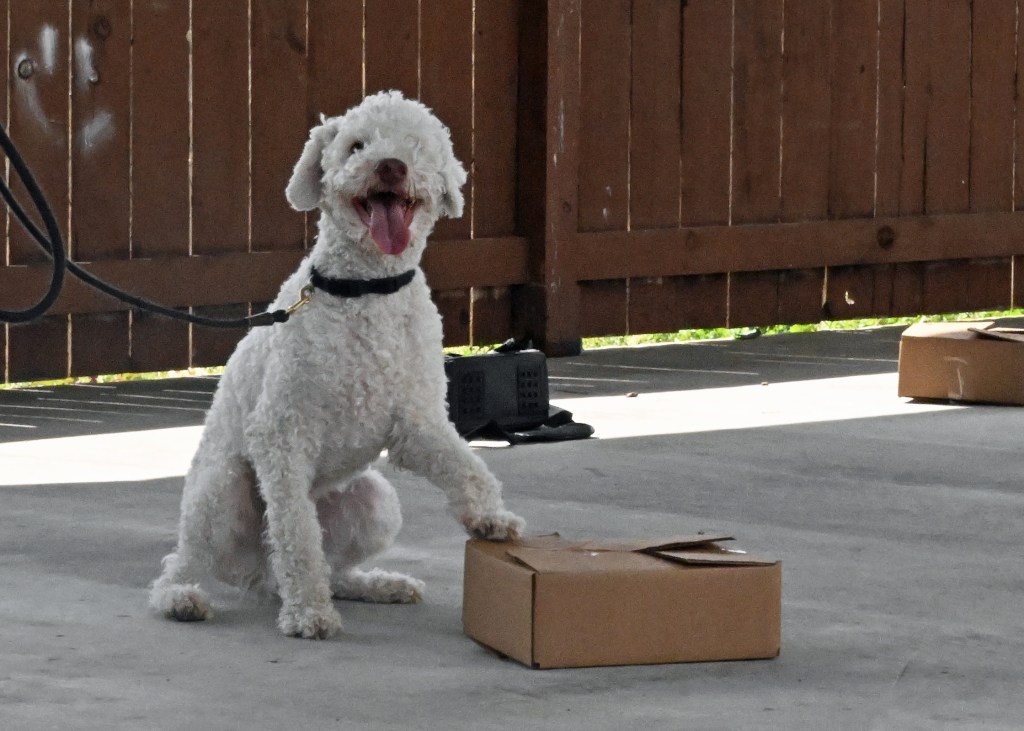
I was talking to a former student of mine at a trial recently.
“How did you do in buried?” I asked.
“Well he did great! He got third place!” and then her expression fell.
“but the judge said that I didn’t call them quickly enough, he said Pookie got them both in ten seconds.”
I could tell she was happy about the placement, but the thought of losing that ten second run had really weighed her down with self doubts and recrimination.
I have several problems with this conversation.
First, I really wish that judges would refrain from making editorial comments about a team’s performance. As a judge, you don’t know what that team’s history is, or anything about them, so in my personal opinion, anything beyond “good job” or “better luck next time” is just uncalled for. I don’t see judges in any other performance sport making comments on a team’s performance, beyond what is called for on the score sheet. (The obvious exception to this is if the competitor has actually asked the judge for feedback, or a specific question, such as “did you see the dog notice that hide that we missed?”)
Second, the judge has access to valuable information that you do not have access to: knowledge of the hide and a panoramic viewpoint. And any comments that he/she makes is colored by that privileged information.
The Panoramic Viewpoint.
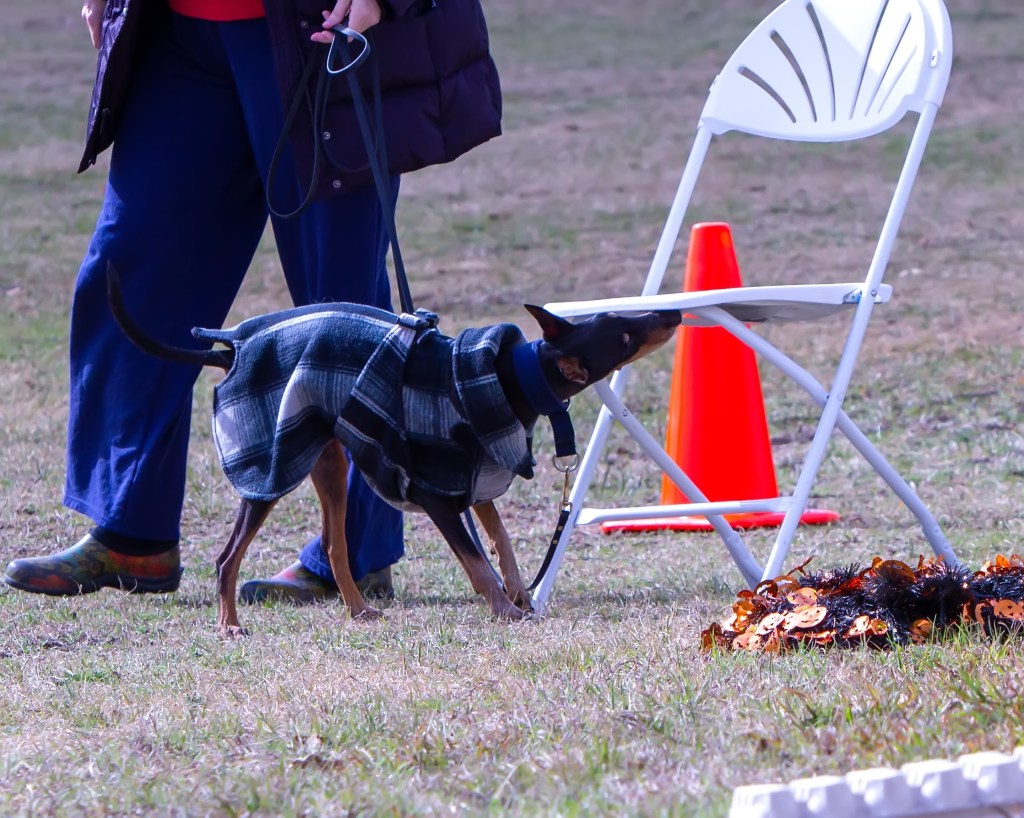
When we are running our dogs, most of the time we are on-leash because of safety considerations. And that means that we are usually close to our dogs when they are working. And when we are close, we are missing valuable information. We often cannot see ALL of the dog’s body language, we are limited to the dog’s head, or just the top of the head, or we are looking at him from above or behind, and we see the tail but not the head…you get the idea.
We also cannot see the patterns that becomes obvious when we can see the bigger picture—the dog triangulating on several different points to gather information about the location of source, the bracketing pattern, the dog following the direction of the wind, how much of the area the dog is covering.
In addition, part of our brain is occupied by trying to watch where we walk, keeping proper tension on the leash and not getting it tangled in anything, trying to keep track of search boundaries, and keeping track of how much time we are using up.
The whole thing is a lot like an impressionist painting. When you are close up, you mostly see the brush strokes. When you are far away, those brush strokes fall into patterns that become beautiful, complete pictures.
And, as I wrote in my last post (https://sniffingaroundscentwork.com/2024/03/27/why-we-are-all-so-stupid-at-trials/), our trial stress further limits the amount of information we can take in and process.
The Placement of the Hide
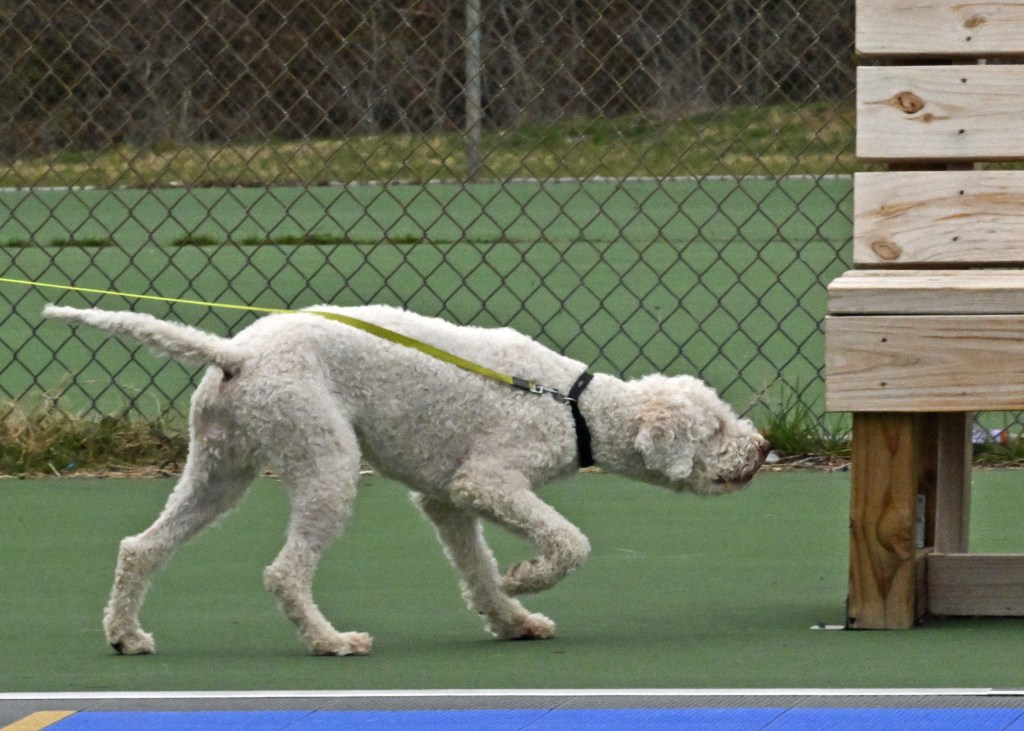
The second piece of information the judge possesses is (obviously) where the hide is. This gives them the power to not only see the patterns of your dog searching, but also to make sense of those patterns. The judge can see that twitch of your dog’s head to the side, is not a random movement, but is in fact, the dog catching some odor. The judge can see the triangulation movements your dog is making. The judge can see all of your dog’s body language, from head to tail, and his reaction to your movements.
The judge can easily see the patterns flow, and the pieces fall into place. Everything is obvious to the judge, and in their omniscience, the judge often forgets that the handler does not have access to all of that information. I sit on both sides of the competitor/judge boundary, and even I sometimes forget.
“Why isn’t she taking the dog over to that corner area?!! They have searched that other wall three times” I might think to myself while judging. And then a minute later, I find myself remembering two trials ago, when Yeti searched EVERY box except the hot one, TWICE, and I didn’t realize it (major facepalm moment).
That conversation I had with my ex-student? I tried to reassure her that it wasn’t her fault that she didn’t get her run in ten seconds the way the judge told her. She didn’t have all the information, and she did just fine with her dog.
As Holly Bushard once said “Holding the clipboard makes you smart. Holding the leash makes you stupid.”
Want to get these posts delivered to your email? Click on the Home button on the left, scroll down to the bottom and put your email in
the SUBSCRIBE box.
Related Posts:


 Sniffing Around Scent Work
Leave a reply to Lynne B Cancel reply