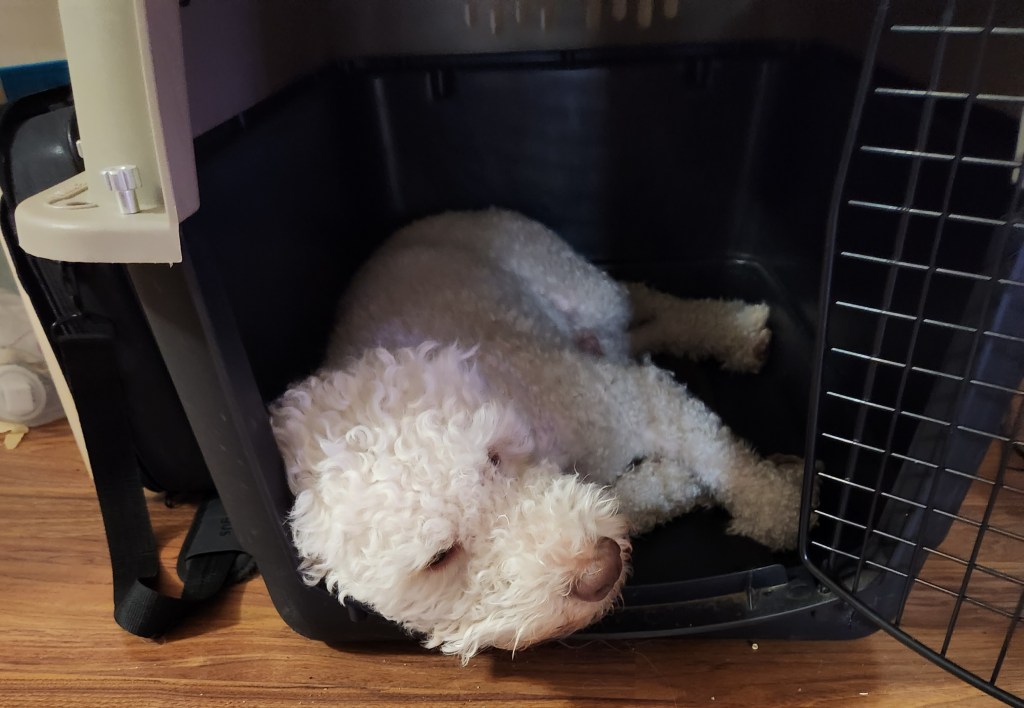
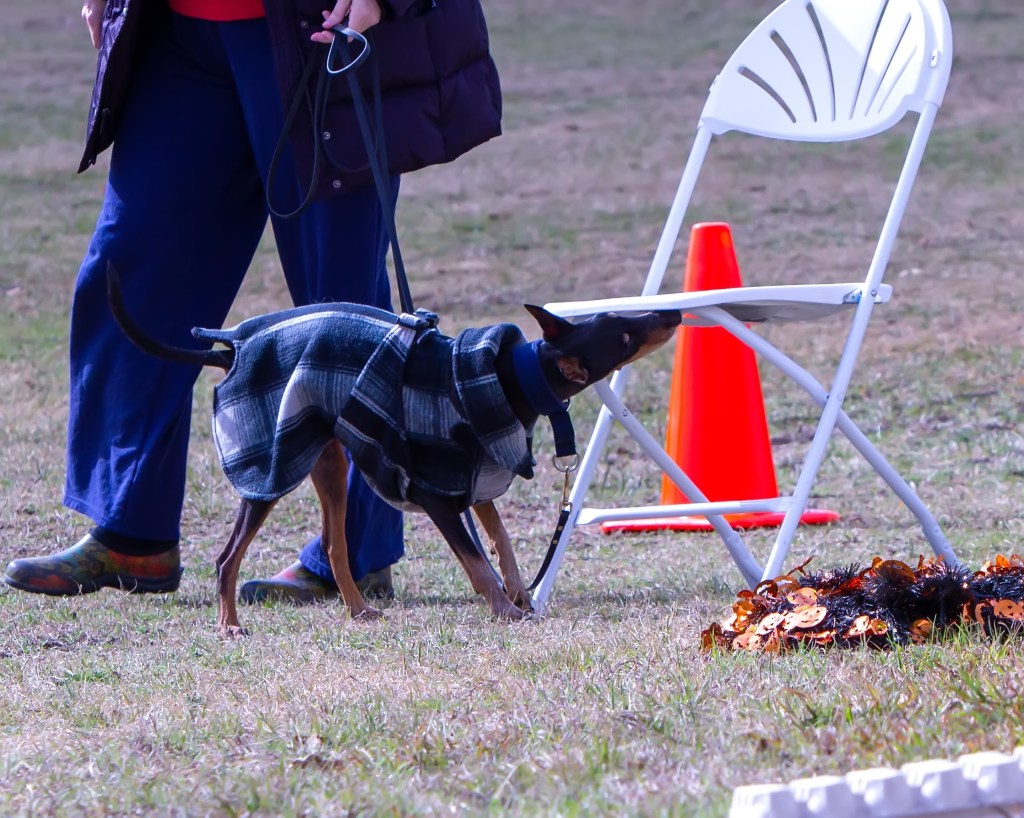
Scenario one: I am in class, watching a little terrier work. It’s an two-hide search, and the hides are in easy places, one under a chair, the other under step stool. This is a bright dog and he should make quick work of it, in but I see him moving slowly around the room, looking unengaged, and occasionally sniffing the floor. He finally trots over to the chair hide, sniffs and slowly gives his sit indication, and gets his cookie for a reward, and then dawdles around for another two full minutes before alerting on the stool hide. The handler breathes a sigh of relief, after handing him his last cookie, exclaiming, “wow, you sure took your time on that, buddy!”
Scenario two: I am at a trial, chatting with another handler between runs.
“Well I just don’t know how Snooky is going to do in her classes this weekend….she was on fire last fall, really loving the searches, but after Thanksgiving, she just seemed to go off nosework for some reason. I set hides for her around the house and in the training building, and she just shuts down and does not want to work. I don’t know what is going on with her.”
What do these two scenarios have in common? Disengaged dogs,lackluster performances, and I suspect, boredom.
Boredom is a tricky thing to diagnose in a dog, because it is a psychological state, and the dogs cannot tell us in words that they are bored, we have to infer it from their behavior. One of the definitions of boredom is “wearied by dullness or sameness.” But boredom can also look very much like a lack of confidence or frustration or even the symptoms of a physical illness.
So how can we tell?
It is a judgement call to be sure. To me, the hallmarks are a dog whose performance has previously been competent and/or joyful, and has gone downhill. The dog does not seem to be enjoying the work.
Of course, you should rule out other things before you assume boredom is the cause, including training issues (have they really learned the task?),physical injury or illness.
What causes boredom? I think the most common causes are:
- Not enough variation in hides
- Too many drills
- No variation in rewards
Hides
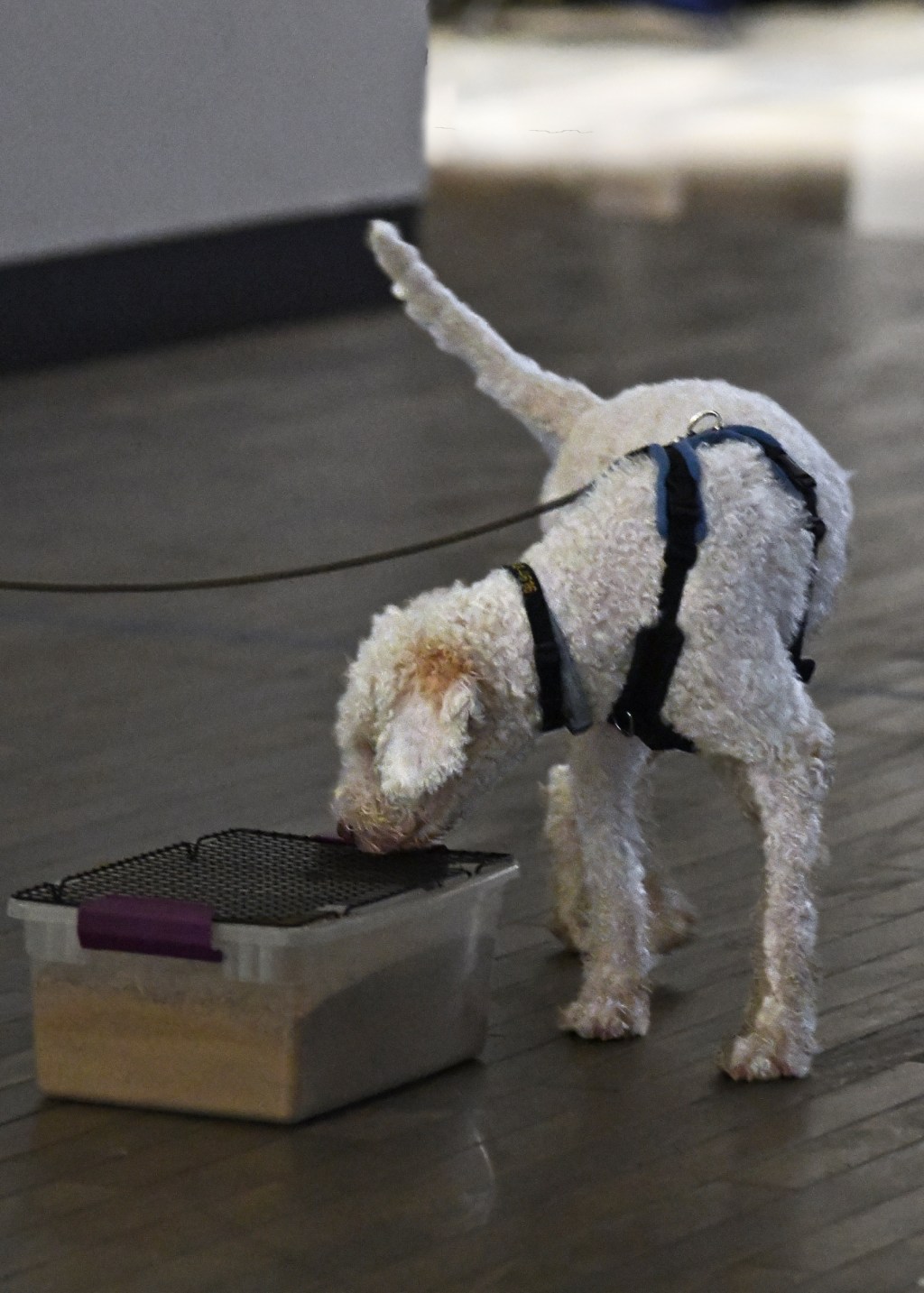
All of us have patterns in where we put hides. I guarantee that your dog knows this better than you do. Your dog also knows exactly what behaviors you do before you put out a hide, and has intimate knowledge of the airflow/odor patterns inside your house and yard. So setting hides in your place probably has gotten pretty predictable and very boring. For this reason, after my dogs are through the imprinting stage, and are started on a final indication, I try to minimize using my home for interiors and exterior training.
Sometimes I just can’t get out for whatever reason, and then I will set hides in my place, but I keep a log of places I have used for hides, and try not repeat those locations if at all avoidable. My dogs have very long memories for hide locations, and I have seen Yeti searching places that I used once six months ago.
Drills
There are some dogs who do not like repetitive drills. These are usually very bright dogs who just don’t want to work the same problems over and over. My Lagottos are the one who taught me that yes, you really do need to quit after one GOOD repetition. Particularly on container runs, if my dog has run the container set up and gotten it right, and I insist doing more repetitions, they are going to make it more interesting by throwing behaviors, falsing on random things, and generally acting out. This is not because they don’t understand the hides or what I want. It is because they are bored. This is hard to do, after you have spent time planning, and perhaps driving to a location to train, and preparing containers and setting them out. All for one thirty second run? Yes. It is a rule my dogs hold me to.
Rewards
When was the last time you changed up your rewards? This is another area where humans love their habits. There is a good chance that you are giving your dog the same reward treats that you gave him/her last year, and the year before that. There is also a very good chance that you are giving only one or two treats per hide. How quickly we fall into this pattern! We are often taught to give only one cookie per repetition, when we are working on shaping exercises, and this is a solid time saving strategy at trials, BUT… like us, most dogs love a pleasant surprise. And if your dog is plodding through the hides, changing up the reward he is getting will probably brighten his performance.
You can change up the reward in a number of different ways. Most of us already have the high value, very special treats that we save for just for nosework. But even high value treats will become boring over time. I am sure your dog loves many different types of food. On occasion, I will cook up a little bacon just so I can reward containers with an extra tempting pleasure food.
Also, most people do not reward enough. And if they reward more than one treat, they tend to give them all at once in a big handful so that the dog gobbles them and they are gone in two seconds. Dogs respond to being rewarded for a longer amount of time, so giving fifteen or twenty treats ONE at a time really makes them perk up and take notice. Instead of a two second treat, they are getting treats for thirty seconds or more. Wahoo!!! Humans are astonishingly bad at this (honestly, why are we SO IMPATIENT with rewards?) and when I work with my students on raising motivation I count the treats for them as they hand them out and don’t let them stop before they have handed out at least fifteen. You usually see the dog’s eyes get big around treat number twelve.
The other way you can spice up your food reward is in the delivery. Handing your dog a cookie is all very well and good, but throwing that cookie across the floor and letting your dog chase it adds extra excitement. So does tossing the cookie in the air and letting your dog catch it. And offering your dog a small container of cat food and letting them eat the WHOLE THING is something most dogs really love. There is something about getting to eat ALL of anything that is, well, special.
And of course, there are toy rewards, if your dog likes toys. Most nosework trainers don’t use toys because they are time consuming and awkward to use during competition. But there is nothing wrong with using them during training, to add a bit of excitement and pizzaz to an exercise your dog might be having trouble with. I find intermittent rewarding with the ball will get me an extra quick performance. Toys will send some dogs over the top, but there are ways to cope with that and still get a good performance.
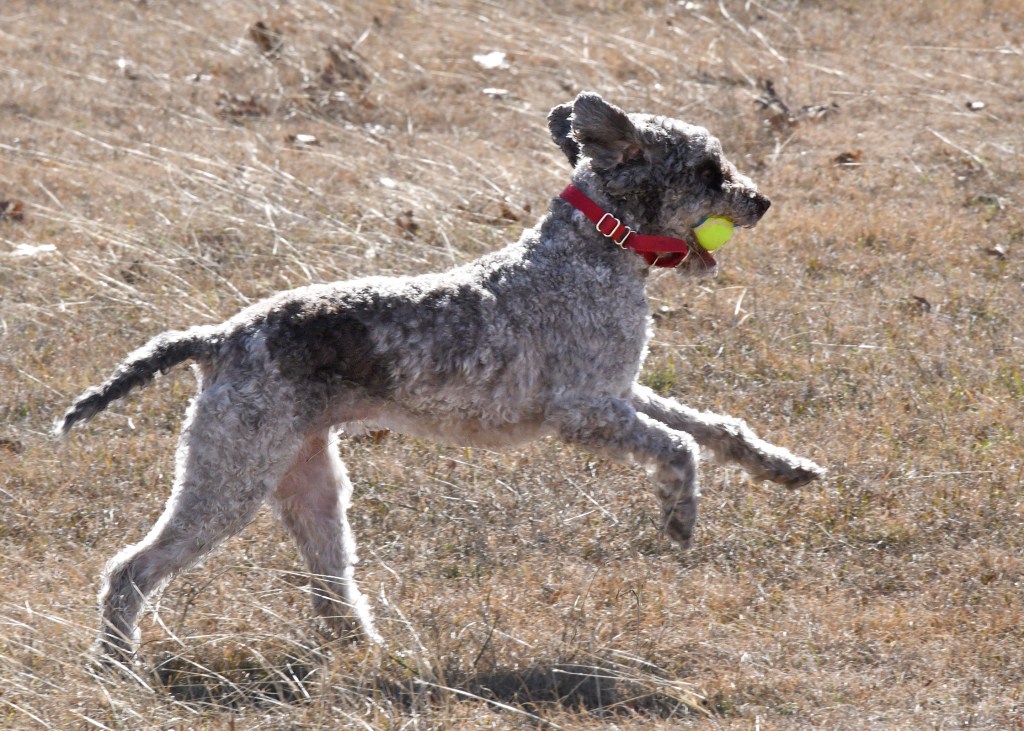
Experiment, observe, learn more about what delights your dog!
Want to get these posts delivered to your email? Click on the Home button on the left, scroll down to the bottom and put your email in the SUBSCRIBE box.


 Sniffing Around Scent Work
Leave a reply to plcpeggy Cancel reply