In my last post, I wrote about how the dogs will naturally search the buried bins. In this post I would like to talk about why.
(Note: if you missed my other posts on the buried element, you can find them here: What You Don’t Understand about the Buried Element and What You Don’t Understand About the Buried Element Part Two. Also Making the Buried Element Easier)
Periodically, I hear people say “well, buried is just another type of container.” While it might look that way to us, (the nose-blind) in reality, the buried element is way more complicated than that.
In containers, the odor is mostly trapped. It escapes through seams and gaps, and depending on the material the container is constructed of, some of it is absorbed. The odor is inaccessible (the dog cannot reach it with his/her nose) and there is much less odor available.
In the buried element, the odor is also inaccessible. Not only can the dogs NOT touch the vessel with their nose, they are also prevented from getting close to it by the substrate that covers it—the sand or water. However, unlike container hides, there is lots of odor available, and it is very active. Very, very active. This is why the dogs usually have to chase it around the room.
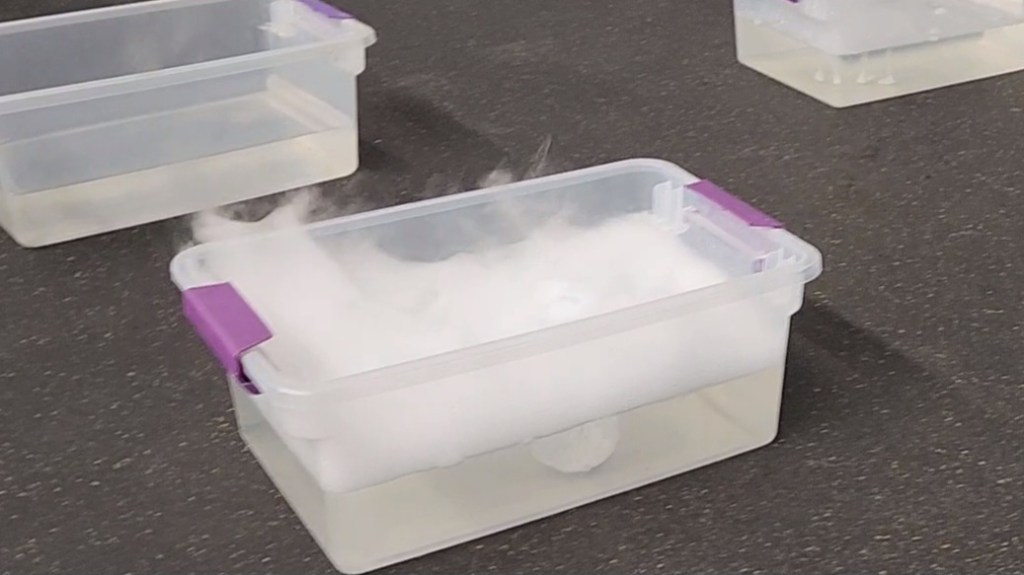
The best way I have found to illustrate this is by using dry ice. I fill up some buried bins with water and drop in a chunk of dry ice. The reaction of the carbon dioxide and water produces that wonderful fog, which gives us a good visual of what the air is doing around the buried container. While this doesn’t exactly replicate what the odor is doing in the water buried hide, it gives us some idea of what the dogs are perceiving when they are working the odor.
I usually do this in my classes around Halloween, because it’s fun and a little spooky. This year I got some good videos.
In this first video, you can see how the “fog” is filling up the container, and then spilling over the edges and onto the floor, where it continues to travel. The fog becomes less visible to us as it moves away from the bin, but if we could see it, we would see it collecting against the walls.
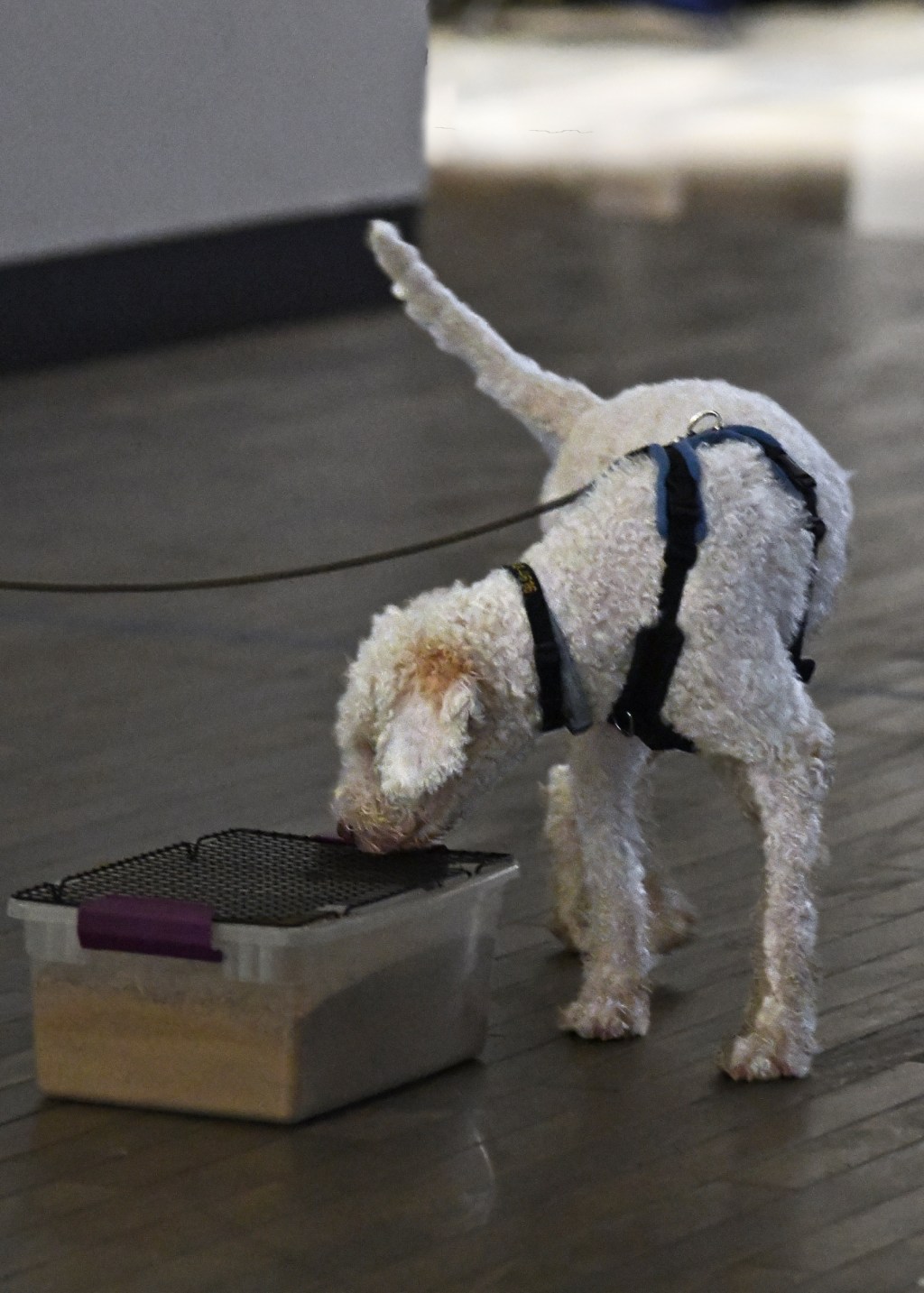
This explains why the dogs work the edge of the bins: that is often where the odor is most accessible to them.
The second video shows the bins with a fan on low blowing on them. This simulates what might happen outside when there is a breeze. You can see how active the air is. What we can’t see is just how far that odor goes. When I work Astra, I almost always let her off leash. On buried hides, I have seen her go thirty feet out before she hits the edge of the cone and comes back to the hide.
The last video shows what happens when someone walks by the bins. Even the slightest disturbance really make the air move and jump. And when the odor moves and jumps, it also clings to the sides of the cold bins. This is why the dogs have to do “comparison shopping” before settling on the bin that contains source, and this is also why the vast majority of “false alerts” occur on the bin next to the hot one.
But What About the Sand???
Ah, I knew you would get around to asking. Yes, you are correct, these demonstrations show what happens with water specifically. Sand should be different.
And it is in some ways. But in many ways it is similar. I don’t have a good way to demonstrate for human eyes, but the dog’s behavior tells me that the odor still comes out on the side of the bin and clings to the edges. And it still causes problems with the dogs finding source vs odor that is just hitting the cold bins.
But with sand, the odor generally needs to be aged a bit before it becomes findable (water hides don’t need to be aged). How long? Difficult to say. Like everything else, it depends on conditions: temperature, humidity, barometric pressure, and the size of the container. A small container, as I wrote about in the Making the Buried Element Easier post, will not need much aging at all, maybe ten minutes at most. A larger container will need more.
And it also depends on the experience of the dog. A very experienced buried dog will usually be able to find the odor in a variety of conditions. An inexperienced dog will struggle with conditions that they have not encountered, such as heat, cold, extreme wind, very wet set vs. very dry sand.
In conclusion, the keys to passing the buried element classes consistently are: train, train, train in as many different conditions as possible, and get out of the way and let your dog search.
Want to get these posts delivered to your email? Click on the Home button on the left, scroll down to the bottom and put your email in the SUBSCRIBE box.



 Sniffing Around Scent Work
Leave a reply to More About the Buried Element – Sniffing Around Scent Work Cancel reply