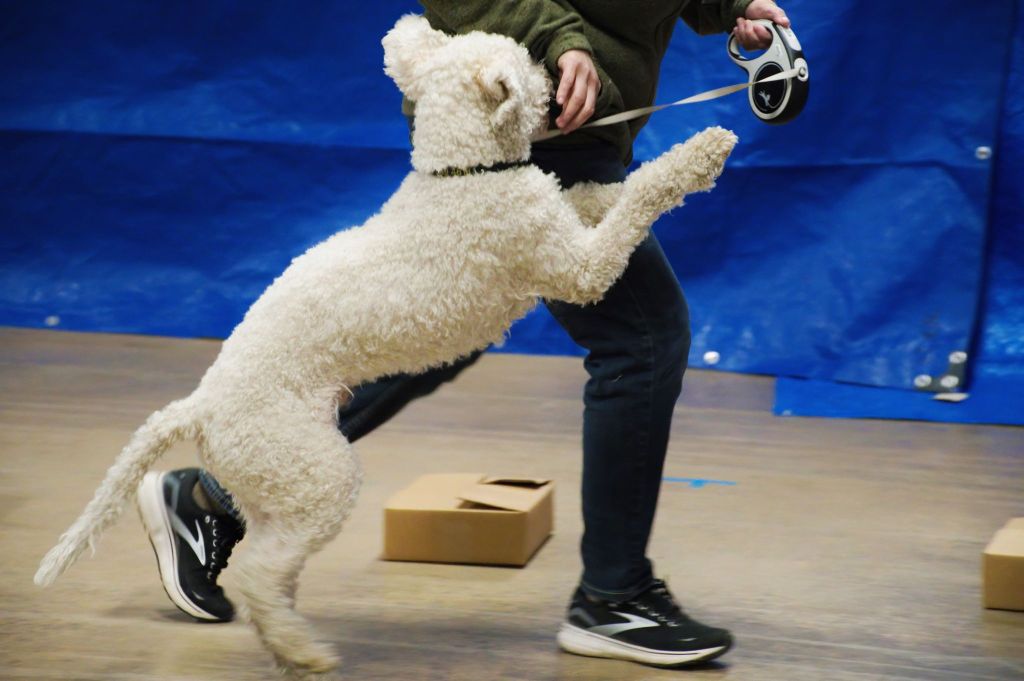
Although we all wish this didn’t happen, there comes a time when our dogs will false alert in a trial. (False alert = alert when there is no target odor present). If we are lucky, this happens early in his career, because the longer you go without a false, the more painful it is when it happens. It generally feels like a betrayal.
We go to great lengths to avoid calling a “false.” There is often a great deal of advice traded at trials about how to avoid calling a false….if you have doubts about the call, walk on and see if he “sticks” the hide, or leaves it …ask him if he is sure…ask him to “show me,”….see if his tail is wagging or still or if his eyebrows have twitched, that is the sure sign of a true alert….
I used to be one of these people who would do anything to avoid calling a false alert, and I have spent a good deal of time saying “let’s come back to that one” to my dogs during trials. But experience and observation have taught me differently.
A typical pattern I see while judging goes something like this: dog false alerts on the first run. The dog doesn’t get rewarded, the handler is sad and disappointed (or angry and disappointed – “you liar!”). In the second run, the handler has lost all trust in the dog, and so, when the dog alerts, they do not believe him and do not call it. They walk away from the hide without rewarding the dog.
However, this time, the dog has alerted on odor. He learned from the last run. But, he wonders, why didn’t he get rewarded? He is puzzled…maybe that odor was not what the handler wanted….so he now wanders around and finds something else to alert on, something that doesn’t have odor on it.
The Handler is unsure of what to do but ends up calling the second (incorrect) alert. Now both dog and handler are confused and the trust, which is the essence of this sport, has been lost.
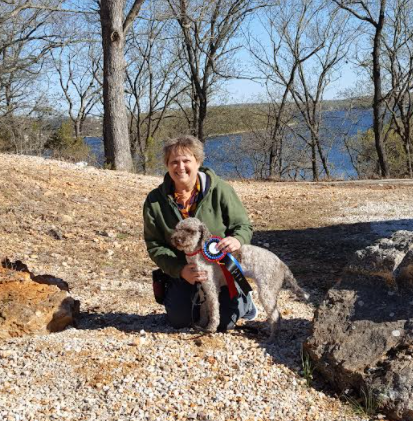
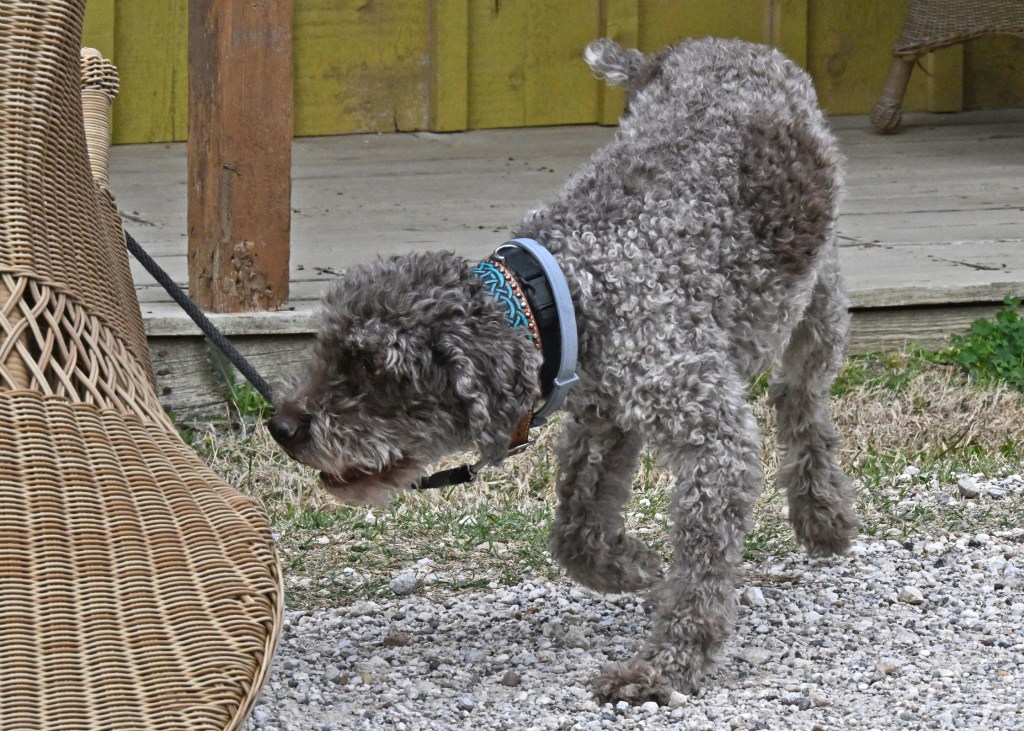
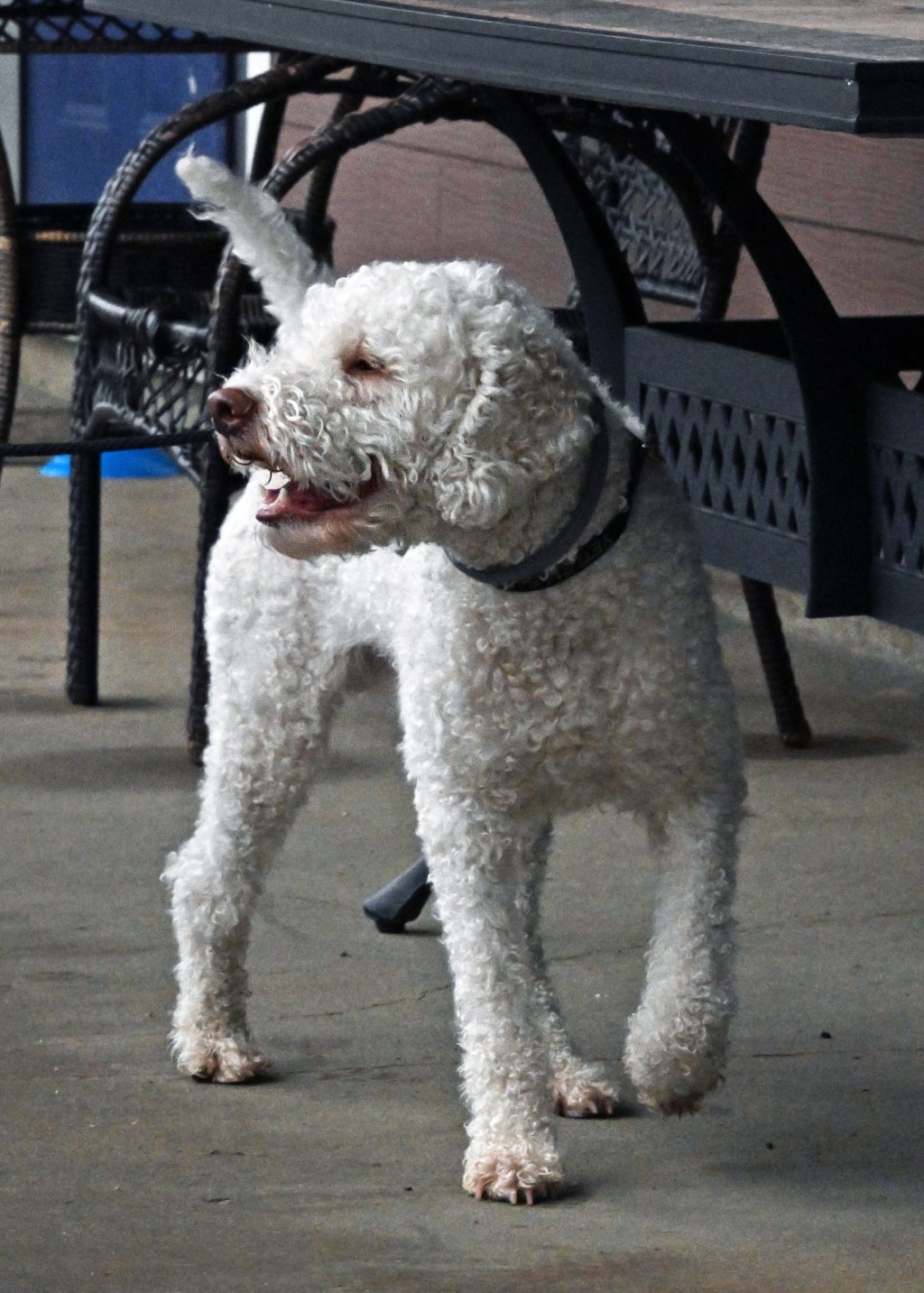
(Oh, the trust! Poor Riley (pictured below, my first nosework dog), could write volumes on this. He suffered from my bad training techniques and lack of knowledge. He taught me how hard it is to get the trust back once you’ve lost it.)
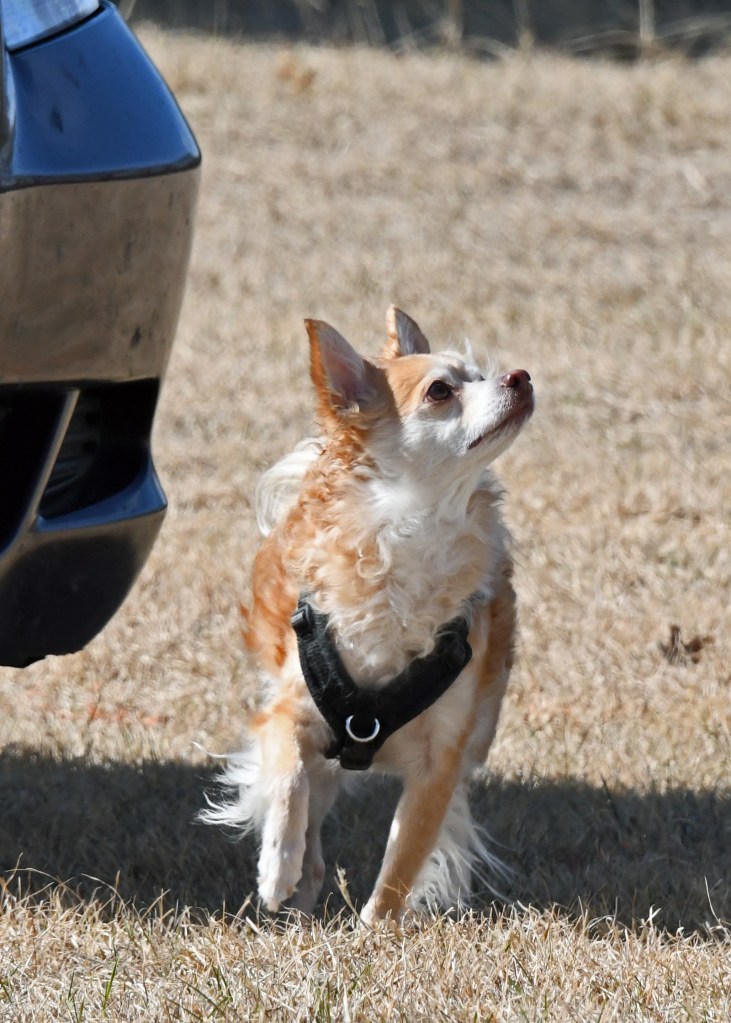
What should you do after your dog false alerts in a trial? Just call the alert next time your dog gives his indication. Even you suspect it is wrong, just call it. Yes, you may lose the qualification. But now the dog has the information that what he did or thought was not correct—it didn’t please you and he didn’t get his cookie. He can and will use that information. If not in this trial, then possibly in the next one. Dogs all learn at different rates.
Because your dog is learning ALL the time, not just in “training sessions.” They are relatively intelligent creatures, who are very socially aware, and who are exceedingly savy about our emotional states. I believe that they know that trials are special social situations, and that they pay attention during them.
Also, in choosing to call the alert, I am telling the dog that:
1. I respect his opinion.
2. In trials, I don’t know where the hide is, I am depending on him to tell me.
Of course, always calling the alert in trials is not a panacea—it is just part of a training strategy that should include an array of methods to help you communicate with your dog, and build the trust between you.
Want to get these posts delivered to your email? Click on the Home button on the left, scroll down to the bottom and put your email in the SUBSCRIBE box.


 Sniffing Around Scent Work
Leave a reply to Why We Are All So Stupid At Trials Part Two – Sniffing Around Scent Work Cancel reply