I was talking with a friend the other day, and we got into a discussion about calling finish on unknown hides. In the upper levels of most of the competition venues you are required to search an area not knowing how many hides there are, and to indicate to the judge when all of the hides have been found (generally by saying the word “finish”). It is a challenge radically different from searching when you know how many hides there are, and in my opinion, this skill is not introduced nearly early enough in most training programs.
There are two philosophies about when exactly to call finish in a search with an unknown number of hides:
1. You want the dog to keep searching actively until YOU have decided that the dog has searched the area thoroughly enough to find all the hides.
2. You want THE DOG to give you some signals that she has found all the hides and is done with the search.
Both of these strategies are valid, and both have advantages and disadvantages.
Strategy One (Dog Searches Until You Say Stop)
The advantage of the first method is that you will get a more thorough search.
Which sounds great, because obviously we need to get ALL the hides in order to pass.
HOWEVER…
You have to keep track of where the dog has searched and how thoroughly, so you can make the call when all of the areas have been adequately searched.
This can be much trickier than it sounds. If the dog has done one round of the search area, does that mean that it’s covered? What if your dog ping pongs around the search area (as mine tend to do)—this makes it REALLY hard to figure out coverage. How complicated is the area? What are the conditions like? How are those condition affecting the search?
All of these things can radically affect HOW the area needs to be covered, and without a lot of experience (PARTICULARLY in trial situations where the venues can be radically different from one trial to the next) it can be very difficult to judge how detailed the search needs to be.
The odor game is not a straightforward one, and, as I had one very experienced judge tell me, sometimes this is just a game about the dog hitting the hide at just the right angle.
Your dog also has to have enough stamina and experience to keep going and not false alert. If you haven’t introduced blank or unproductive searches often enough in your training, or if your dog thinks that the only way to end a search is to give the alert, this strategy may be problematic.
Another potential problem with this plan is that if you do too many searches where you have the dog continue to search after finding the last hide, the dog may look like he is sniffing, but he is just going through the motions to appease you, and is not actually processing anything with his brain (I have heard people refer to this as “offering sniffing behavior”).
This is the equivalent of you typing furiously at your keyboard when your boss passes by your office door….you want to look like you are working hard, but you are actually typing an email to your friend complaining about that meeting yesterday (don’t look so innocent…we have all done this).
Strategy Two (You Wait Until You See Signals from the Dog that He Has Found All the Hides)
The main advantage of the second method (you stop when dog is done) is fewer false alerts. A lot of false alerts happen because the dog is done searching but we pressure him to keep going.
HOWEVER…
The main disadvantage of the second method is that no dog is perfect and therefore, hides will get missed. (Also, you need to know your dog’s “I am all done here” signals pretty well, because under the stress of a trial, we all get a little less observant.)
Missed hides are likely to occur because:
a. Getting ALL the hides is less important to the dog than it is you.
b. There is likely to be a little behavioral drift over time, where the dog gets more impatient and less thorough. This is more likely to happen when the dog is rewarded with a high value reward for blank searches or for giving “I am all done here” signals. You can minimize this with some careful training—not doing too many blank searches or difficult searches, and not rewarding when the dog gives the signal that he is finished searching and he is wrong. And not giving a lot of high value rewards for the “all done here” signal.
c. Like us, dogs make mistakes.
In reality, it is probably best to use both strategies, depending on the situation. You want to sometimes accept the good opinion of your partner, because after all, he IS the one with the incredible nose. BUT also you sometimes want him to keep on searching, even after he thinks he is done, because maybe he missed a corner, or it wouldn’t hurt to go back over the area in a different direction, in case there was an angle he missed. Isn’t this the nature of true partnership? Both parties’ opinions get respected?
And, of course, no matter what you do you are going to make mistakes and miss calls and not pass searches. We are not perfect beings, and our dogs are not perfect beings, and nothing in this world is 100%. Even the professional detection dogs do not get 100% accuracy all the time.
MY EXPERIENCE
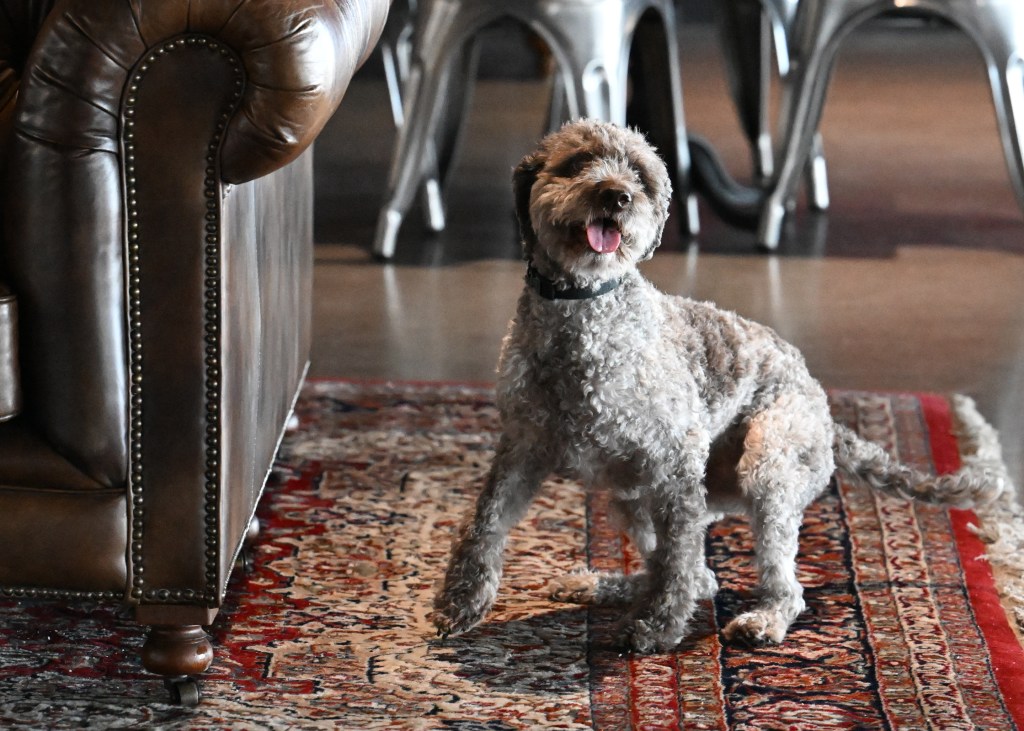
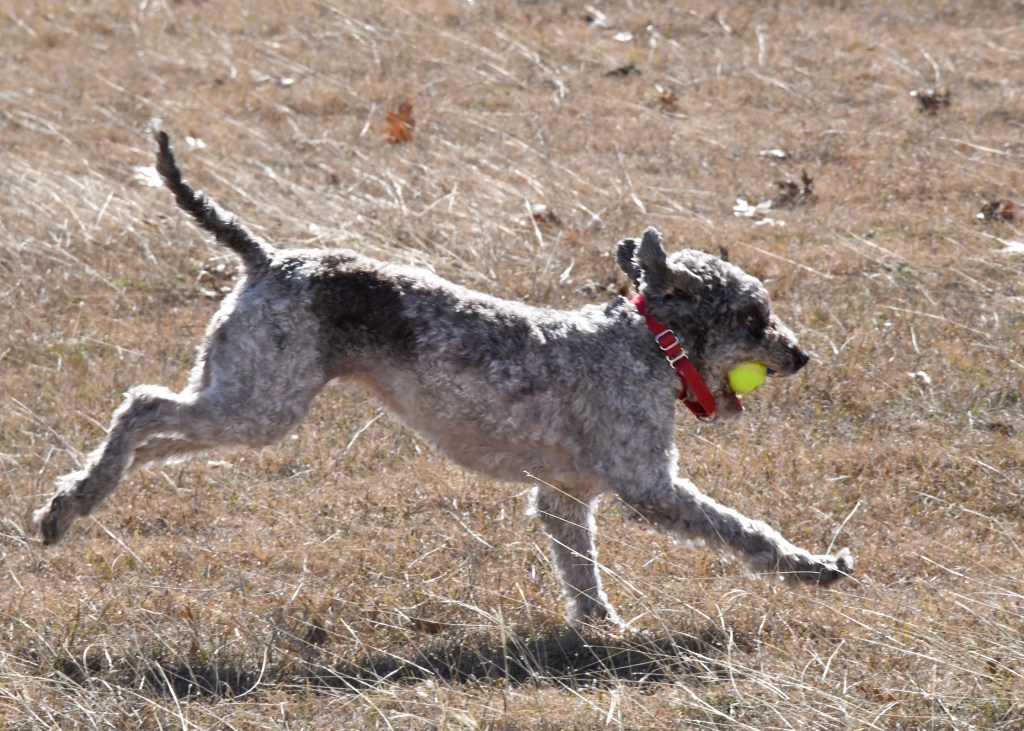
Astra was the first dog that I worked on blank areas and unknown hides in competition. I found that she had a signal that she gave when she had found all the hides: she would bounce and look at me. I reinforced that behavior with her favorite reward, her tennis ball, and eventually, over time, she began missing hides and or just not searching areas before giving me the signal. Unfortunately this happened when we were trying to get through the Masters Interiors level in AKC, and caused me a great deal of frustration and failure.
I had to backtrack in training, stop rewarding with her ball, and encourage her to keep searching, even after all the hides were found. Now she will search pretty much until she drops from exhaustion, but I have a very difficult time knowing when she has found all the hides, and my finish call is often very delayed (causing her a good amount of frustration, I am sure). This is the nature of competition, and of life; we will keep bouncing back and forth between mistakes until we can find the happy middle ground.
Want to get these posts delivered to your email? Click on the Home button on the left, scroll down to the bottom and put your email in the SUBSCRIBE box.


 Sniffing Around Scent Work
Leave a reply to Shaefer Sides Cancel reply