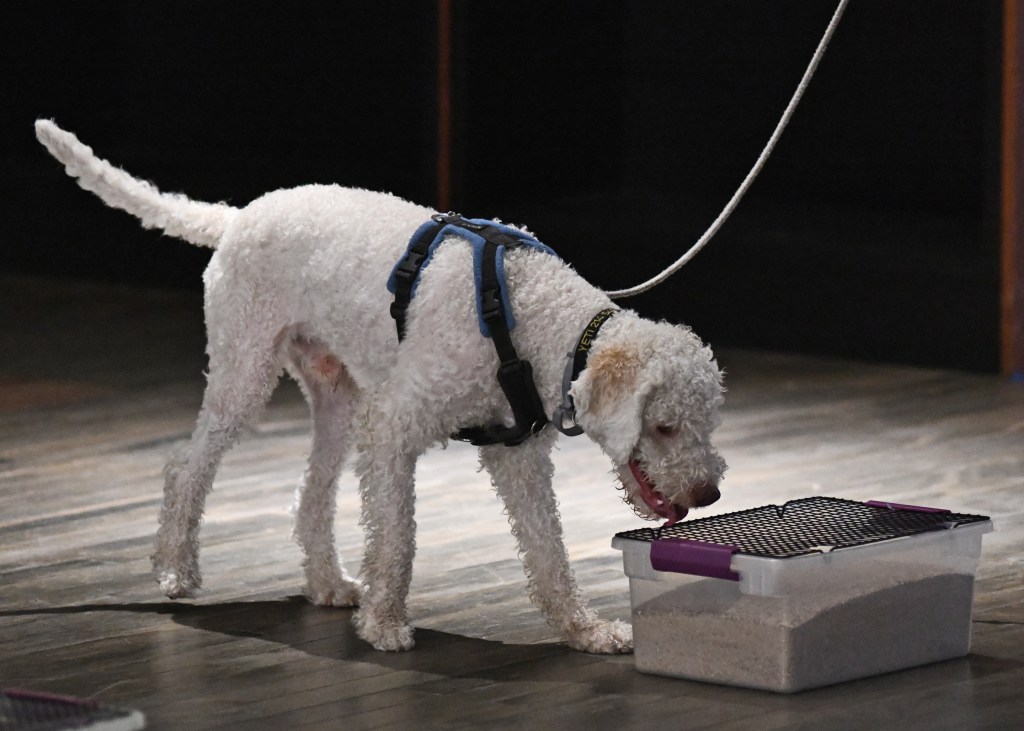
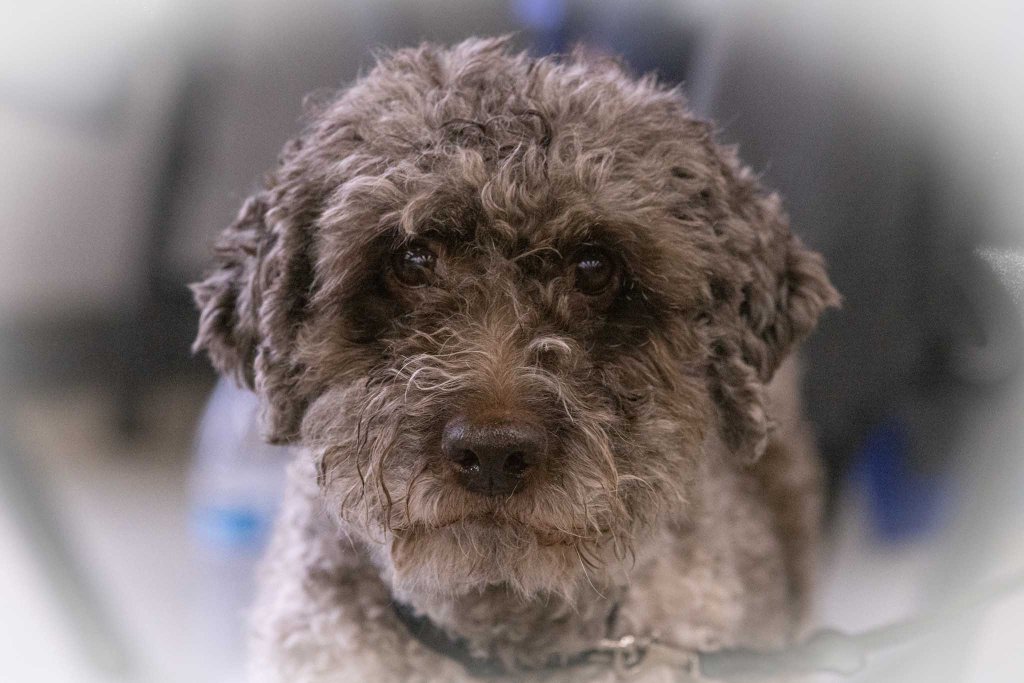
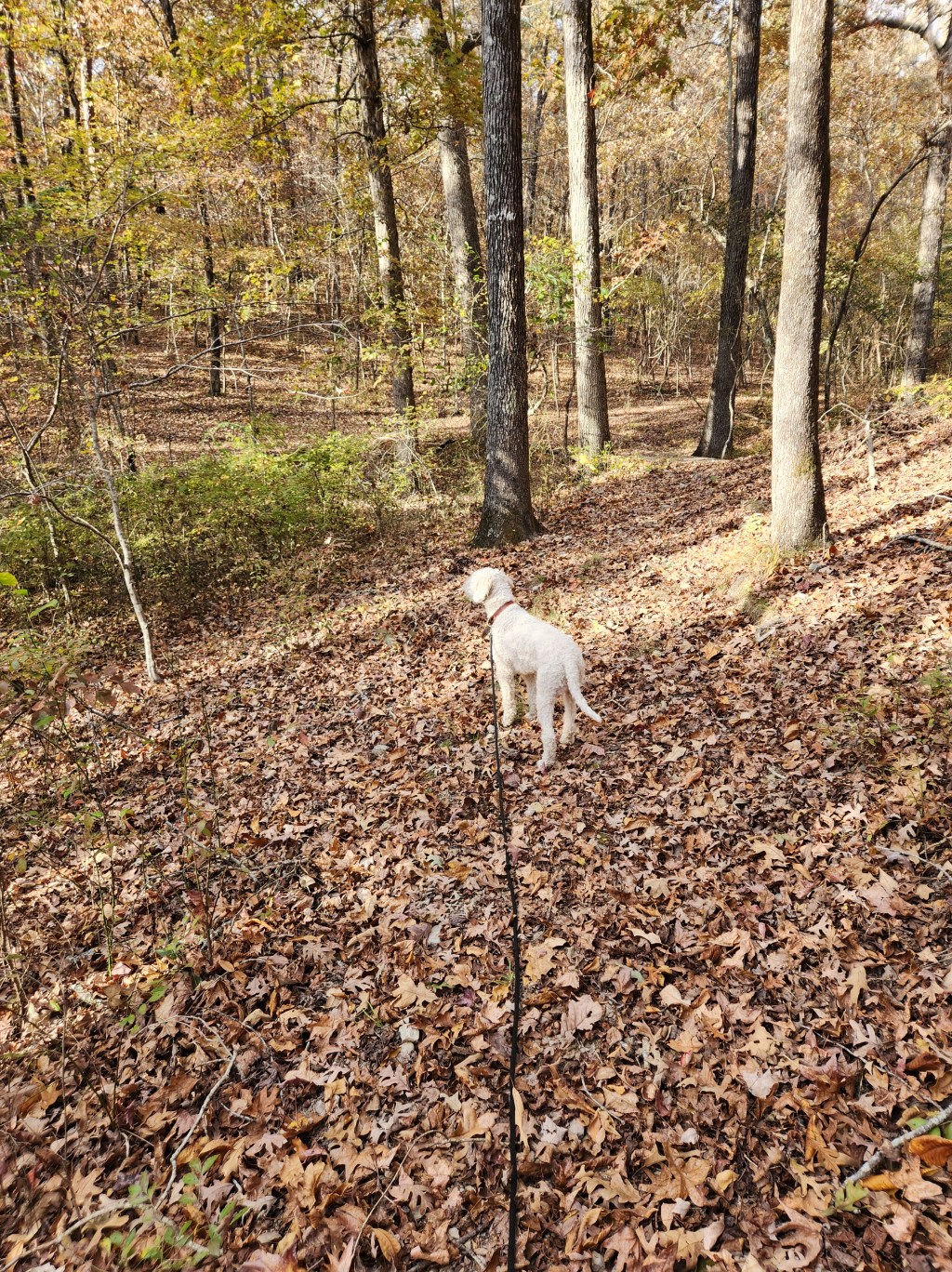
Yeti working a buried hide
On a regular basis (seems like every few months) the topic of the buried element comes up on the Friends of AKC Scentwork Facebook page. It goes something like this (every time): AKC should get rid of this element, women our age cannot set up heavy bins of water and sand for either trial OR practice, AKC should just have a vehicles element like everyone else, buried is just another container search, my dogs struggle with it, it takes forever to pass the classes, and on and on.
I have to admit that: 1. all of these things are true, and 2. I used to feel the same way. When I started trialing in AKC, Astra and I struggled with the buried element. We managed to pass Novice and, with some trouble, Advanced. But we got stuck in Excellent–failing at several trials. Finally, tired of wasting entry fees, I put my big girl panties on and decided to do some serious work. I set up bins of sand and water every day and we practiced, practiced, practiced. Until Astra learned to recognize the odor in sand and water, AND trace it to the correct bin. It is not just another container search, I learned by watching her, there are lots of subtleties involved in the way the odor is both very available AND inaccessible.
By the time we got to Master’s level, though, my shoulders were giving out under the strain of setting up 16 bins (for each session, I had to drag the bins out into my carport, because my yard was not big enough to practice in, And then I had to drag them back). And then, when talking to a trainer friend of mine, she suggested that I try training with small amounts of sand and water.
And this, my friends, I am here to tell you, is the secret to this element.
I have been teaching classes and practicing this way for the last several years and it works very well. Amazingly, the skills that the dogs learn on the small containers generally transfer seamlessly to the big containers during trials. I used to set up big bins once or twice just before a trial, just to make sure that there weren’t problems with the dog working them, but now I don’t bother.
Here is how I do it:
I use quart yogurt containers for the sand and water (I eat a lot of yoghurt) but you could use any small sized containers. I have students who use the small cheap Tupperware containers. The yogurt containers gives me about 4 inches of depth (as the regulations require), but I you can do it with less depth perfectly well.
I put the q-tip directly in the bottom of container with the sand/water. The regulations for competition require that the q tips be in aquarium tubing stuck to the bottom of the container for water, and in tea strainers for sand, but I have found that you can leave these out in practice and it doesn’t make any difference to the dogs. The q tip will sink to the bottom of the water container after a minute or two anyway.
Of course, you need to make sure you mark the containers as hot, as they will now be contaminated with oil residue.
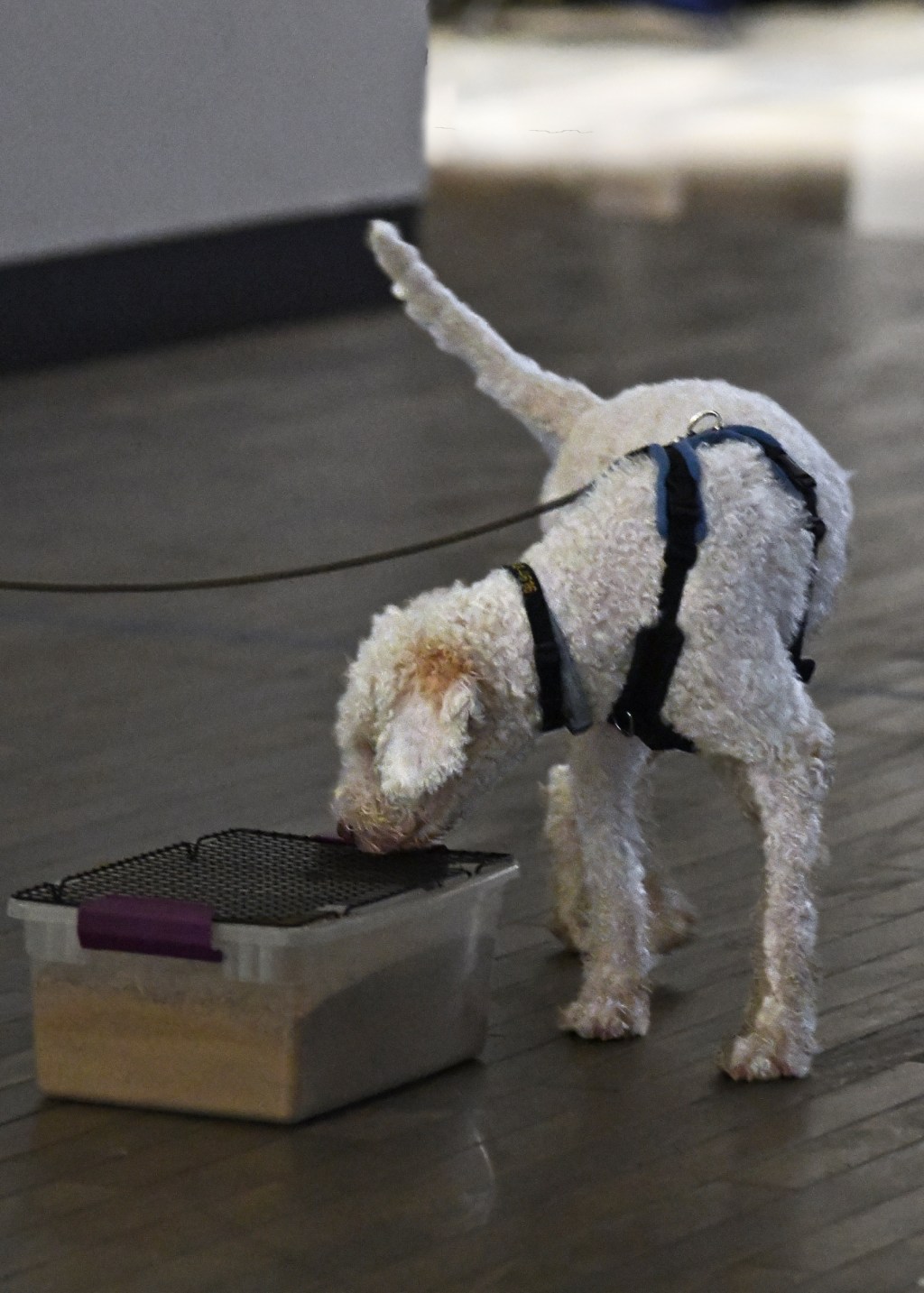
I put the yogurt containers in the regulation sized bins. This helps prevent dogs from knocking the containers over, and provides the dog with a similar visual picture to the one that she will see at the trial—this will eventually help her target the containers, although at first she may wander around, following the scent plume.
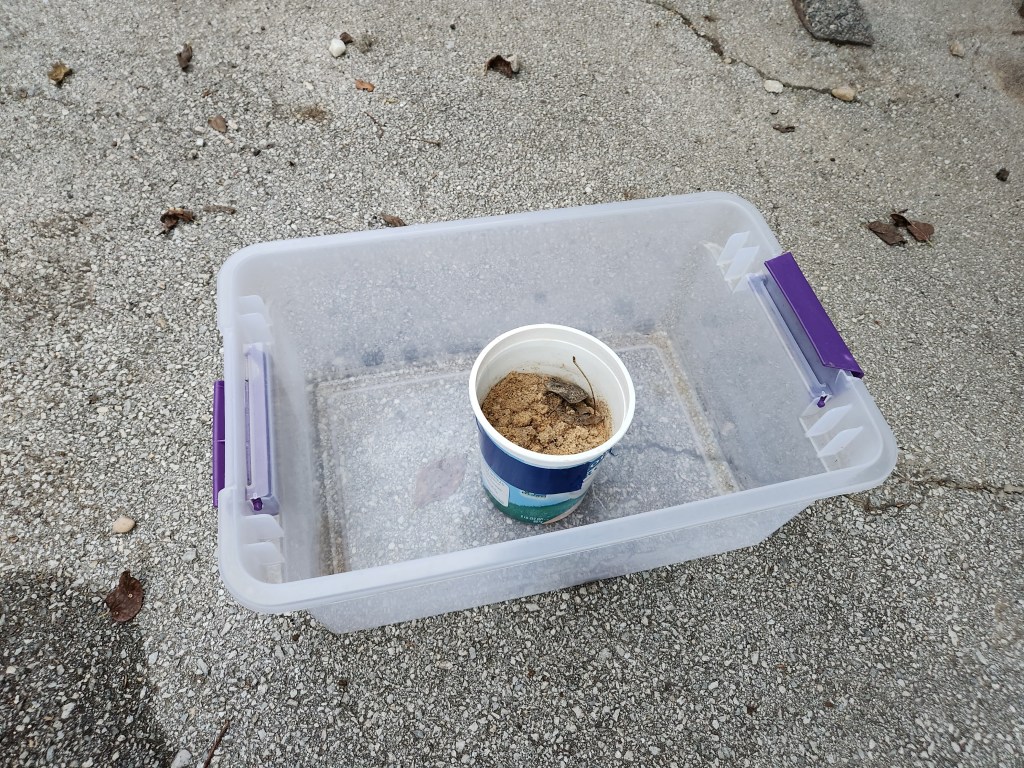
Small container with sand in larger bin. This container is hot, so it is marked with blue tape, so that it can be easily identified.
I also start with the containers further apart than the regulation three feet. Fringing is the biggest problem in this element, and the further away your containers are from each other, the easier it will be for the dog to identify the correct container. After a few practice sessions, I will start moving the bins closer to each other until they are three feet apart, the way they will be in trial.
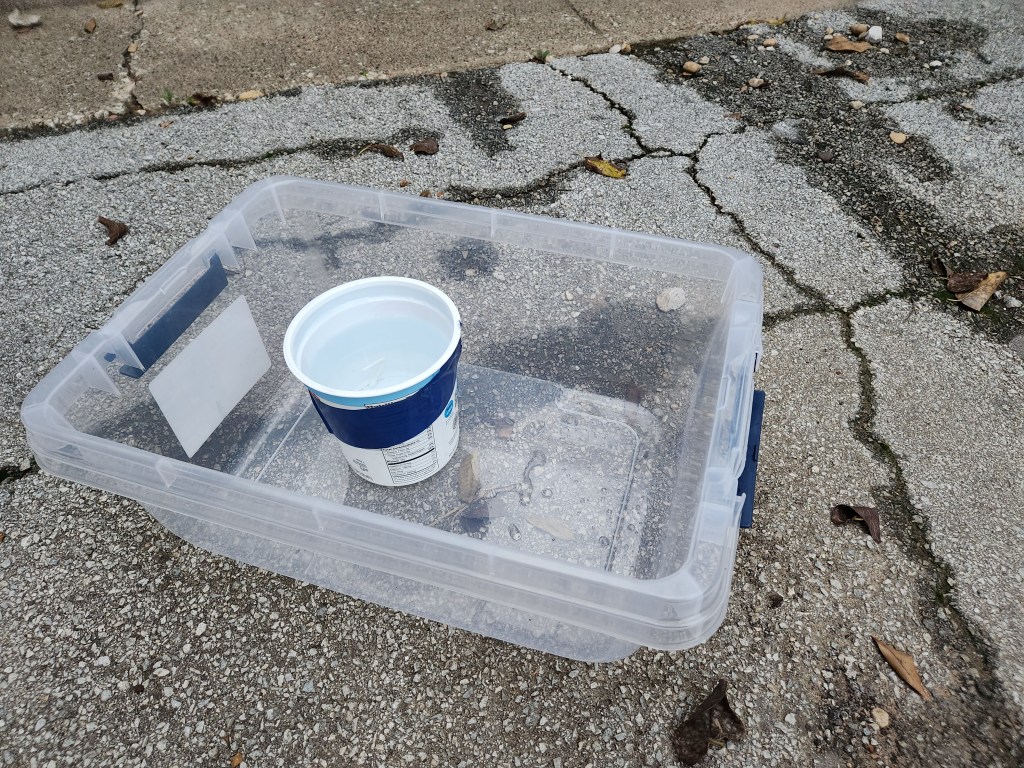
Water hide in small container
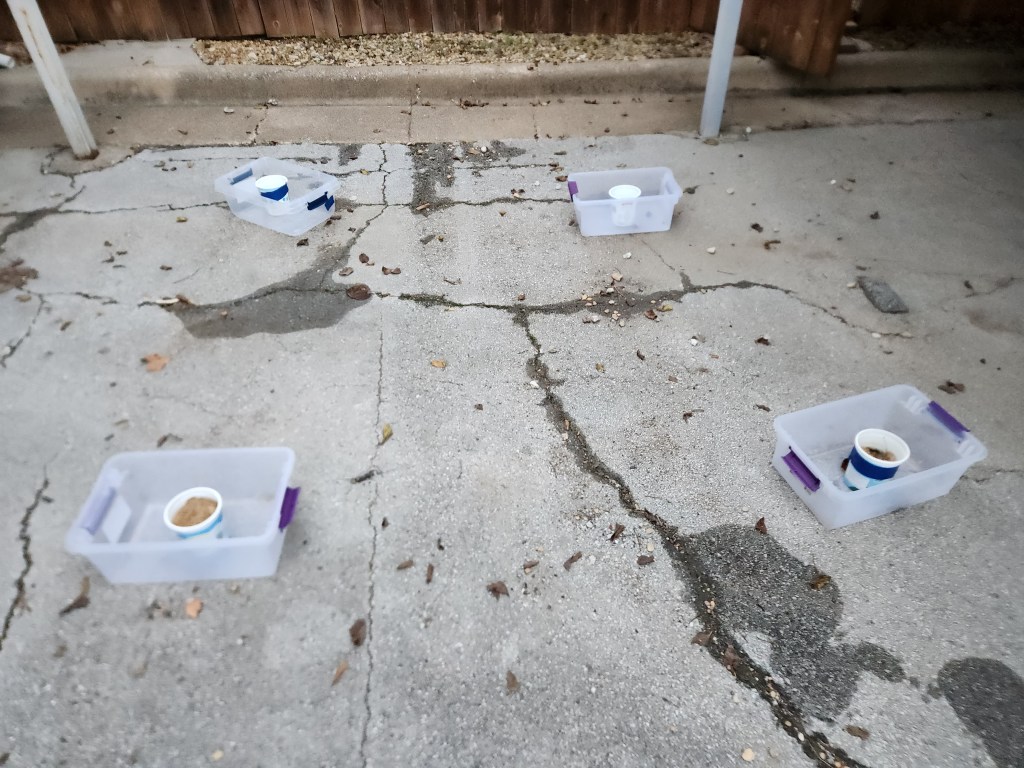
Bins about four feet apart for starting
In addition, I initially leave the cooling racks off of the containers, because I think it helps the dogs if they can get their noses down close to the sand or water, it makes the source a tiny bit more accessible, and helps them figure out the puzzle. After the dog is alerting on the correct container the majority of the time, I will add the cooling racks to the top.
Of course, there are always dogs who will knock over the container, in spite of precautions. I usually put a tarp down on the floor when practicing inside, it makes clean-up much easier.
I doubt AKC is going to get rid of this element anytime soon, they have put a lot of thought into designing it, and now clubs have invested time and money in getting the equipment to use in trials. So I would encourage people to experiment with practicing with small containers, it is well worth the effort.
Want to get these posts delivered to your email? Click on the Home button on the left, scroll down to the bottom and put your email in the SUBSCRIBE box.


 Sniffing Around Scent Work
Leave a reply to Shawn Albright Cancel reply