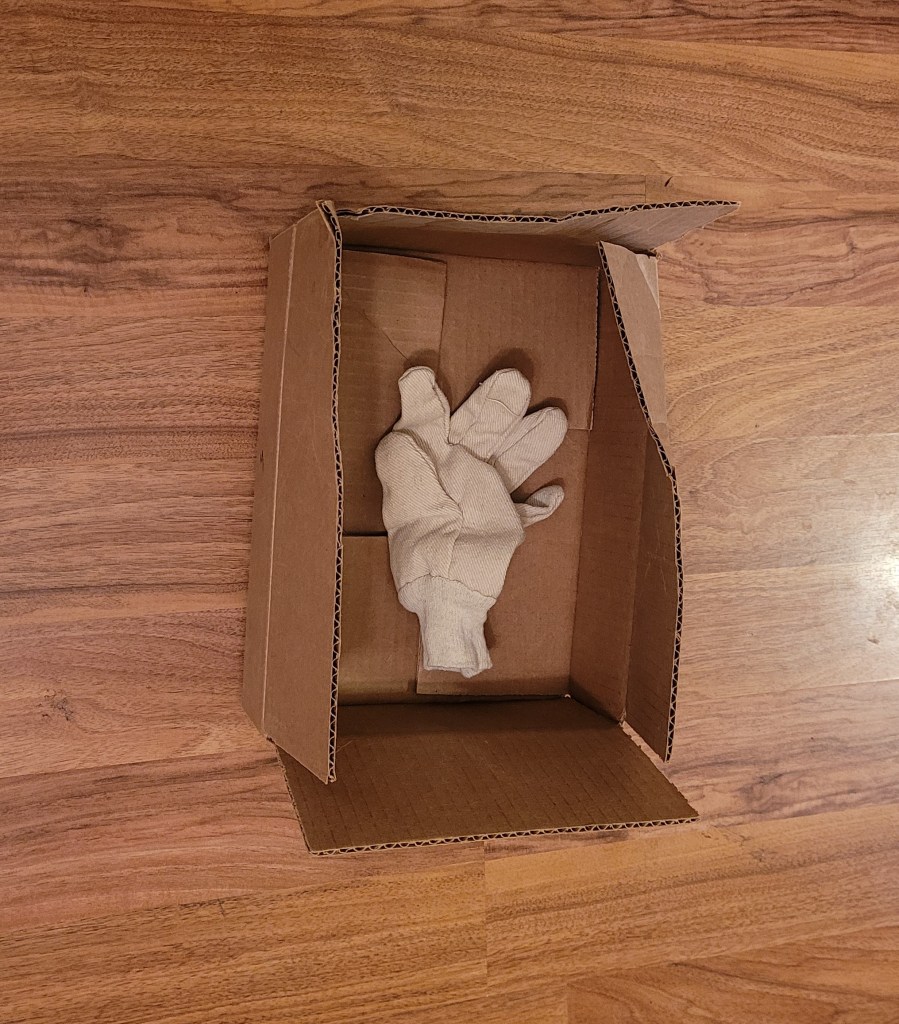
A good friend asked me to blog on this topic, which, as it turns out, I have been devoting a great deal of thought to, as Astra has reached the Master HD level, and Yeti is just starting Novice in HD.
Handler Discrimination, or HD, is a scent work class only found in the UKC and AKC venues, and requires that the dog identify the handler’s scent on an item (glove or sock, cotton ball or q tip) AND distinguish it from another identical item with another person’s scent on it.
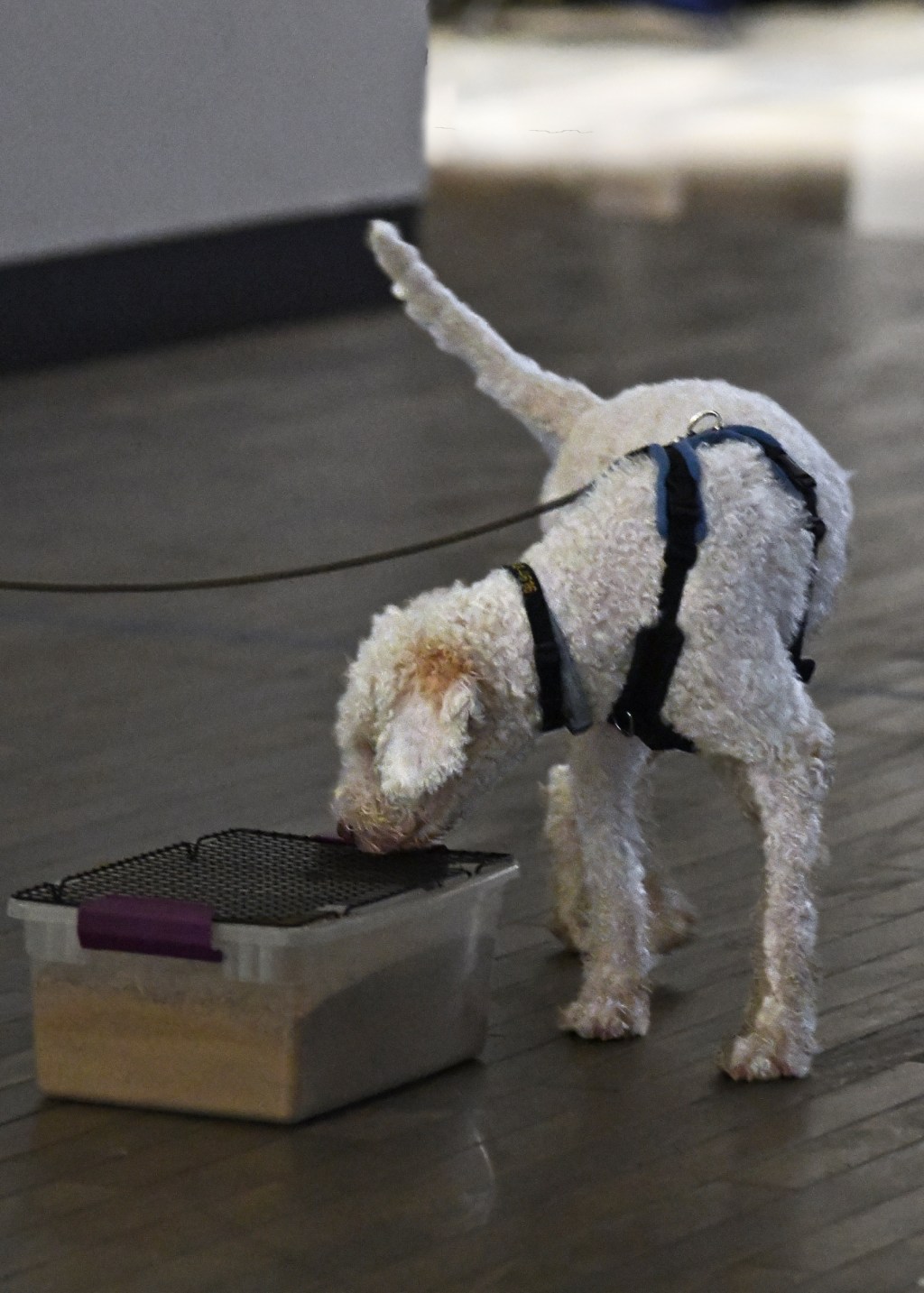
The classes in AKC (which is mostly what I am going to talk about here) are structured so that in the lowest level class, Novice, the dog is looking for the handler’s glove or sock in a box, among ten other boxes, eight of which are empty, and one of which has a glove or sock that the judge has scented in it. Then, in the other three classes, the dog must distinguish, and alert on the handler’s scent on a cotton ball (or cotton swab) hidden inside a room or outside a building.
In any given trial, there is generally a very low pass rate in this class. The majority of dogs will end up alerting on the box containing the judge’s item, or on the judge’s cotton ball hidden in the environment.
After much observation, reading, thought, and experimentation, I have come up with a list of reasons that this element is so difficult:
HD Odor is Very Different from Essential Oil Odor
Human scent is radically different from essential oil odor. Essential oils are made up of Volatile Organic compounds, which, as any google search will tell you, are characterized by their low vapor pressure. In layman’s terms they are very active scents, they spread quickly, and up close, are obvious even to our weak olfactory sense. To a dog, they are super obvious in most environments.
Human scent, on the other hand, is way more subtle, and more of a mixed bag. I am not an expert in this obscure field, but I have done a certain amount of reading on it, and the general consensus is that it is made up of dead skin cells, oil from our skin, by products of bacteria that live on and in us, and sweat, which is mostly water but also contains trace elements of the foods/drugs we have consumed and endocrine secretions (hormones). For more on this topic, I would recommend the book “The Joy of Sweat” by Sarah Everts.
My dogs tell me that the human scent on a cotton ball or glove is harder to detect, in that they often must very close to an object that a cotton ball is hidden under in order to notice it, whereas they can often catch the whiff of an essential oil hide many feet away. Astra’s search of an area in HD is a much more detailed, slower search, whereas her odor search is generally a quick survey before getting down to the process of determining the exact location of the hide.
Our Dogs Are Not Used to Doing a Very Granular Discrimination Task
The distinction between distinguishing between the handler’s scent and the judge’s (or steward’s) scent is a very fine, or difficult discrimination task because we are asking them to distinguish between two scents (your scent and the judges) that are very similar. They are both human scents.
The discrimination task with essential oils that the dogs are trained for in the regular classes are basically not difficult.
We are asking the dogs to find a very strong, very different smell in the environment. We do not ask them, ever, in competition, to distinguish between any one essential oil and another essential oil. We never ask them to find birch but not anise, in an environment where both are present. Or, we never ask them to find a birch hide in an environment where there is an essential oil present that they have not been trained on, such as rose or lilac oil.
In fact, I have found that most nosework dogs will generalize and alert on ANY essential oil, whether they have been trained on it or not, probably because they generalize odors really well, and we have not rained them NOT to alert on other essential oils.

I imagine that the rough visual equivalent to an HD task would be asking us to distinguish between two types of apple, say, a macintosh and a red Delicious apple. There are more similarities than differences in the two objects, on first glance. And it’s not that it is impossible to do, but in order to make that determination quickly, it would take a certain amount of experience and training on the specific characteristics and difference between the two apples.
Our Training Practices Are Not Setting Our Dogs Up For Success
Most dogs have much less practice on finding HD scents than they do on essential oils. Most people start training HD much later, and since HD is only one class, and the essential oil scents have four or more classes to compete in, HD practice rather necessarily takes a back seat to the essential oils. And, as discussed above, dogs actually need a log more practice with HD than with traditional oils, since it is a more difficult task.
Our training methods for this element do not, I think, set up our dogs for success. Most of the scent work training methods are based on providing the dog with empty boxes or vessels and one vessel with an essential oil ( or combination of essential oils) and the dog gets rewarded for sniffing the item with essential oil. At any rate, we generally reward the dog for finding the MOST DIFFERENT smell in the box. And then, when we start trialing, the boxes are all empty, except the box with the essential oil in it—again the one box that is DIFFERENT from the others is the one that gets rewarded.
And this, I think (after all, this is just a theory, since I can’t ask the dogs to verbalize what they are doing) is why the dogs alert on the judge’s box in Novice HD: it is the most DIFFERENT smell that they are encountering, and they instinctively fall back on the strategy they use with box searches and essential oils. After all, they are very FAMILIAR with our scent, and even if we have been practicing with a distraction item (say, your friend’s glove or your instructor’s glove) those items have probably been used repeatedly, and are also familiar to the dog.
Most people also do not handle their dogs well when working the boxes in Novice. Most people march up and down the line of boxes with their dogs on a fairly short leash, at a fairly rapid pace, expecting the dog to sniff each box very quickly, make a split second, snap decision whether to alert or not, and then move on to the next box. This is a very unnatural way for dogs to sniff, and it REALLY handicaps the dogs when they are searching for a very subtle odor and make a very fine discrimination between two very similar odors, which takes a lot of thought. The more successful dogs in this search are often the dogs who are allowed to wander between the boxes and do some comparison sniffing. Initially, they often need to find the two boxes with the gloves, and sniff them more than once so they can figure out the differences. Many handlers are not tolerant of this process, and will pull the dog off, wanting them to continue to the next box, regardless of what the dog is doing.
And then, after training the glove, many people think that the dog will automatically recognize the handler’s scent on the cotton ball. It’s all the same scent, right? After watching my own dogs and my student’s dogs struggle with this, I think the answer is: not so much. After all, a sock or glove made out of a cotton blend, cloth item is going to smell and absorb odor in a very different way from relatively unprocessed cotton in a cotton ball. And these carriers of the odor in HD is a much larger percentage of the odor picture that the dog is sniffing, than in the case of the oils, where the cotton swab is a much smaller percentage of the picture, because of its volatility and strength.
So, one might ask, what is the best way to avoid all of those NQs when you first start competing in HD? I have some ideas, but I will save them for a future post.
Want to get these posts delivered to your email? Click on the Home button on the left, scroll down to the bottom and put your email in the SUBSCRIBE box.


 Sniffing Around Scent Work
Leave a reply to Valerie Casillas Cancel reply