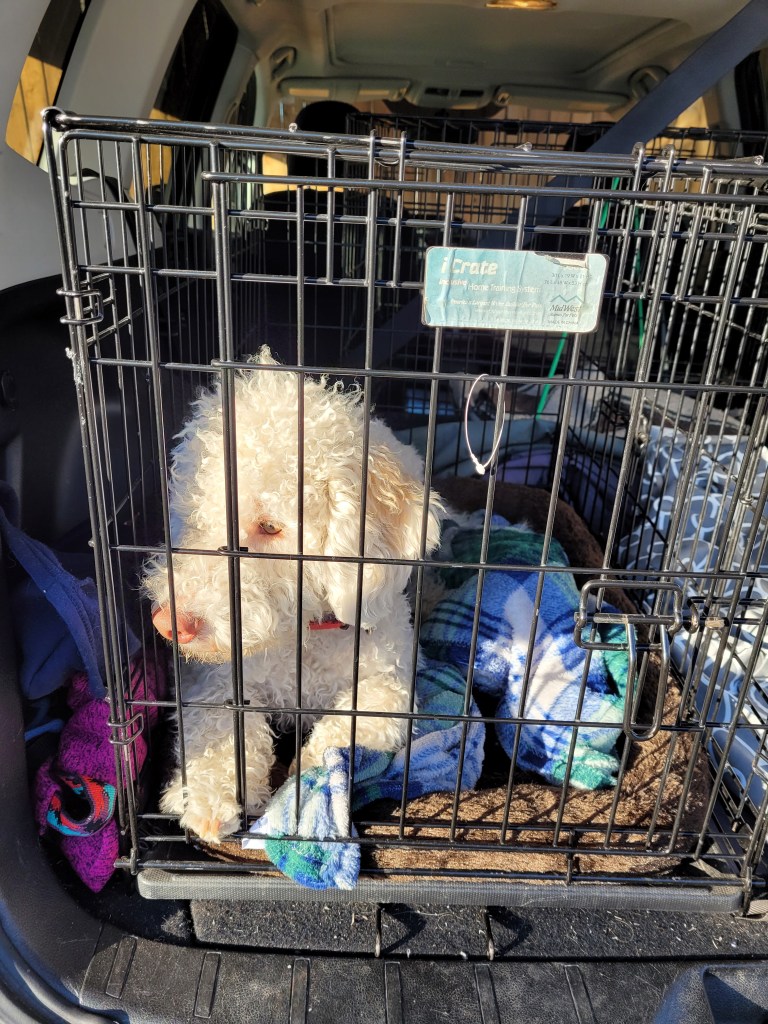
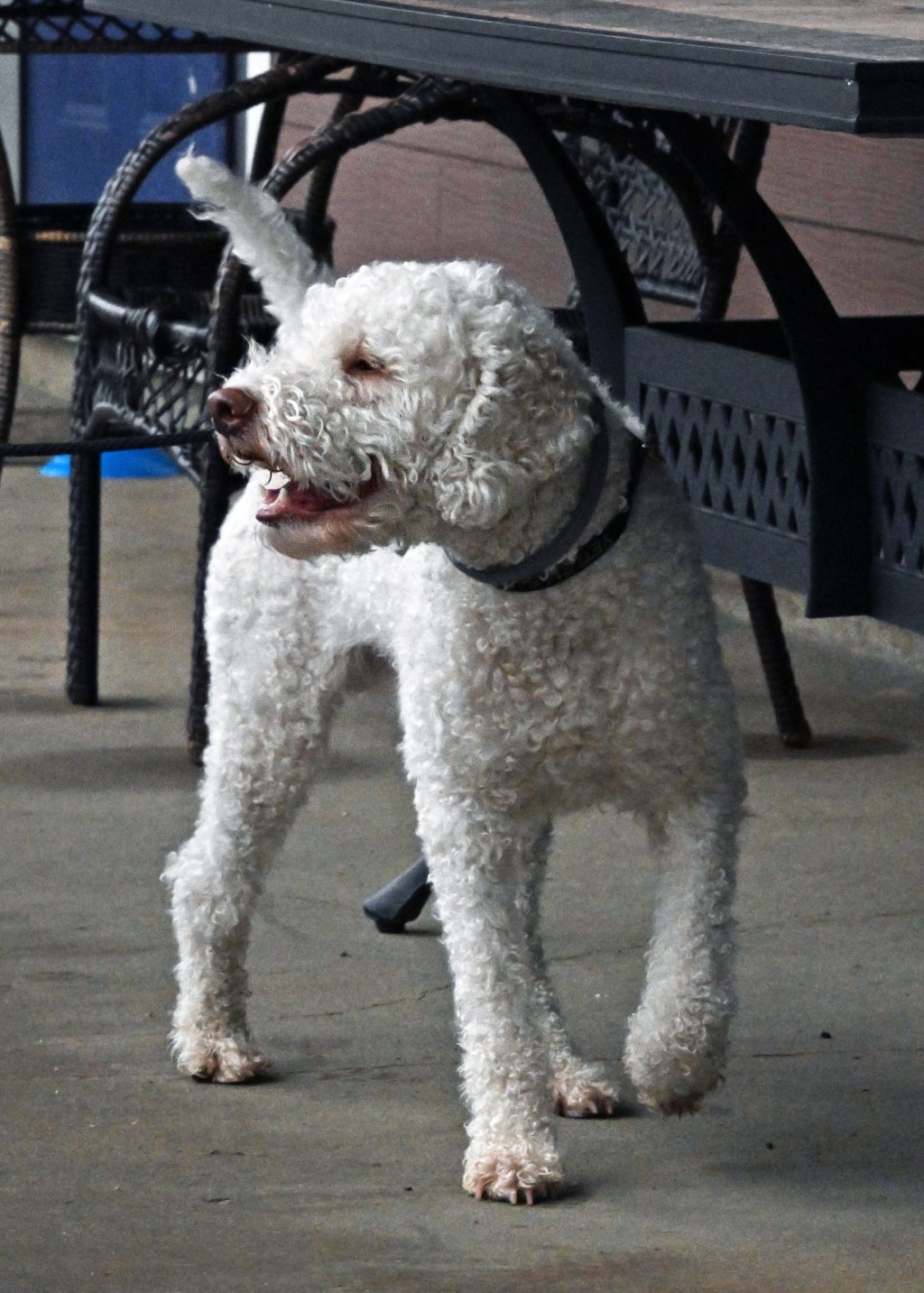
Yeti was ready for the Odor Recognition Test. I was sure of it. I had used all of my teaching experience to introduce him to THE sport: nosework. He was solid on odor; we had transitioned to boxes about a month after introducing the six essential oil “cocktail.” I had introduced box hides to him carefully and gradually, working them open, and then closed, and then working them in different environments around town. Yeti had searched boxes in parking lots and parks and schools. He generally found the odor box pretty quickly, though he was not yet automatically drawn to the boxes the way a seasoned nosework dog is. And he was a happy worker. This is what he was bred to do, and you could see his joy in doing it.
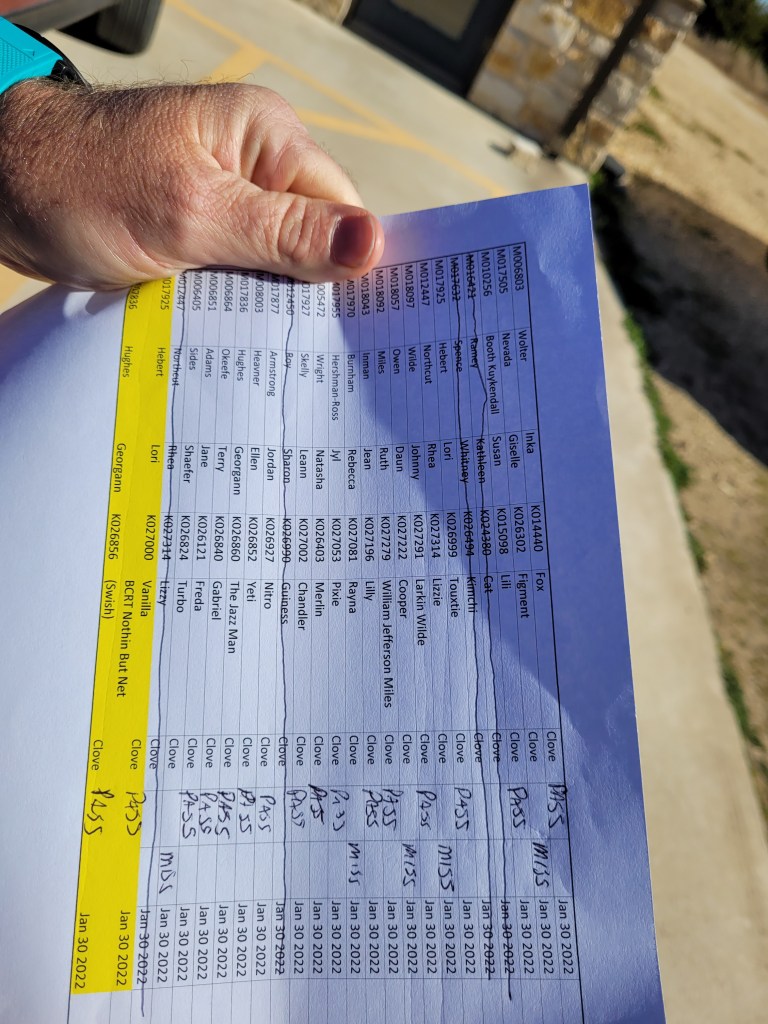
Yes, he was ready. After all, the Odor Recognition Test, is, exactly as it sounds, just a test to see if the dog will recognize the target odor in a box. It is not a competition, but the qualifier for real competitions in NACSW (National Association of Canine Scent Work). The dog must pass three ORTs, finding birch, anise, and clove oil in one box out of 12 before he can enter his first trial. (if you have never been to an ORT, you can see some videos here: https://www.nacsw.net/ort-video-examples )
Ready. So I got up at 4am and loaded up the car and drove the three hours to Austin with a good measure of optimism. I am a pessimist by nature; I do not come by optimism easily.
And yet…. things did not go to plan.
(Are you in need of some ego deflation? Get involved in competitive dog training…dogs will humble you like nothing else will.)
Yeti did great on the ride down, and when we got there, settled in fairly well. He barked briefly at one Doberman, but in general I didn’t see any of the alarm barking that he had exhibited as a three month old. Thank heavens. One barrier down. He also pottied in the properly designated area, and waited for his turn quietly in his crate. All of these behaviors are necessities in a good competition dog, and not to be taken for granted.
The test was in a big training room, with nothing in it but the 12 boxes in two rows and the judge and CO behind a table at the far end. The boxes were set up with almost 3 feet between them, which is a big distance. Yeti had never worked boxes that far apart, and he had only worked on leash with someone watching once.
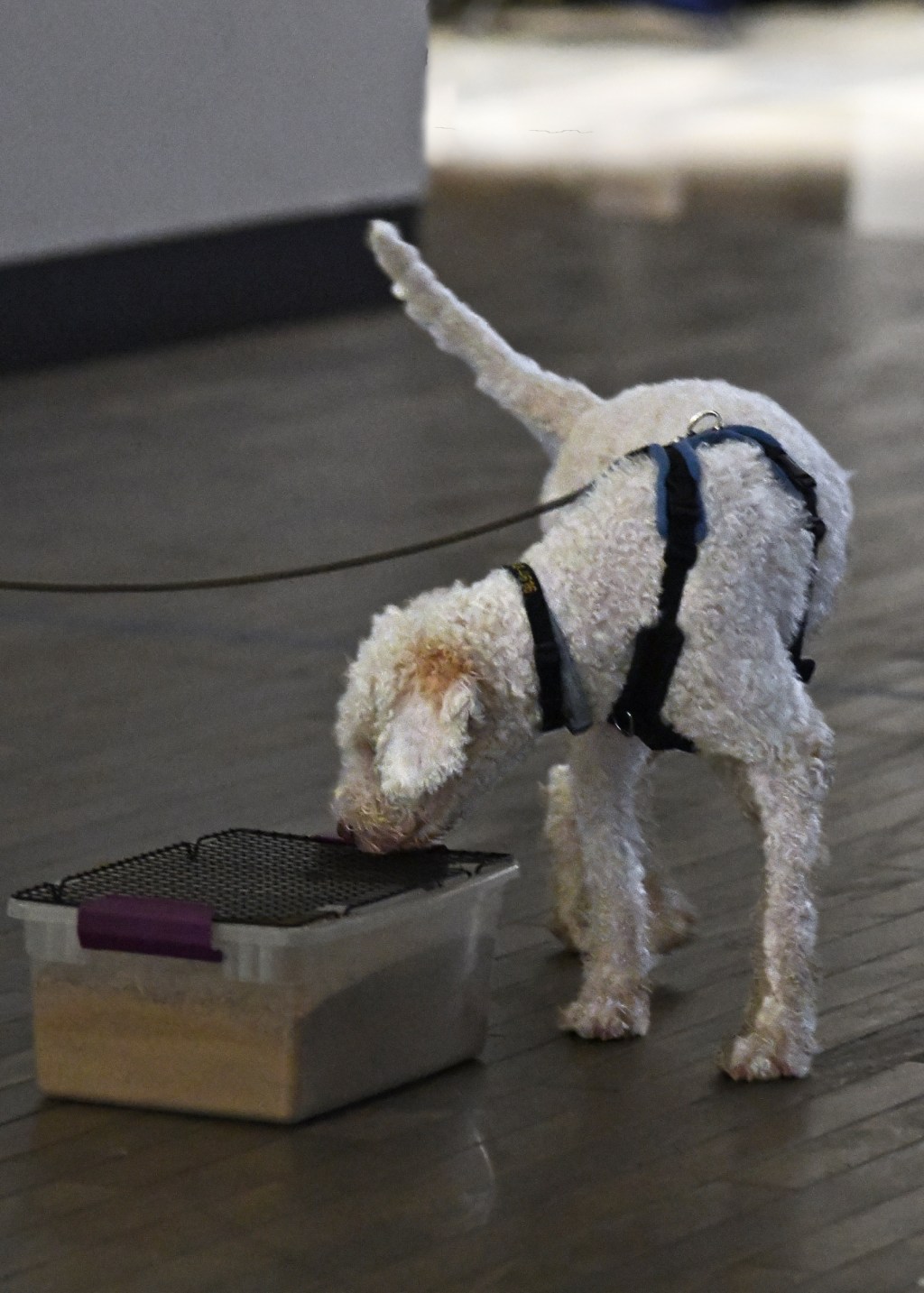
We entered the room, the start line was just to our left, and I didn’t pause much because Yeti was pulling and raring to go. He ran down the line of boxes without paying much attention to any of them, and pulled to go see the judges. I held the leash taut and tried not to pull him too much, just trying to anchor him in the general area of the boxes. After going round the boxes again, still without sniffing any of them, I gave him the command again (and probably a third time). On round three, he slowed and started sniffing the floor extensively. I waited. Was he getting odor on the floor? It wasn’t his usual style, but you sometimes can’t tell where the odor has landed. Then suddenly he gave one of the boxes a nudge with his nose, my heart sped up….had he been following odor on the floor to that box? No, he immediately left it, and went down to the end of the line and suddenly sat down next to a box. Was he alerting? We had been working on him sitting down as his “final indication” that he had found odor, but he wasn’t very consistent with the signal yet, and I didn’t expect him to give it….but…a few seconds passed…and he was still sitting. I called Alert (the signal to the judges that we had made our decision) and got the dreaded “no.”
Yeti had sat down next to a blank box. The judge kindly told us where the “hot” box was, I led Yeti over and once he sniffed it, I told him good boy, and gave him his treat. I don’t do this with seasoned dogs, because I want them to find the target, not me, but on the first run ever, it is so important to be positive, and to let me him know what it was I wanted. I tried hard to be enthusiastic. But it was difficult to hide my disappointment.
Back outside, I acted cheerful, and we walked around a bit before I put him back in the car. Then I sat down to think it out.
I realized two things almost immediately: one, when he sat down, he hadn’t been looking at me. At all. His gaze had been fixed in the opposite direction, a sure sign that he was uncomfortable. He had always been super happy and proud, when he found odor, turning to me with a wide grin. His expression had not been happy at all. It had been stressed.
Two: I had been pulling on the leash too much to keep him in the area of the boxes, AND talking too much.
HOW MANY TIMES had I told my students NOT to do those things? I have sometimes told my students that I want them to hear my voice in their head, telling them NOT to hover, not to pull, not to chatter when they are in a trial. Now I could hear my own voice telling myself just that. He had clearly been stressed by actions, and the fail was clearly my fault. You idiot, I told myself. He is A PUPPY! I had taken him to a brand new place, walked into a room he had never been in, with strange people staring at him and instead of acting normal and letting him greet people, I had just acted weird and pulled on the leash and robotically repeated “seek….seek.” No wonder he had falsed. He didn’t know what was going on, so he just resorted to sitting down (because, really, that is a behavior that usually makes me pretty happy).
However, I was relieved. This was totally fixable for the next two runs. If I could hold myself together and change MY BEHAVIOR.
Our second run came very quickly.
This time I held him at the start line. I wanted a more settled start. He took a good look around the room, and after about 10 seconds we walked past the start cones. He still wanted to explore the room, and I walked with him this time, keeping a looser leash and letting him explore further away from the boxes. After he had scrambled around the perimeter of the room, looking at everything except the boxes, he went to a box near the start line and nudged it with his nose and looked at me, then immediately nudged the box next to it. I just stood there, determined to be patient. He had occasionally done this in practice, but he usually settled on one of the boxes and stuck with it. Now, however, he left those two boxes, and walked back down the line, so I went with him. We could always come back to those boxes if he wasn’t interested in any of the others. Trotting down the row, he wandered to the right, to the next row of boxes, spent two seconds sniffing the end box, then nudged it a couple of times and looked at me expectantly, grinning. That was it, I felt it in my gut. I called the Alert, and got the yes. My stomach turned over with relief. I had read the situation correctly with Yeti, I had identified the problem and had been able to adjust my behavior to work with him. This was a huge victory.
I often think that we humans really struggle to change. We see the problems, but don’t know how to make adjustments to our behavior to make change happen. We continue to eat the second (and third!) piece of cake, even though we know we shouldn’t; we speak up when we know we should keep quiet; we swear we will get our next project done by the deadline, but end up finishing it late.
And sports are a microcosm of life. Nosework is like any sport. We struggle to make the changes that will make us successful. In scent work, we hesitate to call the alert when our dogs are doing their best, and we rush to call a false alert when the dog is confused. We mis-read situations, we bully our dogs, we don’t cover the area, we struggle with the concept of partnership.
For this one moment, this one snapshot in time I had gotten it right. And it felt good.
I made sure to reward big, right next to the box, giving Yeti at least 10 cookies, and then running outside and still loudly telling him how wonderful he was, giving him more cookies, and generally making a fuss. I wanted there to be no question in Yeti’s mind that this had been a big success. YOU DID SO GOOD BUDDY!! He responded like that happy puppy he was, wagging with his whole body, and licking my face, waving his ridiculously big paws around in the air, gobbling up the cheese I was giving him with abandon.
Unlike us, our dogs live in the moment. They leave their mistakes behind, they don’t obsess on them, and they often don’t get stuck in the wrong behaviors (if they are given the clear information to work with, that is.)
I will spare you the details of our third run of the day, except to say that we were successful.
We will still have to enter another ORT, as the NACSW rules state that we must have passed all three odors in order to enter a trial. But, for the moment, I am very happy. In the words of the immortal Meatloaf “Cause two out of three ain’t bad.”


 Sniffing Around Scent Work
Leave a reply to Sherree Cancel reply