
So far, in this containers series, I have covered: how odor travels outside the containers, the learning stages of odor (part one), the different types of containers and the importance of training on each one (part two), how the arrangement of containers affects odor convergence and the difficulty of the search (part three).
This week’s topic is about a pet peeve of mine: searching containers on leash.
In the typical containers search this is what you see:
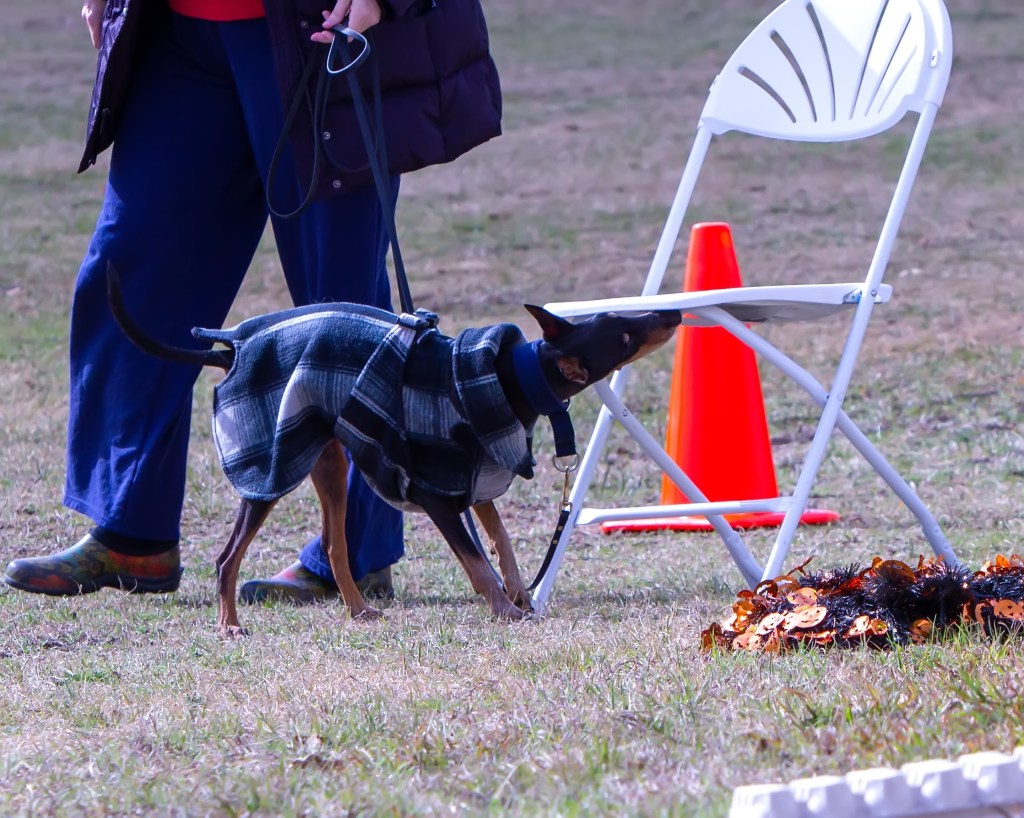
- The dog is on a six foot leash, but the handler has it shortened so that the dog can only reach the containers, and cannot move much to one side or the other. Often you see the dog strung up as if it is in the confirmation ring
- The handler is moving at a brisk pace. The dog has just enough time to dip her head down to sniff the container briefly, before moving along with the handler to the next container.
- The dog is forced to search the containers up the line, in the order they are presented to her. She is not able to stop and go back, or to move over to the next row unless she is willing to put up with being jerked on by the leash.
What’s wrong with this picture?
It is forcing the dog to search with her nose the way we would search with our eyes. And scent DOES NOT work that way.
Scent escapes from containers and drifts around the room, clinging a bit to the cold containers, often fragmenting in wisps. The dog’s natural method of searching is to follow the scent plume, NOT to work linearly.
A dog working rows of containers in a natural way will move around the area in what appears to be a “random” pattern to us. They will find scent, move across rows, check containers, change direction, compare containers, and then usually pause a bit before giving an alert.
Imagine how ridiculous it would be if a hunter tried to force a bird dog to search the bushes in a field in a linear pattern!
Forcing a dog to search on leash, in a linear fashion often causes the dog to miss containers, or false alert out because of stress or confusion.
I once watched an entire class of Master container dogs fail because their handlers were working them on lead and rushing them through the search. In the Master level, there are a range of hides (one, two or three hides) but the handler does not know how many. In this particular search there were two hides. One hide was an easy box hide, but the other, in a small purse, was more difficult.
Yeti was the demo dog. In order to get the purse hide, he had needed to work the odor along the wall. I let him off leash, so he had been free to move as he needed to work this out.
As the class ran, every dog was able to find the very easy box hide, but even after doing multiple passes through the containers, were not able to find the more difficult hide because their handlers kept them on a short leash, and were walking them around very quickly. The dogs had no opportunity to stop and work anything out.
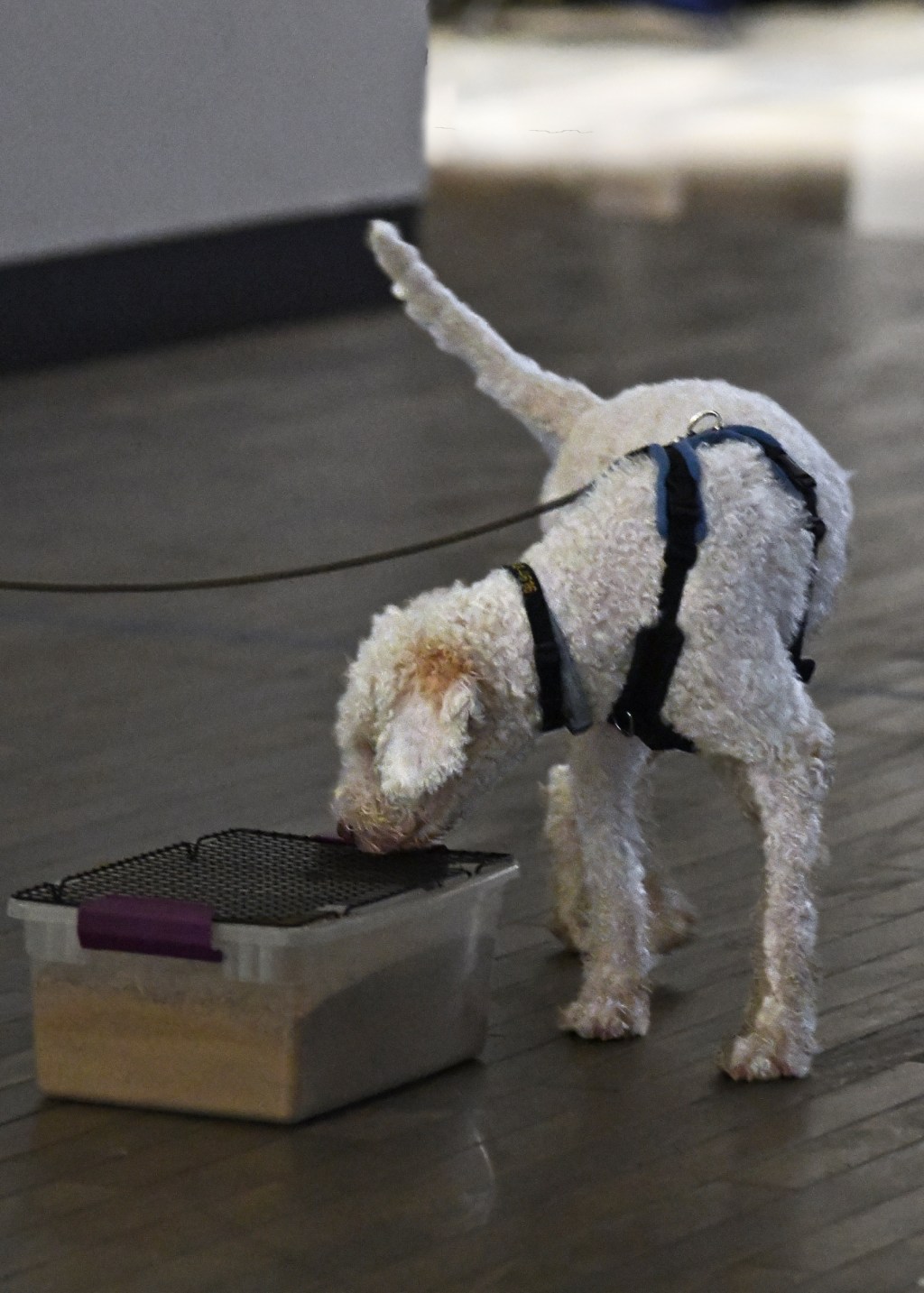
Here is a video of Astra working containers in a U shape. She is working methodically down the line, but she is also taking a different amount of time to work each container—some she sniffs over quickly, and some she pauses at, and has to think about. She is free to do that because she is off leash. If I had her on a short leash and was walking briskly she would not be able to search like this–at her own pace.
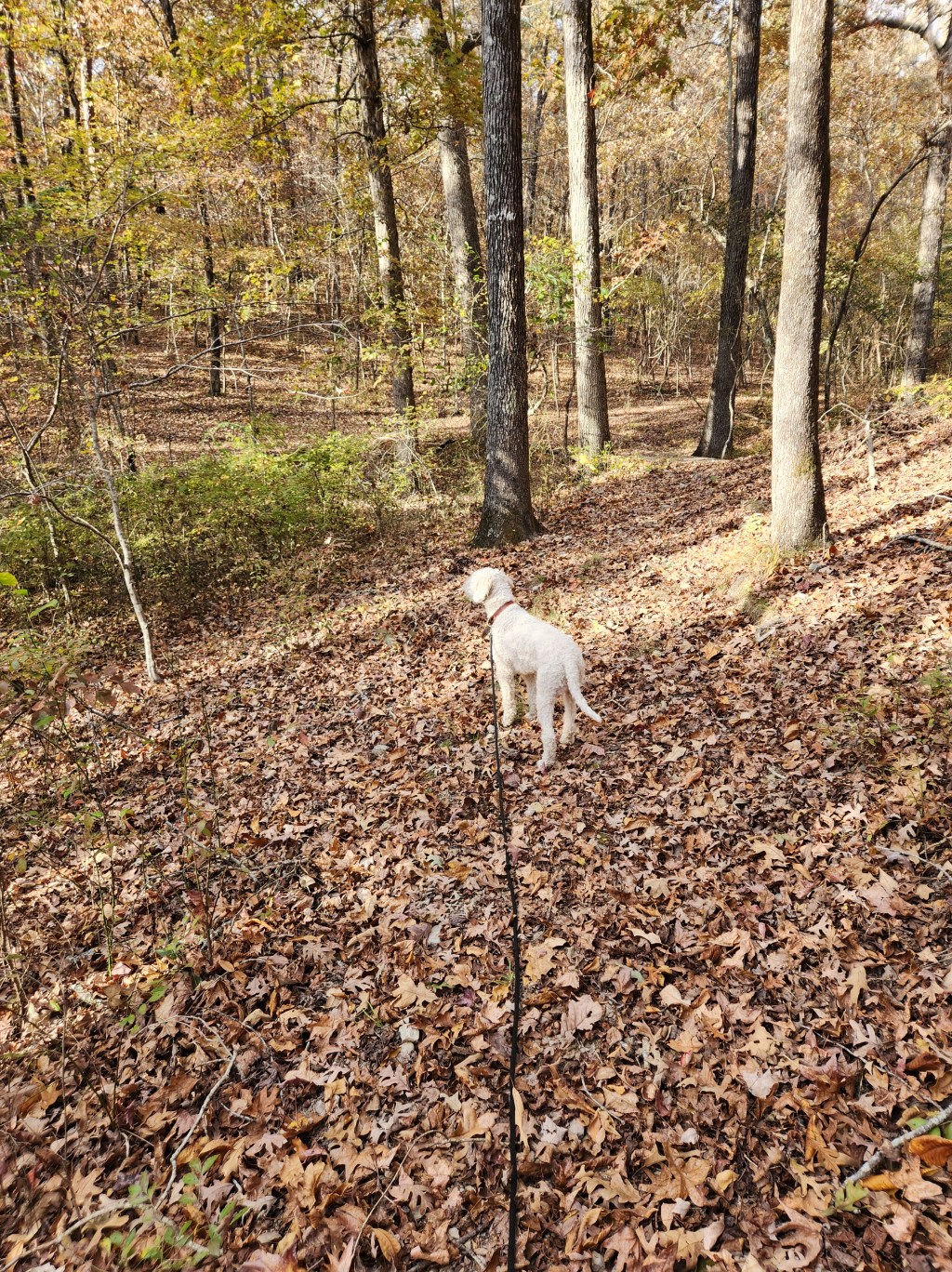
Now, I know that there are sometimes good reasons to work on leash—for example, the area might not be secure. But you can do that with a long line and give the dog some freedom to move and work, while you stay out of the way.
I have “fixed” a number of container runs at trials for people by simply suggesting that they try running their dog off leash. “Why I never thought of that!” they say to me. And they come back to me the next day and tell me that they passed the containers search with no difficulty at all!
So if you are not passing your containers class, give the dog some freedom.
Have you signed up to get posts delivered directly to email? I am no longer putting all my posts on Facebook. Scroll up to the top (or down to the bottom if you are on a mobile device) and put your email in the black box.



 Sniffing Around Scent Work
Leave a comment