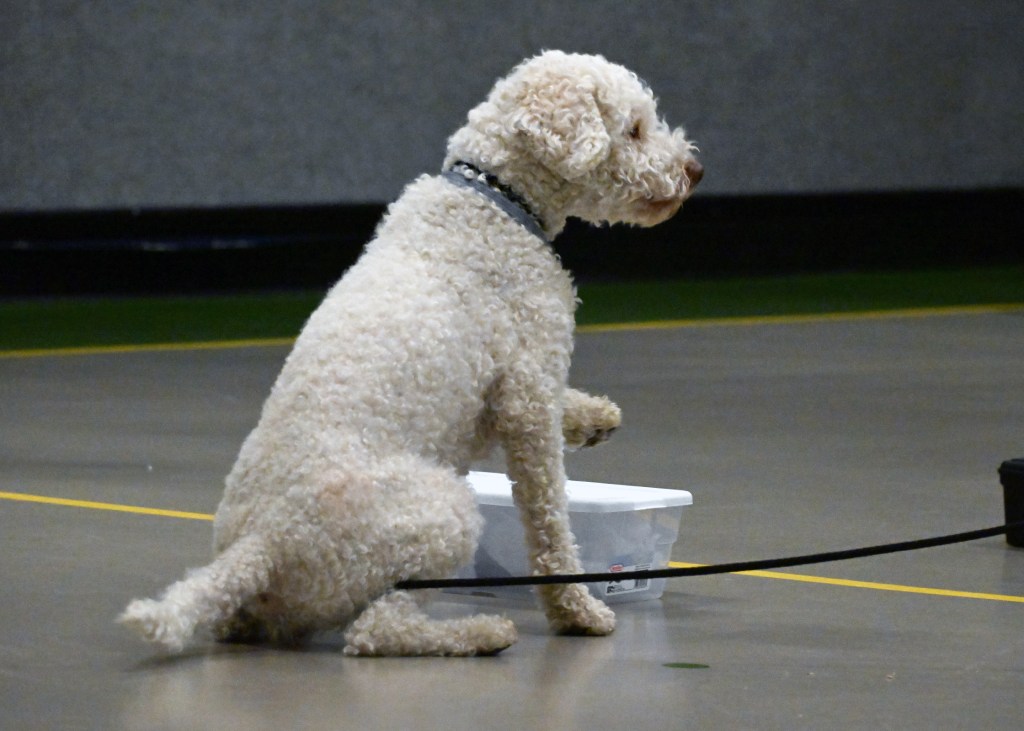
I have been meaning to write about containers, well, um, for a very long time. And somehow have never gotten around to it. Part of this is because I have been struggling with Yeti and containers…and the whole topic somehow just got way too complicated in my head. Tangled up with frustration and uncertainty about what exactly the problem was (in case you are interested the problem was adolescence.) Now we are pretty much on the other side of that struggle, and so I feel freed up to write about it.
As usual I have a lot to say. But I have decided to start with the basics, so here it goes.
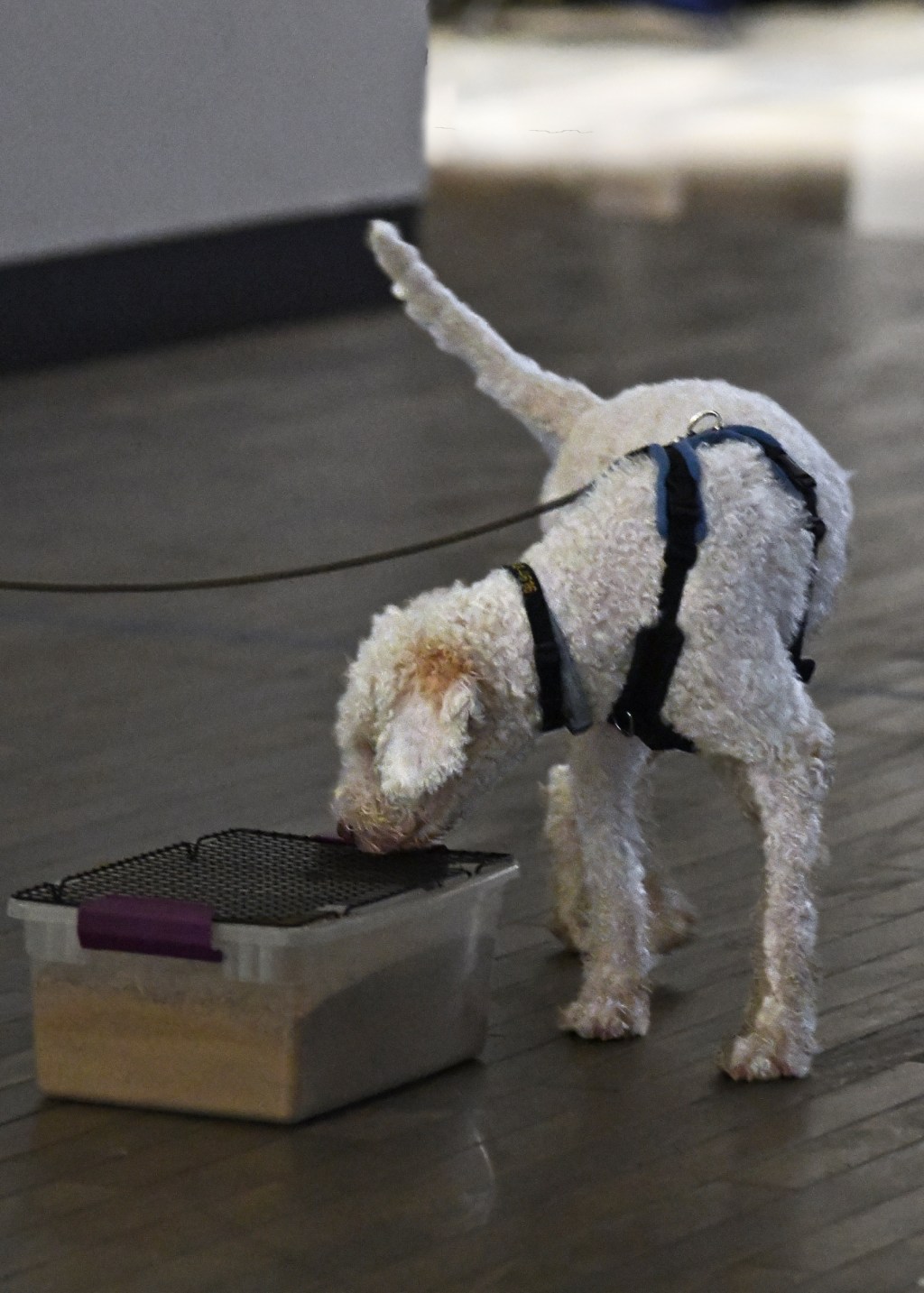
Containers do contain odor, but not completely. The odor spills out through the cracks and holes and zippers and other openings, and travels all over the room. How secure that container is, that is, how waterproof that container is (and yes, I just said “waterproof”) will determine how fast and how much odor escape the container. For the purposes of this post, I will discuss the simple box container, as it is the first container we introduce to the dog.
Here are two videos of boxes with a smoke machine inside, so you can see how the air escapes from the boxes.
In the beginning, if you let them, your dog will chase that odor all over the room. Here is a video of Yeti’s ORT. To the untutored eye, it seems like he is just wandering around the room. He is not. He is actually following the odor. (I was able to verify this after watching the video of another dog who followed almost exactly the same pattern that Yeti did.)
The containers element (and the buried element also) is actually not a search and find problem as interiors and exteriors are. In interiors and exteriors, the search area almost never looks the same, and the hide can be, well, anywhere. The problem is to cast around, find the odor plume and follow it to source.
Containers, buried, and vehicles are all selection problems, in which we know that the hide is in/on one of the items in front of us, we just need to select which one(s).
If you let them, that is, if you run your dog off leash when the dog is learning containers, or at very least, run them on a long line and let them move freely, they will go through several phases of learning, and then start working the containers the way we think they should. Here are the stages I have observed:
Learning stages:
1. Dog wanders around
2. Dog starts to understand that boxes are important and that source is often located in them, but is still exploring environment.
3. Dog understand that the source is always in a box and starts to focus on the boxes.
4. Dog figures out how to search the box more efficiently—at the seam of the box.
5. Dog figures out that you want them to get ALL the hides, not leaving any behind and that it is more efficient to search the boxes sequentially.
Notice that the dog will get more efficient on his own if you just shape the search—that is, if you stand back and just reward when the dog finds odor.
Can the dog learn any other way? For example, if you direct the dogs to the containers or keep him on a short leash, and don’t let him wander around. Well, yes. Dogs are amazing creatures and will often learn no matter how we present the lesson. But l feel it is much more enjoyable for the dog to learn it “his” way, and it leads to many fewer false alerts.
When the dog has to worry about being tugged around by the leash, he cannot focus solely on the odor, and starts to try and read your behavior to figure out what you want and when to alert. This often leads to a lot of miscommunication, and many unhappy teams.
In future posts I will discuss other types of contains and revisit handling .
Want to get these posts in your email? Scroll up (or down to the bottom, if you are on a mobile device) and put your email in the black Subscribe box.


 Sniffing Around Scent Work
Leave a comment