
Two weeks ago was another trial in my winter circuit, this time, it was a UKC trial. I had hopes for a relaxed, easy trial, with plenty of time to visit with friends and students. And in many ways, it was that.
But of course, there was also the lesson that needed to be learned. And this weekend it was controlling arousal at the start line.
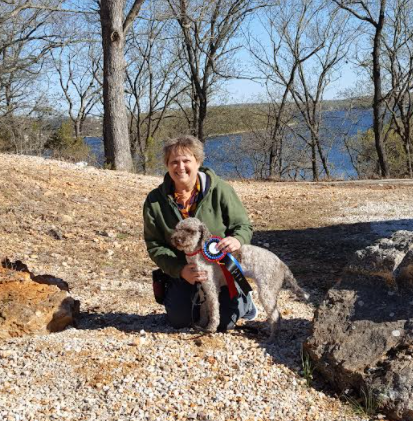
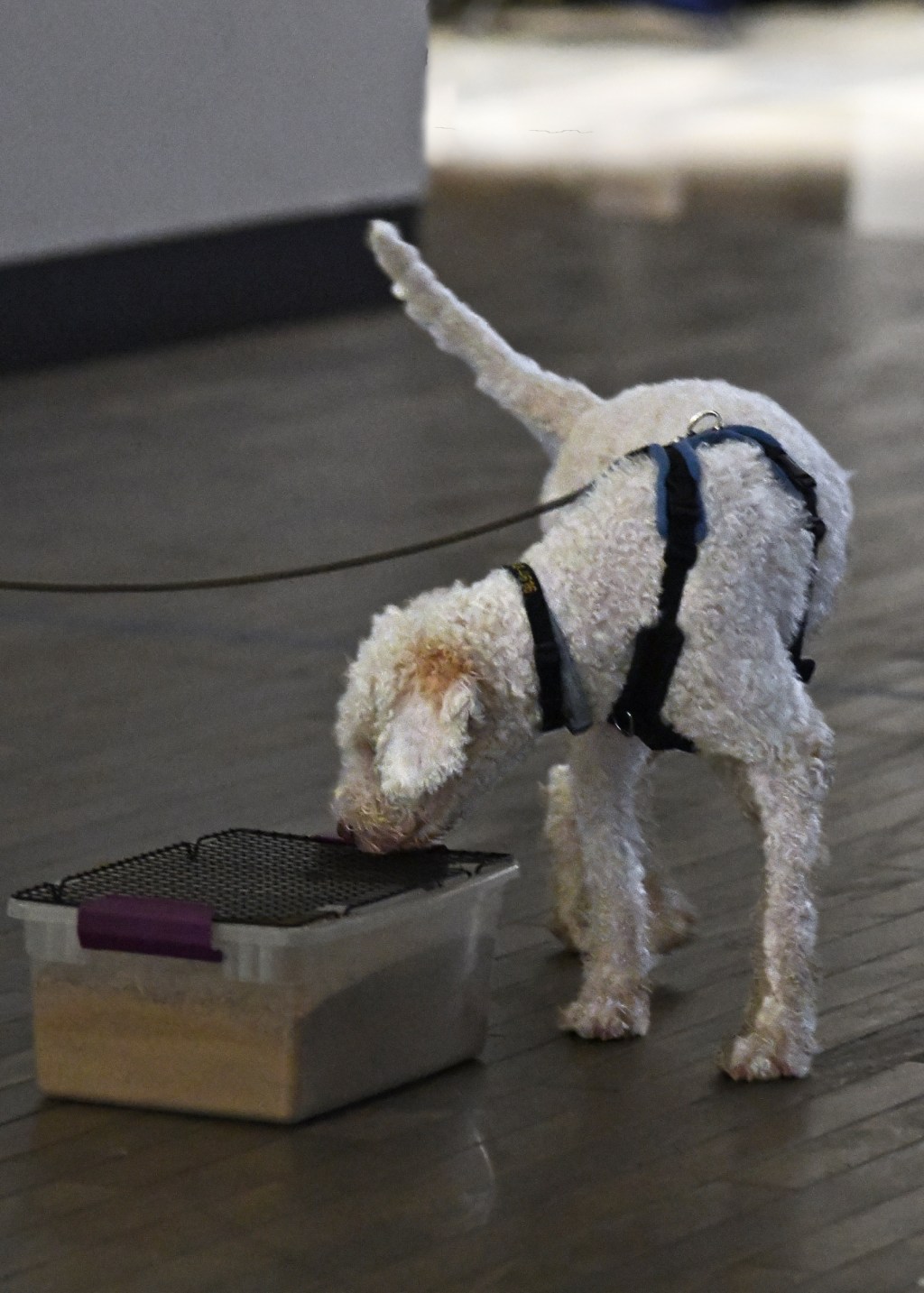
The trial started out well, with a much needed pass in Master Interiors. I was very pleased to see Yeti doing a very careful job of sourcing an inaccessible, sniffing in two places before deciding to alert. Impulsivity and fringing has been a major problem for us.
But then we followed that up with a reckless false in a Superior Exterior search that should have been an easy slam dunk. What went wrong?
As I sat waiting for trial one to wrap up and for trial two to start, I reviewed the run in my head….there was something there that I should have noticed.
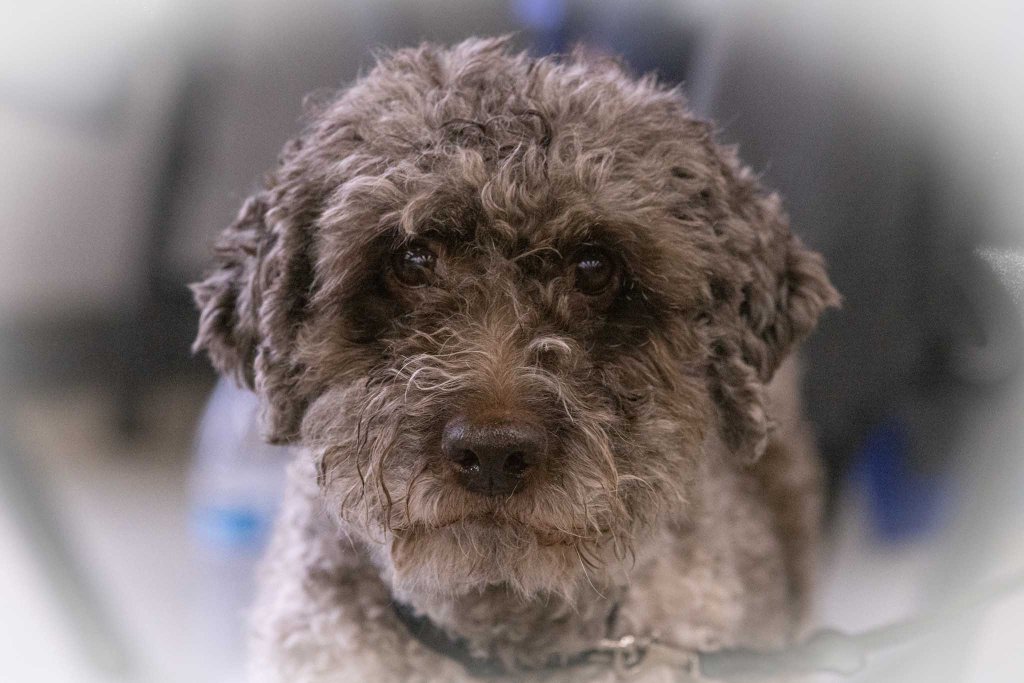
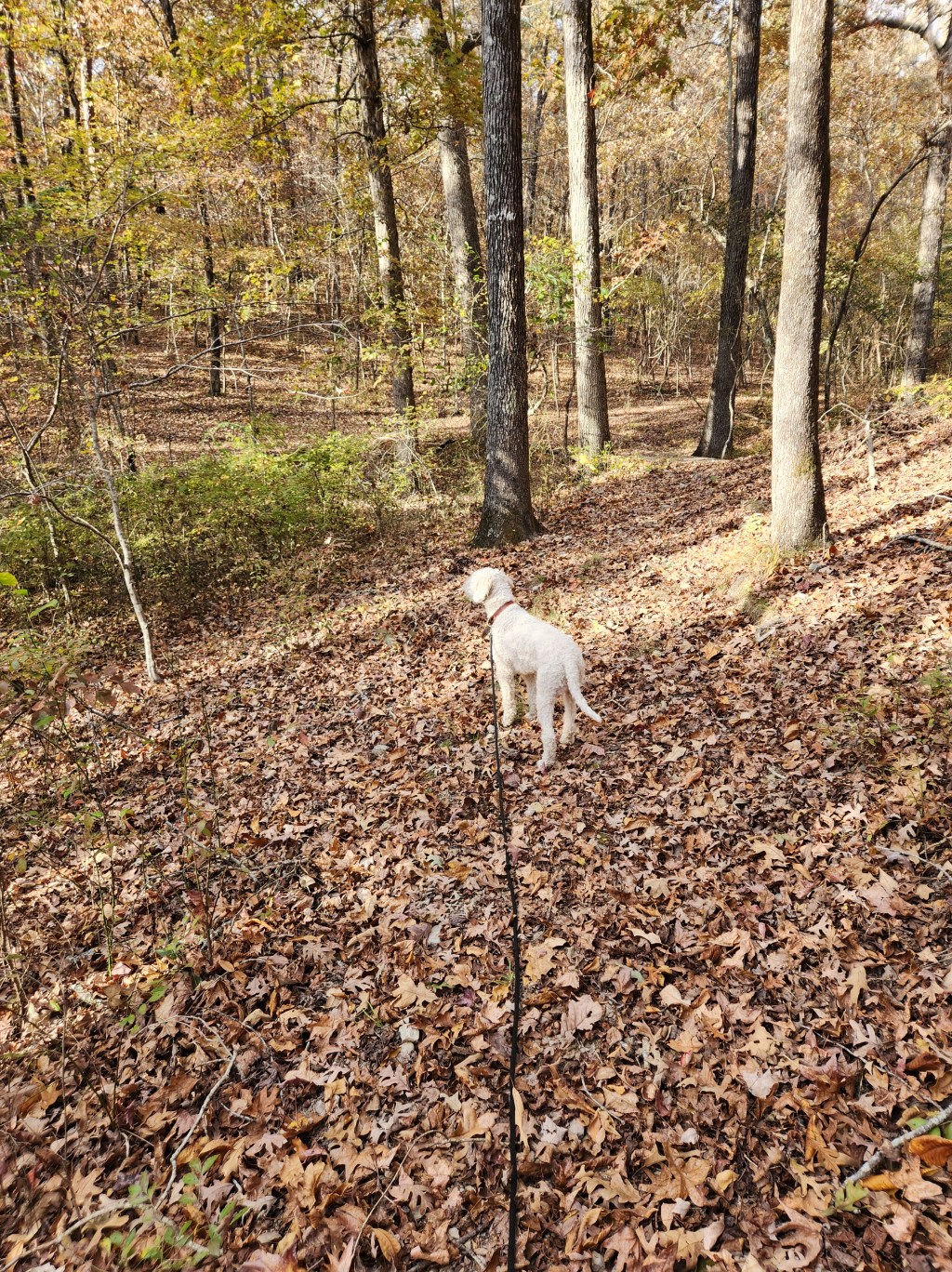
Ah yes. The terrific speed that Yeti charged into the search area with. Yeti is large for a Lagotto, and a powerful dog, and he loves to run. Unfortunately, when he is running, his brain is not engaged, and he is not thinking clearly and nosework is a thinking game.
We had been timing for another class when they called us to go run the exteriors, and in my haste I had let Yeti run up to the start line, and then charge into the search area with barely a pause. He had sped halfway around the area, picked some random object and emphatically gave his alert—on the wrong thing.
Most people who run agility trials are familiar with the over-arousal problem. It is less discussed in nosework circles, but just as problematic. Some people believe that “revving” a dog up before it goes into a search will result in more speed, and therefore a faster search, but this is rarely true.
For any sport, there is an optimum level of arousal in order to get a good performance –for both people and dogs. Too much arousal, or too little, and the brain will not focus properly and the execution of the task will suffer as a result—clues will be missed, time will be lost, hides may not be found.
When I was running Astra in competitions, I was sensitive to her moods and arousal levels, and would adjust my expectations accordingly. If she was excited and going fast during a container search in an unknown hides situation, I knew that she was not going to get all the hides on the first pass, and I would delay calling finish until she had searched all of the containers twice. If she were moving slowly and carefully, I would feel confident calling finish after the first pass.
With Yeti, I have paid less attention to the arousal, perhaps because his arousal has ALWAYS seemed high to me, and his performance at the lower levels didn’t seem to suffer because of it. And when he was a pup, I had often seen him self-regulate his arousal. When searching HD containers, for example, where the odor is more subtle, I had seen him run into a search, and then slow down as he sniffed each container.
As he matured, and the hormone changes set in, and we started doing more challenging searches, I saw less and less of this self-regulation. Unfortunately, it didn’t occur to me to help him with this. I thought that with good training, he would start to self-regulate again. I wanted him to slow himself down.
Until this last trial. It was suddenly clear to me that Yeti’s over-enthusiasm was a serious problem and causing falsing and or fringing during our searches, and I needed to actively help him with this. I needed to become a better partner.
The best way I know to modulate a dog’s arousal level is to change the way treats are being delivered.
Want to create more arousal/enthusiasm? Speed up the treats. Throw them so the dog can chase them across the floor (ok, obviously only in practice, not during competition—that would be contaminating the search area) or toss them so the dog catches them in mid-air.
Want to curb the arousal? Slow the treats down. Make sure the treat is closed in your hand so the dog can’t grab it, and bring it to the dog’s mouth slowly. If the dog grabs or tries to bite, the hand stops and remains closed so the dog can’t get the treat. The dog only gets the treat if he is still and lets the treat come to him. Many people teach this as an “impulse control” exercise for puppies. A well-known variation is to show the dog a treat on a flat palm, and when the dog tries to grab it, the hand closes around the treat so the dog can’t get it.
To reduce arousal in the search, it is important to slow down the start. I made a resolution to become very rigid and consistent in my start line routine: I would only approach the start line with Yeti by my side in heel position, not letting him pull. Then I would stop and give him one slow treat, and wait until he had looked over the search area. Only then would I give the search command and release him.
Fortunately, I had trained all of the pieces of this already. We have spent a lot of time on heeling and slow treating and impulse control exercises.
I had my opportunity to try this in trial two (one of the advantages of UKC competition is that you generally get to do two trials in a day! It’s nice to have a do-over). So I made sure my leash was short and he was heeling when we marched out to the search area. We stopped, and I slow-treated, and I waited while he looked around. After a moment, I gave the seek command. He sprang into action, moved directly to a hot object and alerted. I called it, and without any hesitation at all, he ran to the second hot object and alerted on that. I called it, and we were finished. Success! We got first place, I think it was a twenty second search.
Of course, I am not naïve enough to think that this is going to solve all of our issues, but I am hopeful that it will help. Why did it take me so long to see this problem? Part of it was that I trained a lot while Yeti was still maturing, so he was changing a lot. Part of it was that I changed my reward strategy when we reached the higher level searches—I started using a ball reward at the end, and this resulted in higher arousal during the search. And part of it was I just kept missing the pattern.
Want to get these posts directly in your email? Scroll up (or down if you are on a mobil device) and put your email in the black Subscribe box.


 Sniffing Around Scent Work
Leave a comment