July 4, 2024
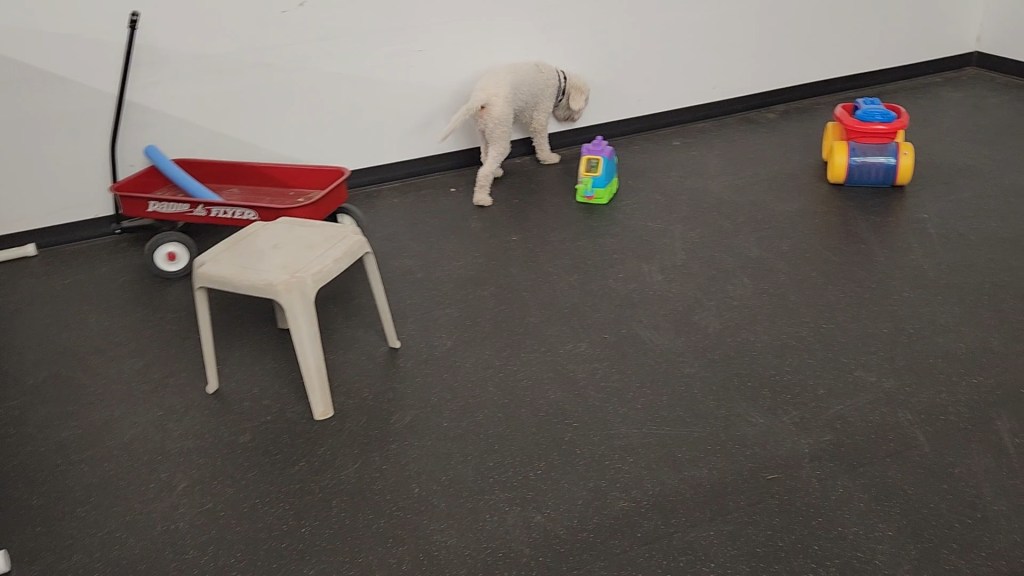
One word: Walls. You need walls for dogs to search interiors effectively.
Particularly if the number of hides are unknown and the handler is being asked to make a decision about when the dog is finished searching. A partial area of a room is ok for the novice and advanced levels, when the hides are easy, and low. But when the real challenges start, you need a real room with walls.
Back in the old days, when I started in UKC nosework trials (before AKC existed!), we routinely searched an area taped off, with just stuff strewn around on the floor. This has obvious advantages for the clubs hosting trials, it makes it much easier to find venues, and it works for the handlers, because we humans are visual beings. It doesn’t work so well for the dogs, who generally want to follow odor wherever it goes, regardless of the cones or tape on the floor. But the UKC rules in those days didn’t require the handlers to find an unknown number of hides, and didn’t require you to finish one area before moving on to another. So we managed to pass our classes…even if both dogs and handlers became a little object oriented in their searches.
However. When AKC wrote the rules, they decided that handlers needed to “clear” one room before moving on to searching another, as is the case in NACSW. Nothing wrong with that. This is skill that all handlers should develop.
Handlers are required to do this starting at the Excellent level, where the first room contains either one or two hides. The rules regarding this state:
“Interior Excellent Class: The target odors of Birch and/or Clove and/or Anise are hidden in two distinct search areas in one or more rooms, or part of a room. The separation of these two distinct search areas must conform to the “proximity of search areas” requirements laid out in Chapter 7, Section 3 (the dog should not encounter odor from Search Area 2 while searching Area 1). It is not sufficient to simply divide a single room in half to create two search areas.”
Section 3. Proximity of Search Areas by Element: Interior – “Active” interior search areas may be no nearer than 30 feet from another active search area without a physical barrier.
It is this last section that I have trouble with. In my experience, 30 feet is not a big enough distance. And preferably, you don’t ask them to search part of a room. Why not? Because odor particles are carried on the air, which does not stop flowing unless contained by walls. It does not stop at the cones or taped boundary, but the handlers WILL stop the dog from following odor beyond those boundaries.
The walls are absolutely necessary for Master Interiors, where there is potentially a blank area with no odor in it. Dogs and handlers just can’t make a good judgement call about a blank area if there are no walls.
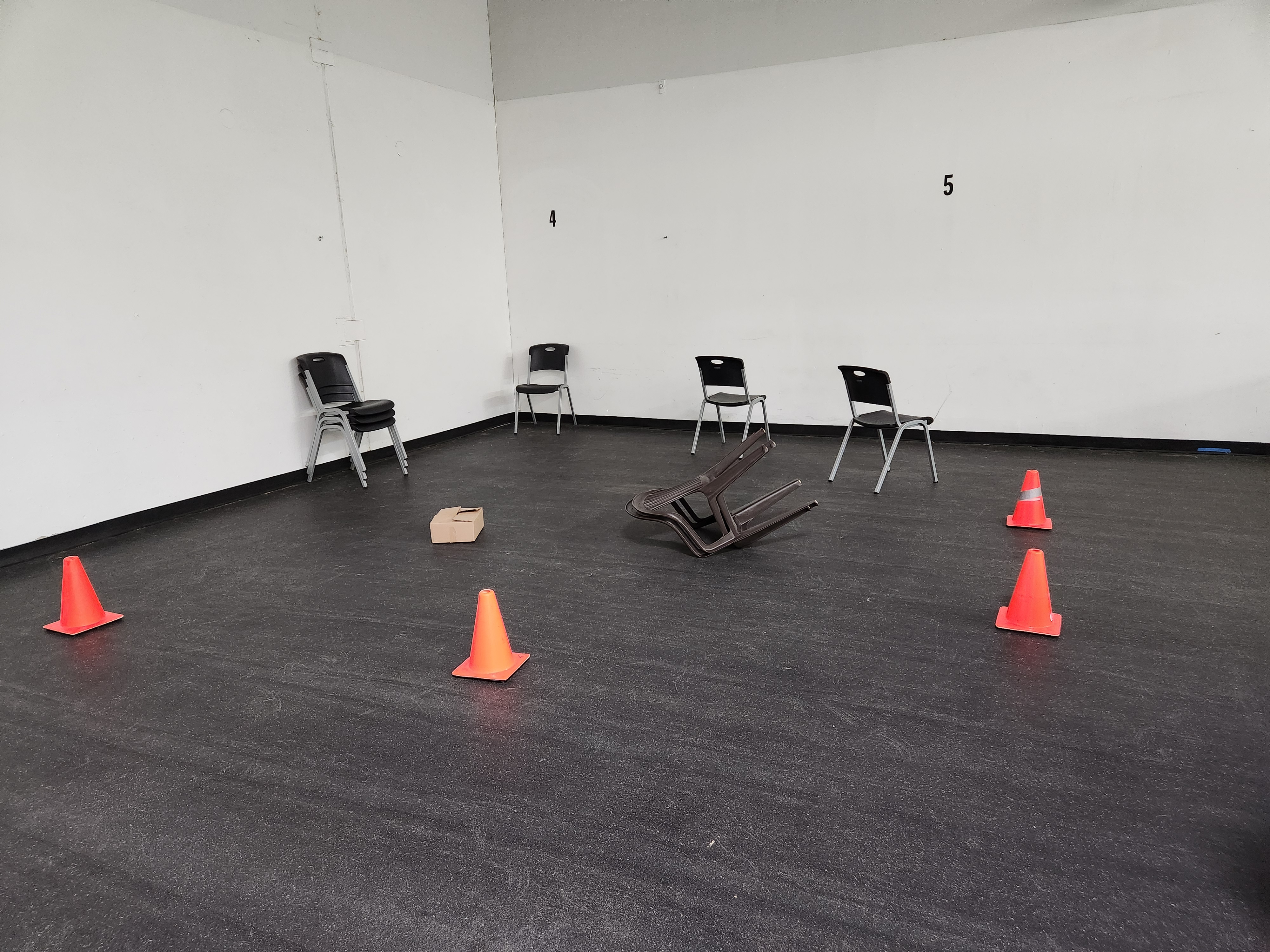
A while back, I was judging Excellent Interiors. I didn’t know the club, but they were very nice, lovely people. There were plenty of volunteers, it was well organized and the trial site was large with lots of buildings and areas to use. My two rooms were in a huge barn: room one consisted of two walls, and two coned off boundary lines to designate a large rectangle. The other room was on the other side of the barn, and again, had two walls in a corner, and the other two sides of the search area marked by cones. There weren’t a lot of objects in either room, but enough to set hides.
I wasn’t happy with the area, but I didn’t want to upset the show chair, who had the flow of the competitors all planned out, and the area was clearly within the regulations. So I set up two easy hides in the first “room”: one on an object near the back wall, and one on a chair. Both hides were at about nose height, and the time limit was generous. The demo dog successfully found both hides. I figured these were dogs who had enough experience and would search the chair automatically, and hopefully, would also search along the wall.
Unfortunately, I figured wrong. Most of the dogs got the hide along the wall, and then timed out. They would go past the chair hide and just not get any odor. Only one dog actually got both hides, and that dog didn’t pass because it didn’t get the one hide in the second room.
What had happened? Something about the odor dynamics in the barn had affected the chair hide so that the dogs didn’t pick it up.
If there had been a wall, instead of just a boundary line with a cone, the odor would have bounced off of that and been very obvious to the dogs. Instead the odor drifted so far out or directly up that the dogs couldn’t follow it back to source effectively (that is my guess, anyway…. but that is only a guess on my part because I don’t have the equipment in my nose or my brain to recognize odor in the way a dog does).
As it happens, this competition was set up so that I was now scheduled to judge Excellent interior again for trial 2. When I expressed my unhappiness about my area and my pass rate to my volunteers, they said, “oh don’t worry, we have a different area for Trial 2.” Which, it turns out, was a similar situation in another building: two areas, thirty feet apart.
I really didn’t want to fail another entire class. So I asked to speak to the trial chair, and see if there was any other areas we could use that actually had rooms with four walls.
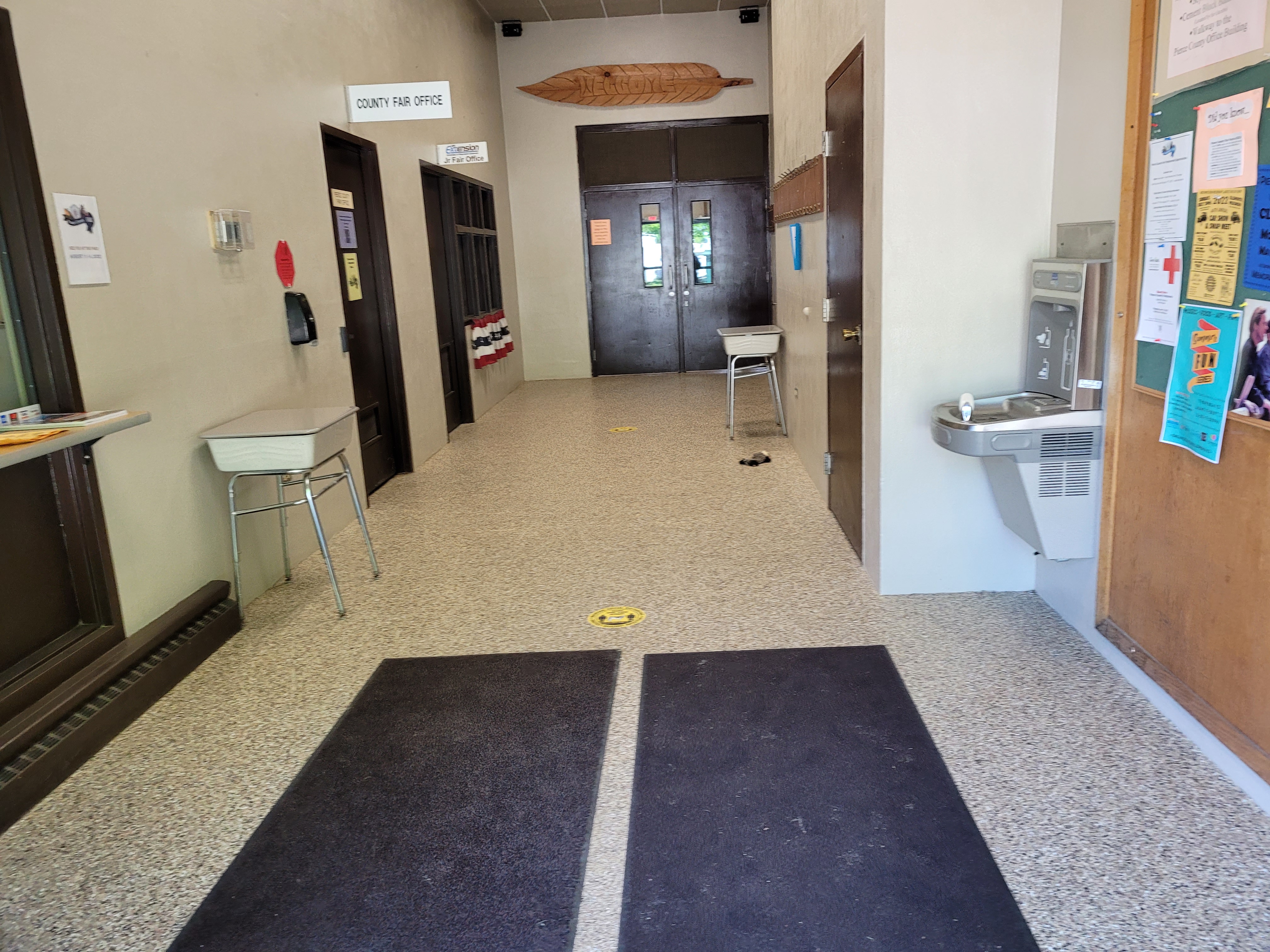
I just can’t say enough good things about this club, because they hustled and changed things around and very cheerfully DID find me a lovely indoor area with a hall and a separate bathroom that would meet the requirements for Excellent Interiors.
The same dogs ran that class, and almost every one of them passed it. My timer, who was a beginner, said to me “wow, you can really see the difference in the dogs searching!” And you could! The dogs were confident and efficient and clear in their communication, so that the handlers could call finish with certainty. There was none of the hesitancy or questioning that the dogs did in the barn search.
Unfortunately, not all clubs are so accommodating. And not all judges are willing to argue with the trial chair. After all, as a judge you are a contractor for the club: you have been hired to do one job: judge. But you also need to advocate for the teams running under you, and see that the rules of the game are applied in an appropriate way.
And I fully understand the difficulties of finding good venues. It is very hard to find buildings with enough rooms to accommodate a full array of classes. I have the greatest respect for the folks who volunteer to chair a trial or work on a trial committee. It can be a difficult, thankless job, But this is still my wish: please find me rooms with walls to search!
Want to get these posts delivered to your email? Click on the HOME button on the left, scroll down to the bottom and put your email in the SUBSCRIBE box.
 Sniffing Around Scent Work
Leave a comment