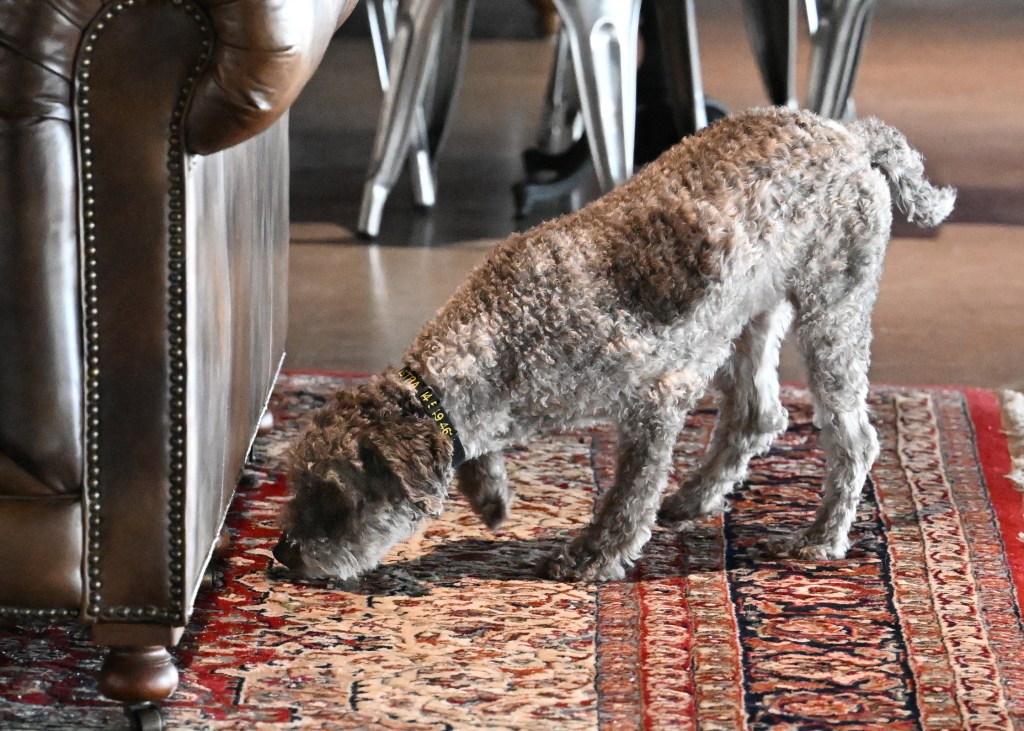
This post is dedicated to those of you venturing into the Master Interiors class for the first time.
I have started trialing Yeti seriously again, after a bit of a hiatus. We have our Excellent Interiors title, plus a few extras, and the time has come to proceed into Master Interiors. I have been in this class before, and dear reader, I have to admit, I did not enjoy it.
I could put this off, do some training to fill in a few holes that I am aware of, but I don’t see the point. No matter what we do, this will likely be a long and difficult slog, and we might as well forge ahead and hope that we learn a few things along the way. This element is, in my humble opinion, the most difficult of all the classes, including Detective.
“What??!” I can hear you exclaim. Well, dear reader, let me explain the intricacies and challenges of Master Interiors.
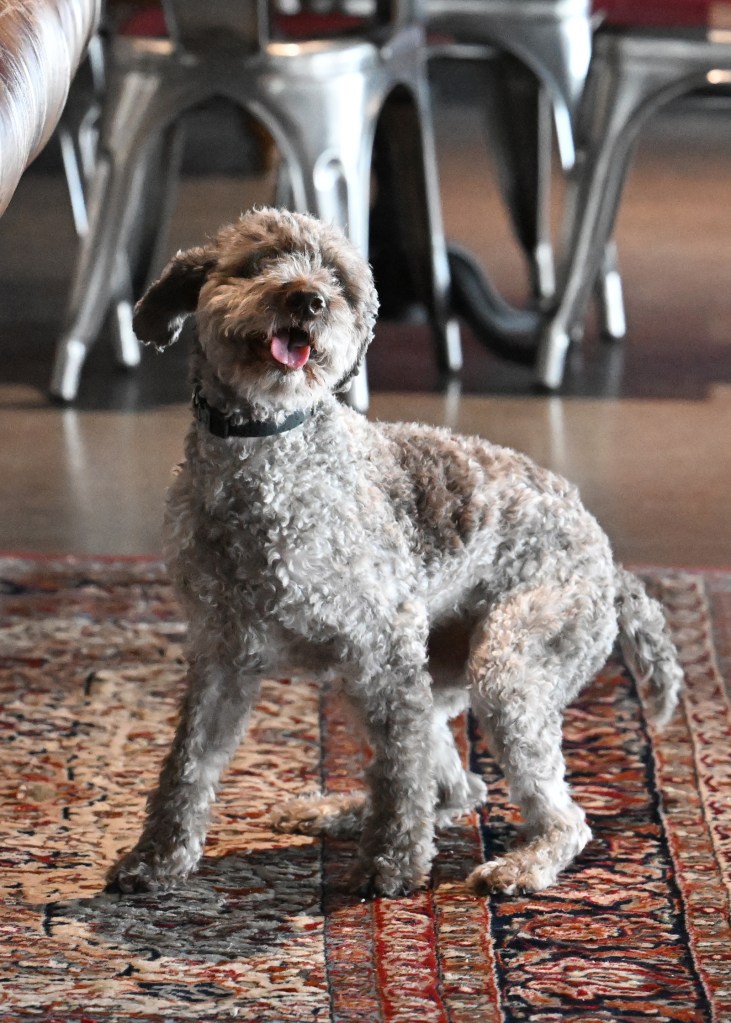
First, understanding the rules alone is a bit of a mind twister.
You have to search three rooms. Each room is a separate search, with a separate time limit and a separate finish call. There is an unknown number of hides in each room, with a range of zero to three, however only ONE room can be blank. AND there is a maximum of six hides in all three rooms. If you fail one room, you don’t move onto the next.
Now let’s look at the actual search challenges:
- Unknown number of hides including the room could be BLANK, which is challenge that you do not encounter in any other class. You must make this judgement call in a very short period of time, 1-3 minutes.
- You must time yourself. This means that you are juggling watching the dog, possibly holding the leash, AND setting and watching a timer of some sort, as well as deciding whether your dog is finished searching or whether you need to cover some area just one more time.
- You must make three PERFECT judgement calls in a row, under very tight time constraints, without any breaks or enough time to catch your breath.
- Then there is the psychological trap of trying to predict patterns. Say you find two hides in room one and room two. Your brain automatically expects two hides in the third room. Or the first room is very small, and you only have one minute and thirty seconds as a time limit. You automatically expect there to be one hide at most. Avoiding this type of analytic mind prediction/assumption is next to impossible for most of us.
- You must also cope with the challenges that are allowable at this level, which, according to the Judge’s Guidelines may include “converging odor, pooling odor, eddying odor, channeling odor, and inaccessible hides.” The hides may also be high, up to five feet. The judges have a lot of freedom in just how difficult they can make these very short searches.
Let’s compare this to the challenges in Excellent Interiors
- Unknown number of hides in room one, but it is only one choice: is it one or two hides? There is no chance of a blank room. There is no possibility of a third hide, and no dealing with the amount of convergence that three hides will produce. And once you have successfully navigated room one, you know the number of hides in room two, so the pressure is off.
- There is the possibility of high hides, and one hide may be inaccessible. However, in practice, I have rarely seen anything very high or very inaccessible in the Excellent level. Most judges seem to be saving those challenges for the Master level.
- The time limits are relatively short, one to three minutes, just the same as Master, but the areas are generally smaller.
- You do not have to worry about timing yourself. You have the safety of the thirty second warning, freeing you up to dedicate yourself to watching your dog.
There is a huge jump in competencies/challenges between the Excellent and Masters Interiors classes. If you have had the good fortune to breeze through all three legs of Excellent, you may be in for a big of a shock in Masters.
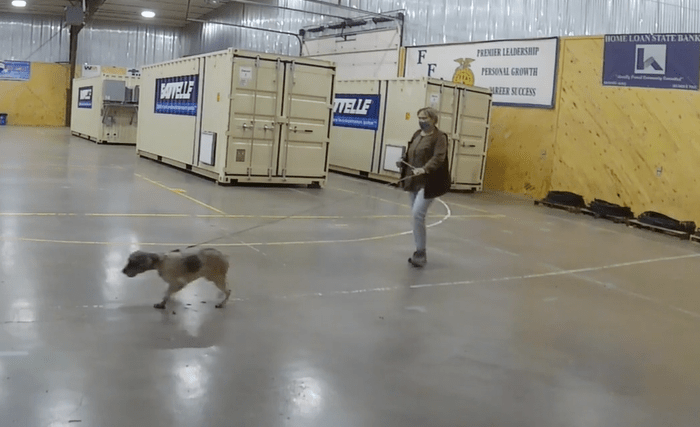
Now let’s look at the Detective class. This is the most prestigious class in AKC scent work, and many people are eager to enter it. You have to complete one Masters title in order to enter (i.e. get three passes in Master Containers, Exteriors, Buried, or Interior). Most people start this class right after they become eligible (usually after getting their Masters Containers title) and many people are still trying to get their Masters Interiors title after passing several Detective classes.
The rules for Detective are pretty simple: you have to search an area that includes both interiors and exteriors, with a square footage range of 2000 to 5000 feet, and find between five and ten hides (unknown to you exactly how many). You will have between seven and fifteen minutes (time limit is set by the judge) and you must time yourself.
The challenges of Detective are:
- Unknown number of hides in a large area. However, you are NOT required to clear any particular area before advancing into another area, the way you are in Interiors. There is only one “finish” call, only one judgement that you have found all the hides, as opposed to the three judgement calls that you must make in Master Interiors.
- The number of hides can be difficult for teams if they have never found more than four hides in a search, or not searched for longer than 4 minutes. Stamina is a real issue in searching.
- The time limit can be generous, although it can also be fairly tight, depending on the area and the number and type of hides. The range allowed by the rule is seven to fifteen minutes.
- There is no limit on the type of hides. I think this is the biggest challenge in the class, other than the challenge of covering a large area. They can be as high as the judge wants to set them, or very converging, or they can be buried, or in containers.
- You do have to time yourself, so you need to keep one eye on the clock, and judge whether you can spend more time searching an area, or need to move on just to make sure you’ve covered all the spaces.
- However, I think that you don’t have to wrangle with your analytic, predictive mind as much as in Master Interiors. You mostly have to cope with the fact that there is an interior area (which might have many rooms) and an exterior area. There are potentially situations where you might find nothing in either of those spaces, in which case, your mind might get to convincing you that you missed a hide. Or you might potentially freak out because the hides are not actually that challenging, and you were expecting to find hides hidden in the ceiling, but I feel like this is nothing compared to the second-guessing that happens in Master Interiors.
I could be wrong about this, because honestly, weighing the difficulty factors is a bit subjective, but I have talked to a number of people who also feel that Master Interiors is harder than any other class. Perhaps Yeti will let me know for sure.
Want to get these posts delivered to your email? Click on the Home button on the left, scroll down to the bottom and put your email in
the SUBSCRIBE box.



 Sniffing Around Scent Work
Leave a comment