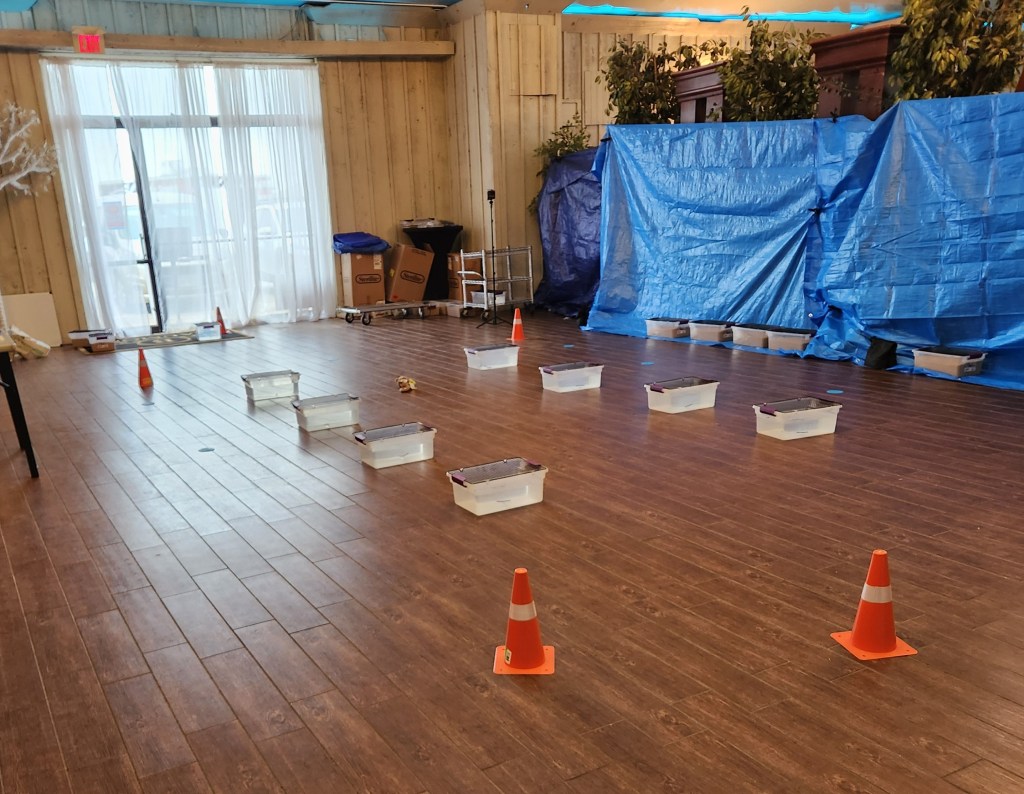
I ran Yeti in a local trial last weekend, and although we had not worked on buried for quite a while, I entered him in the Master level. This was a “what the heck lets see what happens” kind of move, atypical for me because I like to over-prepare for everything.
This was a three day trial for us, and on day one we ran the Excellent level as a warm up (in the Excellent class the dogs need to find three buried hides out of 12 bins, and the hide is in both sand and water). Much to my surprise, he searched well (though not quickly) and passed. I was cautiously optimistic on Day 2, when he was in Masters (in the Masters class, the dogs must search 16 bins, and the number of hides is unknown, it can be anywhere from one to four hides). To my astonishment, he searched well again and passed! Yay! This was only our second pass in any of the Master levels we have run. I was thinking perhaps he knew buried better than I thought!
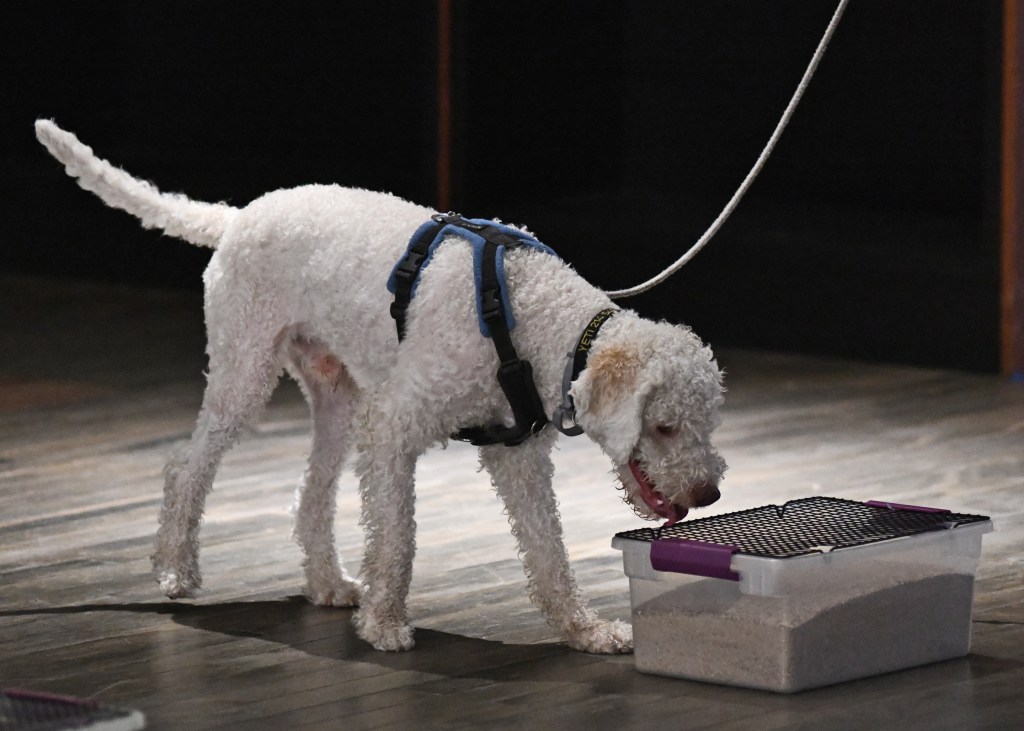
On Day three, I am a little excited. Walking away with two Master level Qs would be wonderful, way beyond my expectations for the weekend. So we approach the start line with anticipation….and he searches with enthusiasm, does his customary orientation run around and then gives a solid alert on a sand container. I call it immediately and….NO.
He had fringed, alerting on a container just down the row from the hot one.
I thanked the judge very politely and left, my heart in my stomach. He had seemed so solid in his buried searching skills the last two days…What happened?
The answer didn’t come to me until the next day, when I was making some notes about the trial in my training notebook: in the buried searches on days one and two, the buried containers had been in a U configuration. On day three, the buried containers had been in three rows.
I had overestimated his competence because when the containers are arranged in a U shape, they are further apart and there is less spread of the odor to other (blank) containers. When the containers are in rows, they are closer together and there is more spread of the odors, both onto blank containers and convergence of target odors (when there are multiple hides).
Yeti has a tendency to fringe, especially under the stress of trialing, and he had gotten a little too confident in his ability to identify the hot container, did a fly-by and just alerted too quickly.
Not following me?
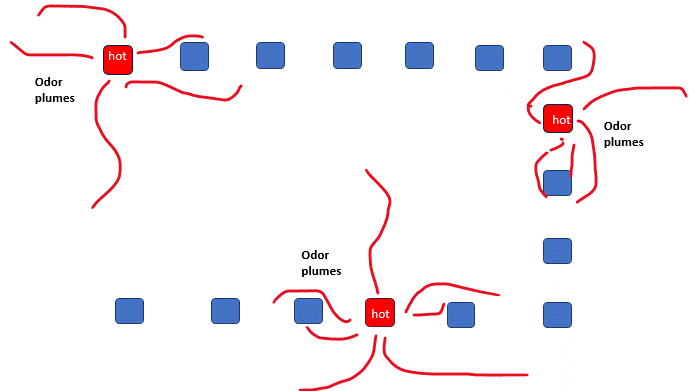
In the Buried element (as discussed previously in these posts: What You Don’t Understand About the Buried Element , What You Don’t Understand About the Buried Element Part Two, and What You Don’t Understand About the Buried Element Part three –click on those links if you haven’t read these) the odor is flowing freely out of the bins. When the bins are in rows, the odor is flowing over and around the cold bins, so the dog has to spend more time ruling out that odor as “not source.”
Above, video of dry ice in water, which demonstrates how the air moves around the bins
I have drawn a diagram below, which is my representation of what the odor is doing when there are rows of bins. You can see that for each hot bin, the odor is hitting three or four other bins (at least, depending on conditions). Therefore the dog has to do more work to figure out which bin has source. (At least in the beginning. As the dog gains expertise in running these types of searches, he/she will be able to make decisions about source much faster and without as much comparison).

When the bins are arranged in a U shape, there is some spread of odor and convergence, but not nearly as much, as you can see in the diagram below.
Yeti, as I have noted in previous blogs, likes to move quickly, and make impulsive decisions (as do all adolescents). And, he had been able to make quick decisions on days one and two of his buried searches and was rewarded for them, so I guess this mistake was only natural for him.
It’s good news and bad news for me. Yeti needs more work on bins in rows. But at least I know what we need to do. Back to training!
Please note: the AKC rules allow for the buried bins to be in ANY configuration from the Advanced level on up to Masters. Rows and the U shape or circle just happen to be the most common configurations that judges use.
Want to get these posts delivered to your email? Click on the Home button on the left, scroll down to the bottom and put your email in the SUBSCRIBE box.



 Sniffing Around Scent Work
Leave a comment