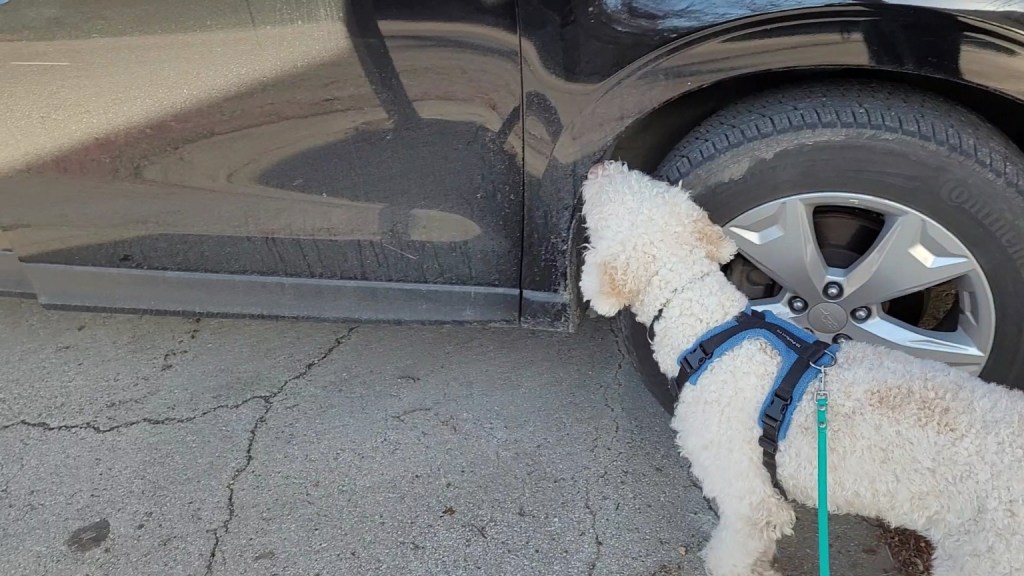
Vehicles, O Vehicles, you are a bitch of an element!
Well, ok, that was how I felt when I was running my first Nosework dog. I admit it, Riley and I sucked at vehicles for a while. And I couldn’t figure out where we were going wrong. So I complained about the big dogs having advantages over chihuahua dog sniffers, and I sulked.
And then I pulled up my big girl panties, got some instruction from a competent teacher to fill the enormous gaping void in my knowledge, and got to work.
And that work paid off. Riley became an expert vehicle searcher, and in the UKC trials (where we had to search seven vehicles at the top level) we managed to place over even the big dogs.
Astra has carried on that fine tradition (lots of placements at NACSW trials), and now Yeti is stepping up to the metaphorical plate.
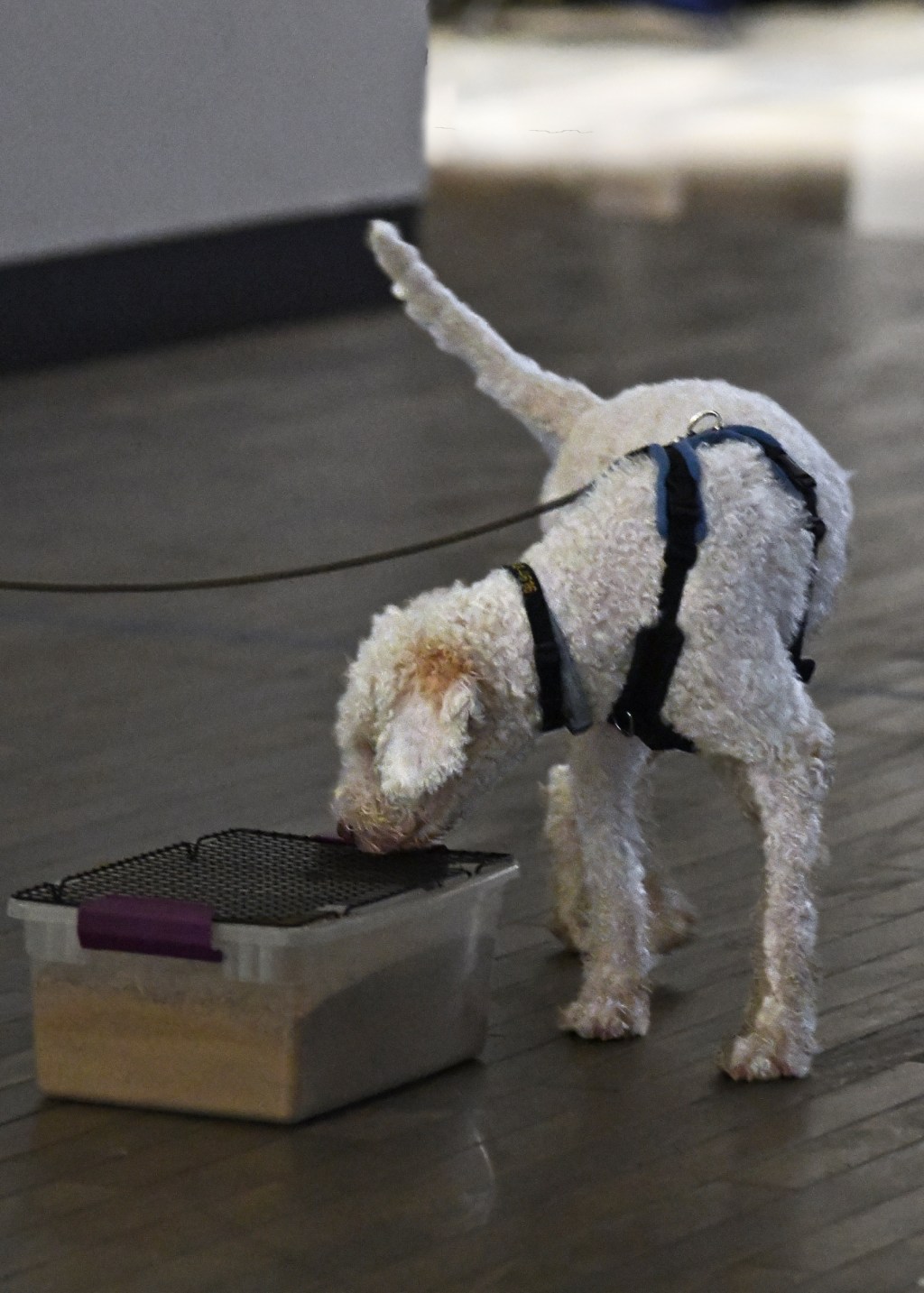
I posted previously on how I generally start dogs on the vehicle element, with an exercise called “Chase the Bunny.” Well, it turns out I haven’t had to do very much of “Chase the Bunny” with Yeti. He generalizes finding scent really easily, (thank you, good hunting dog genetics!) and I have run him maybe five times on vehicle searches, only doing two or three reps per session, and he is paying attention to the car, which is what I really want from him at this point.
Here are two videos from a recent training session. In the first, he spends a few seconds sniffing the ground, which I think was actually the birch odor hitting the ground. There was a breeze coming towards us. [Notice that I let him sniff, I don’t nag him to “get to work” and I don’t gesture or direct him at the car] then he heads down towards the back of the car, and goes beyond the car, and again I let him, keeping a loose leash. He does a U turn all by himself—he has reached the edge of an odor cone—and then he starts detailing the back of the car. He pauses on the rear hatch – I think because he remembers having found a hide there last week, and he wants to rule that out—and then moves up the side of the car, clearly following an odor trail, up to the front license plate. He does this all without any direction or interference from me. Good boy! (I really should have given him a bigger reward).
The second video took place a few minutes after I filmed the first. Notice he choose to go in the opposite direction of the first search. I have moved the hide to the far side of the car, which has changed the how the odor is moving, but probably more importantly, there is a lot of lingering odor from the first hide on the front license plate. You can clearly see him check the plate and dismiss it—source? He says to himself…Nope, not source….gotta keep going… and he continues to search. If he thought it was source, he would have turned around and asked me for his reward.
He actually notices the hide in the door seam at 33 seconds, you can see him give a tiny little nod, and I should have rewarded him RIGHT THEN…but I missed the moment, so I waited for him to go back. And he details, following the odor up the nearby pole, says to himself, yeah odor here, but not source, and then circles around, gets a little frustrated and goes back to the car door and paws and says “yeah, here.”
Yeti is naturally pawsy, which is frowned on in vehicle searches (no one wants a vehicle scratched) so I am shopping for booties for him.
But I am really pleased with his progress, and have started introducing the inaccessible vehicle hides, in door seams and further underneath the car, way sooner than I usually do. And of course, I have to continue to encourage him to give his formal trained indication once he has made a final decision about where exactly the target odor is hidden.
I consider the training for the indication to be secondary to actually searching for odor, so I introduce it late and continue training it for quite a while through the stages where we are generalizing to different search environments. I used to train it the other way around, perfecting the indication before going out and working on generalization, and I found that quite problematic for both me and my students.
In my experience, the problems that most people have with vehicle searches is that they have this weird idea about HOW the dog should be searching the vehicle, usually based on cop searches they have seen or heard about. They think the dog should be stuck to the side of the car searching and they are not familiar enough with their dog’s language to be able to read the search correctly. So the handler ends up directing and interfering, and the dog becomes confused, and the hide gets missed, or the dog gets frustrated and alerts on nothing.
All of the wandering and circling that Yeti does in the video are a part of his process for gathering information as to where the hide is. If I interfere in that gathering process, I am hindering him from finding the hide. And, I am telling him that I don’t trust him.
The dogs actually adapt to vehicle searches fairly easily, and once you know the secret of the following their language, the vehicle search becomes a beautiful ballet.
 Sniffing Around Scent Work
Leave a comment